


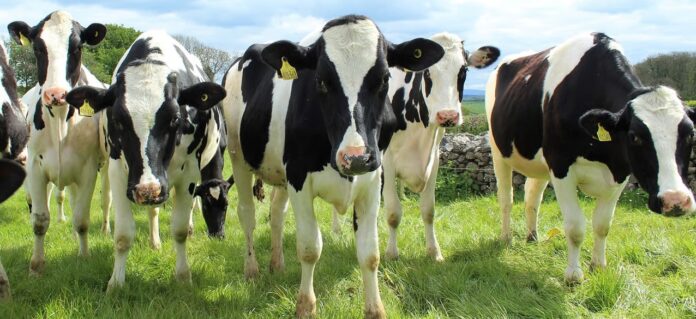
The fight over the redirection of R16-million in Comprehensive Agricultural Support Programme (Casp) funds to curb the spread of the foot-and-mouth (FMD) disease outbreak has taken a nasty turn.
Casp funds are meant to develop farmers; however, the Gauteng Department of Agriculture and Rural Development had announced on January 15 that it had taken a decision to redirect R16-million to curb the spread of FMD.
This resulted in the organisation, Izwi Labantu Forum (ILF), which represents the interests of emerging farmers and disadvantaged communities, questioning the transaction.
Last Sunday, this publication published the story regarding the matter, however, after the department’s response to the ILF, the organisation wrote back to the MEC of agriculture and land reform in Gauteng, Vuyiswa Ramokgopa, and her chief of staff, Khume Ramulifho, expressing dissatisfaction with the response received on Saturday.
The department responded to ILF on Saturday after the organisation had told Sunday World that there was never any response sent to them prior to this publication’s questioning Ramokgopa and her team if they had responded to the initial letter sent to the department by the ILF’s chairperson, Norma Mbatha.
However, Mbatha told Sunday World on Saturday that Ramokgopa and her department had no decency to acknowledge nor respond to her organisation, stating that they did so after they were sent questions by this publication.
In the undated response sent to Mbatha and ILF, Ramulifho said that it was the department’s responsibility to mitigate risks that negatively affect farmers in Gauteng.
“Foot and Mouth Disease poses a significant threat to the sector. Farmers are losing livestock, jobs are at risk, and the red-meat value chain is under strain. This risk affects both small and commercial farmers.
“However, its impact is more severe on small-scale farmers who often lack the resources required to implement and maintain adequate biosecurity measures,” said Ramulifho.
He also said that his department has also noted that the reported cases of FMD are only those officially recorded.
“The actual number may be higher. This is precisely why government intervention is necessary to prevent further spread and protect livelihoods. For your understanding, please note that the Comprehensive Agricultural Support Programme is a conditional grant allocated by the national department for farmer support. In addition, Veterinary Services is the unit within our department responsible for animal health and welfare in the province, covering cattle, sheep, goats, pigs, and other livestock.
“Farmers have approached us, requesting support to combat this outbreak. We have been working closely with them on the ground, and it would be irresponsible for the government to remain passive when farmers are experiencing such severe challenges. The conditional grant can be utilised to respond to these needs if this is done in consultation with the national department – something we are actively doing as we jointly respond to this crisis. We therefore implore you and your members to understand the urgency and gravity of the situation,” said Ramulifho.
However, on Wednesday, ILF, through Mbatha, responded to the department’s MEC and chief of staff, saying that the department continues to fail to respond with certainty and substantive evidence to two core issues repeatedly raised, in which the focal point is the redirection of R16-million of Casp funds to fight FMD, including the absence of accessible physical provincial offices of the department for farmers to visit regarding their concerns when it comes to farming and agricultural challenges.
“It is particularly concerning that the initial media statement on such a critical redirection of funds was issued by a political office (the MEC’s office), rather than through transparent, technical, and farmer-centred channels. This confirms that the farmers’ crisis has been, and continues to be, politicised by politicians, prioritising public relations and announcements over direct, practical action on the ground.
“Farmers are grappling with real losses in livestock, livelihoods, and business viability; they deserve accountable, non-partisan interventions, not political grandstanding that uses their plight for visibility while delivering limited tangible relief,” said Mbatha.
She added that the letter of Ramulifho stated that the R16-million redirection decision was made by the national department of agriculture, with confirmation and processing following appropriate national processes and no irregularities involved.
“This remains insufficiently detailed and unsubstantiated. As previously referenced, provinces have constrained authority under the Division of Revenue Act (DoRA) and Public Finance Management Act (PFMA) to redirect conditional grants like Casp without explicit national approval and adherence to grant conditions. We intend to escalate this directly to the National Department of Agriculture (NDA), to obtain independent verification that the redirection was indeed initiated, approved, and compliant at the national level.
“We request that you immediately provide copies of the relevant correspondence, approvals, and decision documents from the national department of agriculture to support your assertion and prevent unnecessary delays in resolving this matter.
“On the issue of physical offices, the assertion that regional offices are operational, accessible, and mandated for face-to-face services does not address our concern about the lack of dedicated, farmer-orientated physical facilities or walk-in centres in key farming districts. The attached extension officer contacts are valuable but do not equate to fixed, public-access offices where farmers can visit spontaneously for urgent advice on biosecurity, funding applications, or crisis support,” said Mbatha, who also said that the gap raises ongoing questions about how departmental operations are structured.
She was also questioned on how staff are deployed and held accountable and whether taxpayer funds are effectively utilised when farmers, often in remote areas, face barriers to direct engagement.
“We reiterate our request for specific physical addresses, operating hours, and service scopes of these regional offices. Additionally, we must address the MEC concerning statements in her Power FM interview on January 27 2026, where she reportedly described the “F sign” (the mandatory branding on vaccinated livestock) as a ‘good thing’ in the context of FMD vaccination.
“This utterance reveals a troubling disconnect from the realities of commercial livestock farming. Farmers operate businesses with diverse objectives, breeding, live sales, exports, and value addition, not merely for butchering stock as implied in such recommendations,” said Mbatha.
The ILF also urged the department to cease politicising the crisis and pointed out that it should prioritise evidence-based, farmer-led solutions, including on-farm biosecurity and depopulation/repopulation preparation via Casp, and engage directly with Gauteng farmers.
The organisation also proposed an urgent meeting with the department and stated that Gauteng farmers should also be available to discuss all matters at hand for transparency purposes.
“Failure to provide the requested details and documentation within five days will further erode trust and compel us to pursue formal escalation channels. We remain committed to advocating for accountable, effective support for Gauteng’s farming community,” said Mbatha.


