The theme of this year’s African Mining Indaba is “Stronger together: Progress through partnerships”. One could sum up that collaboration will be a key focus in both investments and developing regulatory frameworks to foster growth within the mining sector.
This year’s African Mining Indaba agenda sets as a subtheme “Mining Regulation, Governance and Policy”. In a bid to foster investment, this sub-theme is being positioned as an opportunity to open dialogue on governance, mining regulation and policy framework.
It is imperative we consider the theme of the mining indaba in the context of South Africa having held the G20 presidency together with the signed 122-point leaders’ declaration, which urged collective action on issues disproportionately affecting developing nations such as climate disasters, debt sustainability and inclusive growth, community beneficiation, critical minerals and many others.
Balancing livelihoods and legality in the debate on mining in Africa
As the regulatory framework will be a key focus at the African Mining Indaba, one has to ask: what is the plan of the South African government in this key discussion?
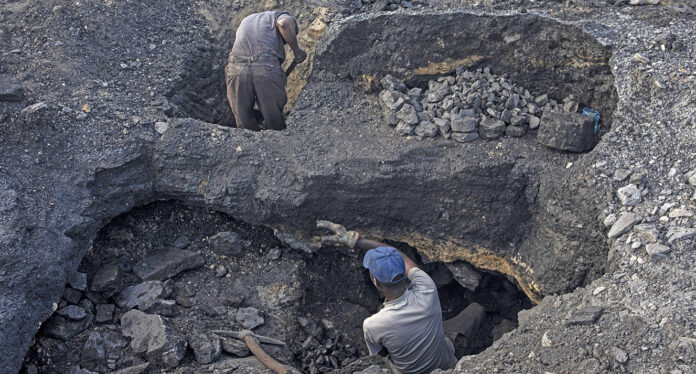
The topic of illegal and artisanal mining in Africa is dominating the news cycle. On one side, artisanal mining is often portrayed as a legitimate, community-driven endeavour that promotes economic empowerment and contributes to alleviating some of these issues.
On the other hand, illegal mining is condemned for its environmental destruction, labour exploitation and connection to criminal networks.
In 2025, the Department of Mineral Resources and Petroleum Resources published the long-awaited amendment to the Mineral and Petroleum Resources and Development Act. According to the department’s announcement in May last year, the amendments are to ensure policy and regulatory certainty and enhance investor confidence.
The amendment further introduced regulation of artisanal and small scale mining. The million dollar question is: will these amendments truly resolve the economic and environmental harm caused by illegal mining, and will this equal the playing field for communities to participate in mining?
Although the draft amendment provides the long-awaited regulation of artisanal and small-scale mining, of concern is that the bill grants the minister significant discretionary power over key decision-making. This includes approval of changes in shareholding and control of mining companies, as well as weakening the role of communities in mining rights application processes by diminishing the definition of consultation and meaningful engagement.
Overlapping interests: challenges in regulation
In South Africa, artisanal mining has been governed by the Artisanal and Small-Scale Mining Policy of 2022. The process of managing artisanal mining and small-scale operations has faced challenges due to complicated efforts on how to regulate the sector, such as costly licensing procedures and lack of access to technical support.
In many African contexts, including South Africa, one cannot adopt a linear approach to regulation, as this often fails. The challenges faced by communities
often demand a nuanced approach and out-of-the-box inclusive solutions.
What is a sustainable solution?
The concerns posed by artisanal mining and the challenges of regulation evidently require a nuanced approach.
Formalising the artisanal and small-scale mining sector has been recognised as a critical step to mitigating environmental damage, reducing human rights abuses, and enhancing safety.
By streamlining regulatory frameworks to make them accessible and affordable, governments can integrate informal, often illegal, miners into the legitimate economy, allowing them to access formal markets and financial services.
The Mineral Resources Bill has the opportunity to provide this solution. There is a critical need for collaboration between stakeholders; this is inclusive of governments, corporations, and local communities.
By fostering trust and inclusivity, policies can distinguish genuine artisanal miners from illegal operators, ensuring that Africa’s mineral wealth becomes a force for sustainable development rather than exploitation.
Sustainable development requires a shift towards genuine, transparent, meaningful and continuous engagement with communities throughout the mining life cycle. Companies must listen to community voices, ensuring their needs and priorities shape the development agenda.
This includes moving away from one-size-fits-all solutions and tailoring projects to the unique cultural, heritage, environmental, economic, and social contexts of each community.
Mugunyani is the head of mining at the Centre for Environmental Rights
- The theme of this year’s African Mining Indaba is “Stronger together: Progress through partnerships”.
- One could sum up that collaboration will be a key focus in both investments and developing regulatory frameworks to foster growth within the mining sector.
- This year’s African Mining Indaba agenda sets as a subtheme “Mining Regulation, Governance and Policy”.
- In a bid to foster investment, this sub-theme is being positioned as an opportunity to open dialogue on governance, mining regulation and policy framework.
- It is imperative we consider the theme of the mining indaba in the context of South Africa having held the G20 presidency together with the signed 122-point leaders’ declaration, which urged collective action on issues disproportionately affecting developing nations such as climate disasters, debt sustainability and inclusive growth, community beneficiation, critical minerals and many others.