


Gwede Mantashe, the Minister of Mineral and Petroleum Resources, has drawn a firm line on the government’s role in the rehabilitation of disused or ownerless dormant mines, arguing that the legal responsibility lies with mining companies, not the government.
Speaking at a South African Human Rights Commission (SAHRC) inquiry into policy framework around artisanal mining, Mantashe said: “…We have no obligation to rehabilitate anything. This is why we found 6 100 ownerless and derelict mines… we are closing those mines systematically, bit by bit”.
It’s estimated that closing all derelict mines could cost up to R50-billion.
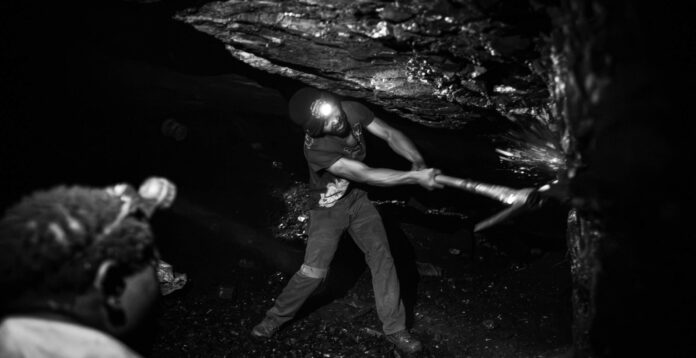
Many of the derelict mines are unsecured, environmentally unstable and actively used by illegal miners known as zama zamas.
The second leg of the inquiry is investigating the policy framework around artisanal mining, the impact of artisanal mining on the human rights of surrounding communities and the scope and tactics employed in Operation Vala Umgodi, the South African Police Service’s action to root out illegal mining activity.
Section 24(b) of the constitution guarantees everyone the right to a healthy environment and requires the state to secure ecologically sustainable development through reasonable legislative and other measures. Importantly, this right is implemented through statutes that impose direct obligations on private actors, including mining companies.
In addition, Section 28 of the National Environmental Act establishes a general duty of care, which states that: “Every person who causes, has caused, or may cause significant pollution or degradation of the environment must take reasonable measures to prevent, minimise and rectify such pollution”.
Section 24 of the same act further requires financial provisioning for remediation and closure, ensuring that rehabilitation is privately funded and not externalised to the state.
Similarly, the Mineral and Petroleum Resources Development Act 28 of 2002 embeds rehabilitation into the mining right itself.
Thousands of mines were abandoned before modern environmental laws existed. In many cases, responsible companies no longer exist.
The result is a growing inventory of hazardous sites that fall into a regulatory grey zone.
Mantashe told the inquiry that the department continues to seal and close disused shafts, but that full rehabilitation is financially unrealistic for the state.
Estimates to rehabilitate all closed mines amount to R49-billion, according to 2022 estimates by Department of Mineral Resources and Energy, which is far beyond budget allocations.
Approximately 15 coal mines and five coal-fired power stations (8.9GW) are expected to shut down by 2030, according to a 2023 South African Institute of Mining and Metallurgy report. By 2040, closures will expand to 23 more mines and four additional power stations, affecting communities across 21 municipalities.
Mining companies collectively hold about R60-billion in rehabilitation provisions, and many complain that this capital is locked behind bureaucratic and legal barriers. Since 2007, less than 1% of legacy mines have been rehabilitated.
What is less visible, and almost entirely unregulated, is what these mines emit into the atmosphere. Research by Professor Brett Cohen and Jesse Burton, from the University of Cape Town, shows that methane emissions from coal mining are more than 80 times more potent than carbon dioxide emission over a 20-year period.
“Abandoned mines, in particular, will become the fastest-growing source of methane, with emissions projected to rise by 800% within the next 70 year,” shows the research.
Despite this, Mantashe maintains that the government is still playing an active role in supporting the safe closure and rehabilitation processes.
He noted significant strides made by Mintek, South Africa’s national mineral research organisation, in rehabilitating derelict mines, with at least four asbestos mines in Limpopo and Northern Cape rehabilitated, and 280 mine openings having been safely closed.
In addition, a further R134.7-million has been allocated to Mintek this financial year to continue this work – ESG Now News


