


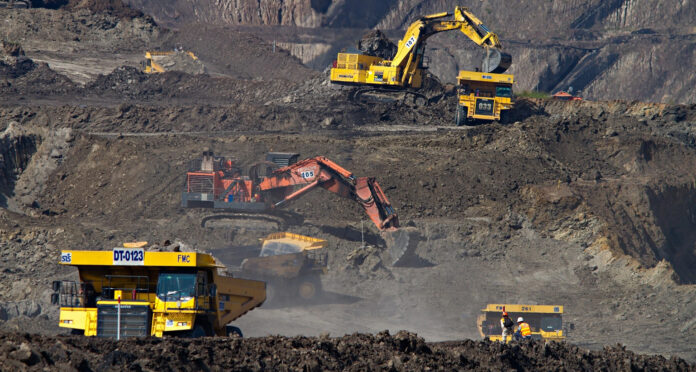
South Africa’s junior mining sector was designed to be a low-barrier entry point for emerging miners, black industrialists and community-scale operations to access the country’s mineral wealth.
In practice, that gateway is increasingly clogged by not only administrative inefficiency, but by a growing pattern of permit hoarding that is sabotaging junior miners, sterilising mineral assets and driving capital elsewhere in Africa.
The Department of Mineral Resources and Energy has publicly acknowledged persistent backlogs in mining permit and prospecting right applications, particularly in provinces such as Mpumalanga and Limpopo. Submissions from the Minerals Council, the industry body, show that the department often processes fewer applications than it receives annually, creating chronic delays.
At the same time, South Africa’s digital mining cadastre has failed to deliver real-time transparency. Investors cannot easily determine who holds which permits, how many permits a single entity controls, or whether those permits are active or dormant.
This opacity matters, because discretion thrives where visibility is limited.
Mining permits under Section 27 of the Mineral and Petroleum Resources Development Act were created specifically for small-scale mining. They allow up to five hectares for a duration of up to five years, and are designed to support rapid entry into production. The law assumes that permits will be actively worked, not hoarded and used as financial instruments.
However, industry due diligence increasingly reveals large concentrations of these permits held by a small number of individuals or entities with little or no operational capacity.
In many of these cases, there is no equipment on site, no meaningful geological or mining work programme, and no production or community development. Their business model is “acquire, sit, flip”.
While holding a permit without mining is not automatically unlawful, the economic impact is significant. Each inactive permit blocks junior miners from access to ground with vast economic value. Consider a typical junior mining company with secured funding, a contract miner lined up and community agreements in place. The business plan assumes permit approval within statutory timelines. Instead, applications stall for months or years, capital sits idle, and costs mount.
Prospecting rights are also held with minimal work completed, effectively excluding other explorers and juniors from accessing prospective ground. This undermines the exploration pipeline that sustains long-term mining investment.
Overlaying this systematic sabotage is the emergence of powerful consultants, facilitators and fixers that position themselves as essential to navigating the system. While many consultants provide legitimate services, some of them consistently report a perception that applications move faster when routed through “the right channels”.
This creates what junior miners often describe as an informal “consultant tax”, which is not always an explicit bribe but a cost imposed by opacity, delay and discretionary decision-making.
For small operators with limited capital, these costs can be fatal to projects before they start.
Corruption Watch and Transparency International’s Accountable Mining programme have repeatedly warned that licensing regimes with high discretion and weak transparency are particularly vulnerable to rent-seeking behaviour, even without overt criminality.
The consequences are increasingly visible in regional investment flows. Junior and mid-tier miners are redirecting exploration and early-stage capital to jurisdictions such as Botswana, Namibia and Zambia.
In Botswana and Namibia, mining cadastres are publicly accessible, showing licence holders, timelines and compliance status.
While approvals are not always fast, the rules are predictable and consistently applied.
Consequently, the Minerals Council reported that exploration spending in South Africa has fallen to below 1% of global exploration expenditure, down from more than 5% in the 2000s.
The government has repeatedly committed to a modern, transparent mining cadastre to clear backlogs and rebuild investor confidence. This reform is essential, but technology alone will not resolve the problem.
If permits can still be held indefinitely without meaningful activity, and if enforcement of work programme commitments remains weak, digitisation risks worsening existing distortions.
Furthermore, where legal access to mining ground is blocked by inactive permits, informal and illegal mining often fills the vacuum.
South Africa does not lack mineral resources, mining skills or entrepreneurial talent. What it lacks is a licensing system that consistently rewards genuine development over speculation.
If South Africa is serious about inclusive growth, junior mining cannot remain a paper exercise.
Mineral wealth only delivers value when permits translate into production, jobs and communities. Not when they sit idle on a registry. – ESG NOW


