


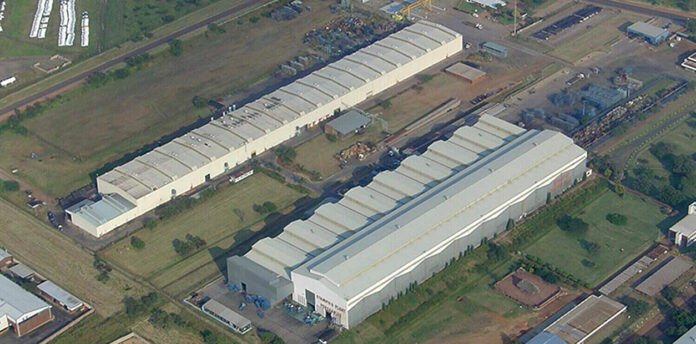
Nissan’s six-decade vehicle production legacy in South Africa is set to come to an end following an agreement between the Japanese brand and its Chinese competitor Chery South Africa (Chery SA) on the acquisition of Nissan’s manufacturing assets in Rosslyn, Pretoria.
The announcement, made on Friday, confirms that Chery SA will acquire the land, buildings and associated assets of Nissan’s Rosslyn manufacturing facility, including its nearby stamping plant, with the transaction expected to be concluded by mid-2026, subject to regulatory approvals.
In a statement, Nissan SA said the agreement would see the majority of affected Nissan employees offered employment by Chery SA on substantially similar terms and conditions.
The closure of the Rosslyn plant has long been anticipated. In May 2025, Nissan announced a global recovery plan aimed at creating a leaner and more resilient business in response to shifting market dynamics. The plan included reducing its global workforce by 20 000
employees and cutting the number of manufacturing plants from 17 to 10 by the end of the 2027 financial year.
Against this backdrop, it was widely expected that the Rosslyn facility, which has produced vehicles in South Africa for nearly 60 years, would be among the plants earmarked for closure.
Once the transaction is finalised, Nissan will transition into a fully import-based operation in South Africa, a move that could limit its access to incentives associated with local manufacturing. Despite this, Nissan confirmed it remains committed to the local market.
“Following the acquisition of the plant by Chery South Africa, Nissan will continue to offer vehicles and services to customers in South Africa as before, with several new vehicle launches planned for the 2026 financial year, including the Nissan Tekton and the Nissan Patrol,” the company said.
Nissan Africa president Jordi Vila described the agreement as the best possible outcome under challenging circumstances.
“Nissan has a long and proud history in South Africa and has worked hard to find the best solution for our people, our customers and our partners,” Vila said. “External factors have had a significant impact on the utilisation of the Rosslyn plant and its long-term viability.
“Through this agreement, we are able to secure employment for the majority of our workforce while preserving opportunities for our supplier network and ensuring the Rosslyn site continues to contribute to the South African automotive sector.”
South Africa’s automotive industry is undergoing a major shift as Chinese carmakers accelerate their entry into the local market, reshaping consumer choices and unsettling long-established players.
Once dominated by European, Japanese and American brands, the showroom floor now features a growing number of Chinese vehicles, often priced well below their rivals. Brands such as Chery, Haval, and GWM have rapidly expanded their footprint, offering models that combine affordability with modern styling and technology.
Chery SA declined to comment in detail on the transaction at this stage, saying it would provide further comment once the process progresses.
Meanwhile, the developments have drawn attention from organised labour. National Union of Metalworkers of South Africa general secretary Irvin Jim, who has previously raised concerns about the growing presence of Chinese vehicle brands in South Africa, said the union’s priority would be job security.
“While this developing story is interesting, our key focus will be the job security of our members,” Jim wrote on social media platform, X.
Once operational, Chery will join six legacy automotive manufacturers still producing vehicles in South Africa, including BMW, Ford, Isuzu, Mercedes-Benz, Toyota and Volkswagen Group Africa. BAIC, another Chinese automotive brand, along with Stellantis, are expected to officially commence local vehicle production, bringing the total number of OEMs in South Africa to nine.
Nissan’s shift raises broader questions about the future of local vehicle manufacturing and whether South Africa’s automotive policy framework remains competitive enough to retain global manufacturers. Industry analysts have warned that without urgent policy intervention, more legacy brands could follow a similar path.
- Nissan’s six-decade vehicle production legacy in South Africa is set to come to an end following an agreement between the Japanese brand and its Chinese competitor Chery South Africa (Chery SA) on the acquisition of Nissan’s manufacturing assets in Rosslyn, Pretoria.
- The announcement, made on Friday, confirms that Chery SA will acquire the land, buildings and associated assets of Nissan’s Rosslyn manufacturing facility, including its nearby stamping plant, with the transaction expected to be concluded by mid-2026, subject to regulatory approvals.
- In a statement, Nissan SA said the agreement would see the majority of affected Nissan employees offered employment by Chery SA on substantially similar terms and conditions.
- The closure of the Rosslyn plant has long been anticipated.
- In May 2025, Nissan announced a global recovery plan aimed at creating a leaner and more resilient business in response to shifting market dynamics.


