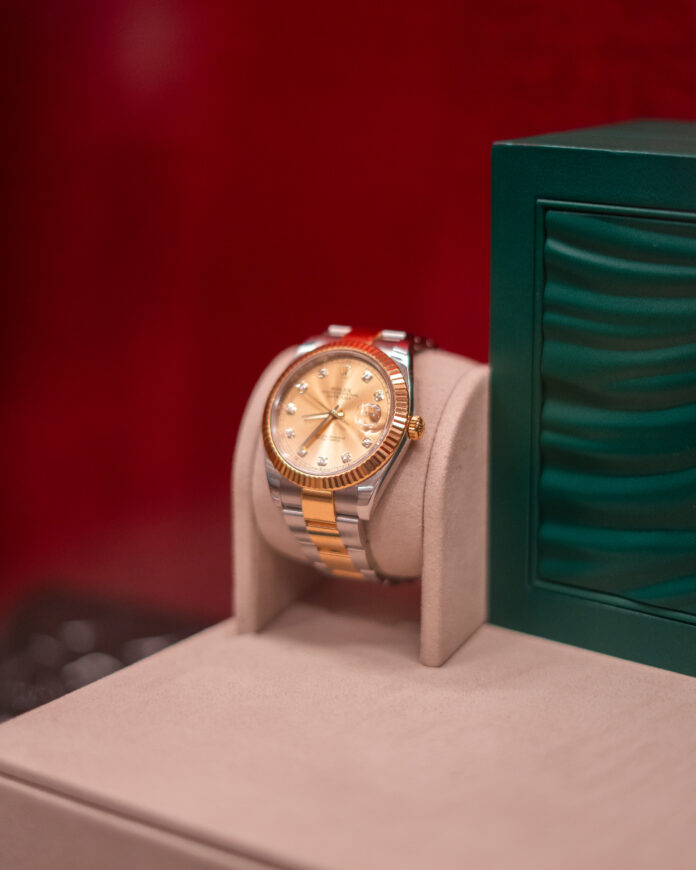
Rolex is increasingly being viewed as an investment as South African consumers drive strong growth in the second-hand luxury market amid rising environmental concerns.
Luxity’s State of the Luxury Market in Africa report has shown that Rolex now trades at 126.5% of its current retail price on the secondary market, up 20% year-on-year.
This means certain models are appreciating in value and outperforming many traditional models.
According to the report, the top three reseller brands on watches and jewellery are Rolex, Cartier, and Van Cleef & Arpels. The report reflects that luxury buying is not about owning more luxurious products but owning essential luxury products.
Michael Zahariev is co-founder of Luxity, an online retailer that “buys and sells authentic, pre-owned luxury items that are in great condition”, according to their website.
Wealth preservation, environment
He said they have seen wealth preservation and environmental consciousness converge.
“When consumers realise that a well-maintained classic piece appreciates while reducing waste, the choice becomes obvious. This isn’t about sacrifice, it’s about smarter consumption that serves both your portfolio and the planet,” said Zahariev.
There is also a serge in brands including Cartier at 72%. Also Hermès at 67.8% and Bulgari at 64.3% are gaining in value performance.
Louis Vuitton trades at 64.2%. However, Louis Vuitton and Gucci combined search share dropped from 30% to 21%.
This growing focus on resale value is also linked to sustainability. The fashion industry accounts for up to 8% of global carbon emission. And it is the world’s second-largest consumer of water.
Saving the planet
The report estimates that buying pre-owned designer handbag saves more than 8kg of carbon dioxide and 22 litres of water compared with buying new. A pair of pre-loved designer shoes saves 3kg of carbon dioxide and more than 7litres of water.
He explained that consumer behaviour is moving away from trend-driven buying toward long-lasting pieces. Search interest in handbags rose by 14.6% year-on-year, while jewellery searches surged by 43.8%.
Interest in shoes dropped by 10.2% and wallets by 21.3%. These are categories considered to have shorter life cycles and weaker resale value.
“Shoppers are directing attention from fast-turnover fashion to tangible assets. This reweighting towards permanence shows a market prioritising pieces that hold or grow in value rather than fade with season.
“It extends product lifecycles. And it keeps textiles, leather, and precious materials in circulation, rather than contributing to waste,” said Zahariev.