
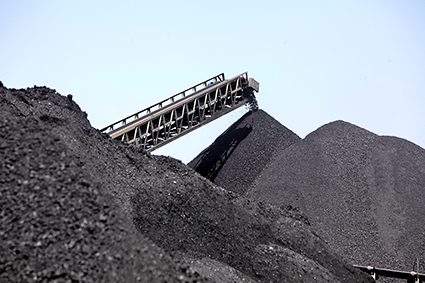
Global chemicals and energy giant Sasol has begun reducing its reliance on external coal suppliers after commissioning a R700-million destoning plant designed to improve the quality of its internally mined coal. This is a critical operational shift at its Secunda fuels and chemicals complex, which reinforces the company’s coal-based energy strategy amid growing energy security risks.
The destoning facility, operational since December 2025, removes rock and impurities from coal before it enters Sasol’s gasifiers. This significantly improves feedstock quality and operational efficiency.
Reducing costly external purchases
By lowering impurity levels to approximately 12%, the plant allows Sasol to extract more usable energy from its own coal reserves. While reducing dependence on expensive external purchases.
This comes after Sasol bought 4.9 million tons of coal from third-party suppliers during the first half of its 2026 financial year. And this was driven by declining quality from its own mining operations and gasifier reliability challenges.
With the destoning plant now fully operational, Sasol expects external purchases to decline to around 4 million tons in the second half of the year. And they are expected to stabilise between 4 million and 6 million tons annually in the longer term.
The shift represents a major cost-control initiative for Sasol. The company has been paying about R700 per ton for externally sourced coal. Internal coal production is substantially cheaper and provides greater operational control. This is particularly as the company works to stabilise output at Secunda, the world’s largest coal-to-liquids facility.
Reducing external coal purchases also lowers indirect emissions associated with transportation and handling. Coal transported from third-party suppliers typically involves diesel-powered trucking or rail logistics. This contributes additional Scope 3 emissions.
Lowering supply chain emissions
By relying more heavily on internally processed coal located closer to its Secunda facility, Sasol can reduce supply chain emissions while improving operational efficiency.
Improved coal quality is already translating into measurable operational gains. Secunda’s production increased by 10% to 3.7 million tons during the interim reporting period. Full-year output is expected to reach between 7 million and 7.2 million tons.
Higher-quality coal allows Sasol’s gasifiers to operate more efficiently. Gasifier instability and shutdowns can lead to inefficient combustion cycles. It can also cause increased risk of methane leakage and higher overall emissions per unit of output.
By using higher-quality coal input, Sasol can reduce the carbon intensity of production. It can do this by reducing the volume of coal required to produce the same fuel and chemical output.
However, the move highlights the complex reality of energy transition in coal-dependent economies. Coal beneficiation improves efficiency, reduces emissions and waste. However, it reinforces Sasol’s reliance on fossil fuels. This at a time when global investors and policymakers are pushing for decarbonisation.
Decarbonisation solutions
From a transition perspective, such efficiency improvements are often described as “abatement within existing systems”. While these improvements do not eliminate emissions, they reduce the carbon intensity of companies. And they develop longer-term decarbonisation solutions such as renewable energy and carbon capture.
Sasol reported a 52% decline in earnings before interest and tax to R4.6-billion in its interim results. Thus reflecting impairments, market volatility, and operational constraints. Reducing input costs through improved coal quality is therefore essential to restoring margins.
Sasol’s destoning investment signals that coal will remain central to the country’s industrial energy system for the foreseeable future. It also illustrates a slower-than-expected pace of transition away from coal by the energy sector.
- Global chemicals and energy giant Sasol has begun reducing its reliance on external coal suppliers after commissioning a R700-million destoning plant designed to improve the quality of its internally mined coal.
- This is a critical operational shift at its Secunda fuels and chemicals complex, which reinforces the company’s coal-based energy strategy amid growing energy security risks.
- The destoning facility, operational since December 2025, removes rock and impurities from coal before it enters Sasol’s gasifiers.
- This significantly improves feedstock quality and operational efficiency.
- Reducing costly external purchases By lowering impurity levels to approximately 12%, the plant allows Sasol to extract more usable energy from its own coal reserves.