
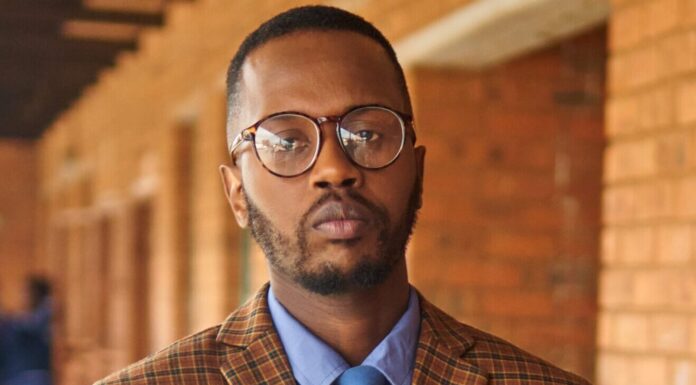
Malibongwe Mdwaba’s return to Skeem Saam signals one of the soapie’s most unsettling storylines yet.
The award-winning actor re-enters the Turfloop universe as Shongwe Radebe, a man fresh out of prison who steals Mr Sibusiso Xulu’s identity and reinvents himself as a qualified teacher, slipping seamlessly into a system built on trust and paperwork.
For Mdwaba, the arc is not about shock value, but about exposing uncomfortable truths.
“This is not a character who believes he is evil. Shongwe genuinely believes he is doing what he must to survive in a society that has already decided he is disposable.”
Relies on intellect and confidence
Having previously appeared on the show as a prisoner, Mdwaba’s character returns sharper, calmer, and more dangerous. This time, Shongwe doesn’t rely on brute force or desperation. He relies on intellect, confidence, and the ability to perform respectability.
“After prison, Shongwe understands one thing very clearly,” says Mdwaba.
“Rehabilitation is something we talk about, but exclusion is what people experience. Once doors remain closed long enough, a person will find another way in. Even if it means using someone else’s name.”
The identity theft of Xulu forms the backbone of the storyline, raising ethical and social questions around legitimacy, second chances, and the fragility of institutions. Despite his criminality, Shongwe excels in the classroom, unsettling viewers who are forced to separate competence from morality.
“That’s the discomfort, he shows up. He does the job. He delivers results. So the audience is left asking themselves: is goodness about paperwork, or about impact?”
Mirror of society’s contradictions
Mdwaba is careful not to romanticise the crime. Instead, he portrays Shongwe as calculated and self-aware. A man who understands the rules well enough to bend them.
“He’s not chasing a thrill. This isn’t about adrenaline. It’s about necessity and understanding that the system is flexible. But only if you know how to read it.”
As the tension builds toward inevitable exposure, Mdwaba believes the storyline holds a mirror up to society’s contradictions.
“We’re quick to demand accountability, but slow to create real pathways for reintegration. And when someone fails again, we call it moral weakness instead of asking what options they were actually given.”
With this role, Mdwaba delivers a chilling reminder that danger doesn’t always arrive loudly. Sometimes it walks in confidently, armed with credentials, charm, and a lesson plan.
“People ask why Shongwe keeps crossing the line. But maybe the better question is, who drew the line, and who gets to stand safely on the right side of it?”
- Malibongwe Mdwaba’s return to Skeem Saam signals one of the soapie’s most unsettling storylines yet.
- The award-winning actor re-enters the Turfloop universe as Shongwe Radebe, a man fresh out of prison who steals Mr Sibusiso Xulu’s identity and reinvents himself as a qualified teacher, slipping seamlessly into a system built on trust and paperwork.
- For Mdwaba, the arc is not about shock value, but about exposing uncomfortable truths.
- “This is not a character who believes he is evil.
- Shongwe genuinely believes he is doing what he must to survive in a society that has already decided he is disposable.” Relies on intellect and confidence Having previously appeared on the show as a prisoner, Mdwaba’s character returns sharper, calmer, and more dangerous.