


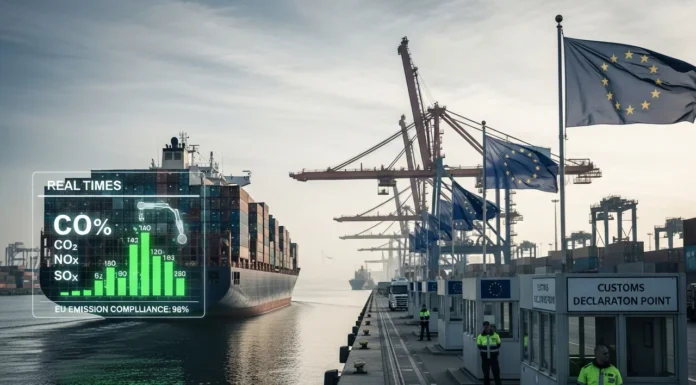
The EU’s Carbon Border Adjustment Mechanism (CBAM) became fully operational on January 1, marking a shift in how carbon costs are applied to global trade. After a two-year transitional phase focused on emissions reporting, CBAM has begun enforcing financial obligations on imports of carbon-intensive goods entering the EU.
At its core, CBAM is designed to prevent “carbon leakage”, which is essentially the relocation of emissions-heavy production outside the EU to avoid climate regulation, while also encouraging cleaner industrial production globally. But it is also emerging as one of the most consequential trade and climate policies affecting exporters in developing economies.
Which goods are affected?
CBAM applies to six major product categories, including cement, iron and steel, aluminium, fertilisers, hydrogen and electricity. These sectors were selected because of their high emissions intensity and exposure to international trade.
CBAM does not apply to finished goods (cars, appliances, machinery, etc), downstream manufactured products using steel or aluminium, oil, gas, coal, or petrochemicals.
For importers, CBAM compliance becomes mandatory when imports exceed 50 tonnes per calendar year, with no minimum threshold for electricity and hydrogen. Without a valid CBAM authorisation, goods will not be released for free circulation in the EU, effectively blocking market access.
During the transitional phase (2023-2025), companies were required only to report embedded emissions. From this year onwards, importers must purchase CBAM certificates reflecting the carbon price that would have been paid had the goods been produced under the EU Emissions Trading System.
National Competent Authorities across EU member states will oversee enforcement, verify CBAM account numbers through customs procedures, and apply penalties for non-compliance. For companies with fragmented supply chains or weak emissions data, this represents a material operational and financial risk.
The European Commission introduced a simplification package aimed at reducing reporting friction, particularly for smaller importers. Nevertheless, the core compliance requirements remain substantial: registration through national authorities, use of the CBAM registry, quarterly reporting, and verification of emissions data from non-EU producers.
For exporters in Africa, CBAM is not merely a compliance issue for European customers but also a competitiveness test. Producers with carbon-intensive processes, limited emissions monitoring, or coal-heavy electricity grids risk seeing their products become more expensive in EU markets.
Conversely, exporters that can demonstrate lower embedded emissions via renewable energy use, efficiency upgrades, or credible carbon data may gain a structural advantage.
In this sense, CBAM acts as a de facto extension of EU climate policy beyond its borders.
While critics warn of protectionism and unequal impacts on developing economies, the EU argues that CBAM simply levels the playing field by applying the same carbon price to domestic and imported goods.
What is clear is that from this month onwards, carbon will no longer be an abstract ESG metric in EU trade. It will be a priced input, verified at the border. For companies trading with Europe, the time for preparation is rapidly running out.


