


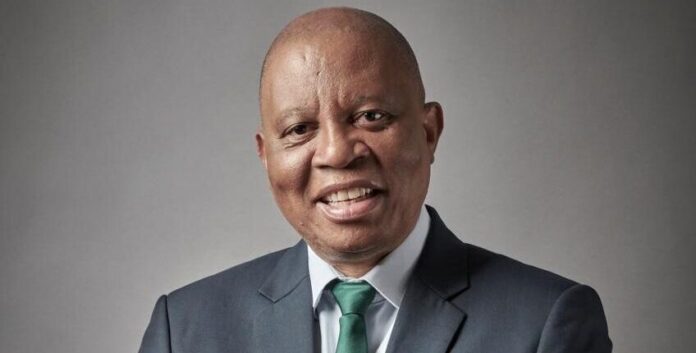
More than four decades after building one of South Africa’s most recognisable hair and cosmetics brands, entrepreneur Herman Mashaba is taking the story behind Black Like Me to a new generation through a podcast.
The entrepreneur launched the Black Like You podcast on September 21 on his personal YouTube channel, extending the story told in his autobiography of the same name into a digital format.
The podcast is also being broadcast across 13 community radio stations. For Mashaba, the move reflects a broader change in how South Africans consume stories and information, particularly as podcasts and digital audio become increasingly prominent.
“The Black Like You podcast comes at a time when it is important to extend the life of the book into an accessible and living platform. That is digital,” Mashaba said.
“The reading culture in South Africa has changed. Consumption of books is now through digital audiobooks and podcasts. It made sense to buck with the trend in terms of changing audience engagement patterns.”
A story that began long before digital media
But behind the podcast is a story that began long before digital media, social platforms, or even South Africa’s democracy.
In 1984, Mashaba approached chemist Johan Kriel with the idea of building a business together. The venture became Black Like Me, a brand that would eventually become synonymous with Black hair care and beauty.
He did not begin with certainty that the business would succeed. Instead, he began with a willingness to take a risk in an economy where apartheid had placed significant restrictions on the movement and economic opportunities of Black South Africans.
“I did not begin with the certainty that it would succeed. I knew that there was a high probability of failure,” Mashaba said.
“But I began with determination and a willingness to take the risk. The obstacles were enormous, but I believed that the possibility of failure was no reason not to try.”
His starting capital came through a R30,000 loan from Walter Dube and Mr Moja at an interest rate of 31%, which Mashaba repaid within seven months.
Lack of financial institutions’ support
Looking back, he remains grateful for the opportunity, particularly because he says conventional financial institutions were unlikely to provide similar support to a Black entrepreneur at the time.
“I am up to date and very grateful for the loan that Walter Dube and Mr Moja gave us, and the opportunity no bank in this country would entertain even today by a black entrepreneur,” he said.
READ: Gatekeepers, investors accused of stifling black business growth
Before Black Like Me became established, Mashaba had already developed his entrepreneurial instincts through a series of hustles, including selling crockery, linen and insurance from the boot of his car.
Those experiences were not simply about making sales. They also required him to navigate the restrictions imposed by apartheid’s pass laws.
“My ability to navigate the pass laws, which restricted my movement. I was expected to work for a white employer and sign this evil document monthly, giving me permission to move around,” he said.
“I defied such restrictions and had to learn to duck and dive from apartheid police.”
Mashaba recalls operating during the State of Emergency, when movement into predominantly Black townships was heavily restricted and security forces were a constant presence.
“Dealing with the State of Emergency. All entrances in mainly black townships were always blocked by a very army that needed to know everything about your life,” he said.
Yet, despite those obstacles, Mashaba says he believed in the potential of his business from the outset.
“I believed in the success of this project from the day I conceived the idea,” he said.
Wider conversation about Black identity
The significance of Black Like Me, however, extended beyond its commercial success.
For Mashaba, the brand became part of a wider conversation about Black identity and pride at a time when Black people were routinely subjected to racial discrimination and degrading stereotypes.
“Black Like Me represented a culture of upwardly mobile Africans who were proud of their appearance and were invested in positive upkeep of black beauty,” he said.
“During a time where black people were shamed and denigrated for their features, Black Like Me became a reliable brand that would instil black pride without apology.”
That idea of self-belief remains central to the lessons Mashaba says he wants to pass on to young entrepreneurs through the podcast.
His own childhood was marked by hardship. He lost his father when he was two years old and was raised by his mother, who worked as a domestic worker.
He says those circumstances could easily have become a limitation had he accepted the narrative imposed on Black South Africans under apartheid.
“I was born in a village, from circumstances of abject poverty and the loss of my father before I could speak,” he said.
“If I believed what the apartheid government propaganda that black people are second-rate to white people by virtue of the colour of my skin, I would be a nobody.”
‘You have to believe in charting your own path’
Instead, he says young entrepreneurs must develop a strong belief in their ability to create their own paths.
“You have to believe in charting your own path. You have to persevere through the hardships,” he said.
Mashaba’s business career subsequently expanded beyond cosmetics into sectors including construction, real estate, retail, energy, and financial services.
When asked about his biggest business mistake, he does not identify one he regrets.
“With absolute humility, I don’t have any mistake I have made that would make me regret. The reason being that I always act in good faith,” he said.
For Mashaba, however, success is no longer measured only by the size of a business or its profits.
He says his greatest satisfaction comes from creating opportunities for other people and building something capable of lasting beyond his own lifetime.
“It means leaving behind a legacy that will outlive an individual,” he said.
He points to the employment opportunities created through his businesses and the hundreds of families he says were able to experience the dignity of providing for themselves.
“There is no greater pride that I have in my business success than knowing that I surrounded myself with people who believed in my vision and saw it all come to life, that it is indeed possible to start from nothing and become someone,” he said.
Also Read: Herman Mashaba hints at return as Joburg mayor after DJ Warras’ killing
He also credits his wife, Connie, for playing an important role in his journey.
“What many business people don’t mention is the support you need to thrive in a stressful environment. My wife, Connie, has been an excellent leader at home and in the business. I owe much of my success to her wisdom, patience, and business acumen,” Mashaba said.
He also credits his grandfather with instilling a sense of self-worth in him from an early age.
That sense of self-belief, from a young man navigating apartheid restrictions to an entrepreneur building a household name, now sits at the centre of Black Like You.
The podcast gives Mashaba an opportunity to revisit those experiences while speaking directly to an audience that consumes stories differently from the generation that first encountered Black Like Me.
More than 40 years after the brand was founded, his story has moved from the shelves of South African businesses and pages of an autobiography into a digital space where he can continue sharing the lessons behind the journey.
- Herman Mashaba launched the Black Like You podcast on September 21 on his YouTube channel and across 13 community radio stations to extend the story of his autobiography.
- Mashaba founded the Black Like Me hair and cosmetics brand in 1984, starting with a R30,000 loan at 31% interest, which he repaid within seven months.
- The brand symbolised Black pride and upward mobility during apartheid, challenging racial discrimination and stereotypes about Black identity.
- Mashaba's entrepreneurial journey included overcoming apartheid restrictions, such as pass laws and the State of Emergency, which limited Black South Africans' economic opportunities.
- Mashaba credits his success to self-belief, perseverance, the support of his wife Connie, and aims to leave a lasting legacy beyond business profits.
More than four decades after building one of South Africa’s most recognisable hair and cosmetics brands, entrepreneur Herman Mashaba is taking the story behind Black Like Me to a new generation through a podcast.
The entrepreneur launched the Black Like You podcast on September 21 on his personal YouTube channel, extending the story told in his autobiography of the same name into a digital format.
The podcast is also being broadcast across 13 community radio stations. For Mashaba, the move reflects a broader change in how South Africans consume stories and information, particularly as podcasts and digital audio become increasingly prominent.
“The Black Like You podcast comes at a time when it is important to extend the life of the book into an accessible and living platform. That is digital,” Mashaba said.
“The reading culture in South Africa has changed. Consumption of books is now through digital audiobooks and podcasts. It made sense to buck with the trend in terms of changing audience engagement patterns.”
But behind the podcast is a story that began long before digital media, social platforms, or even South Africa’s democracy.
In 1984, Mashaba approached chemist Johan Kriel with the idea of building a business together. The venture became Black Like Me, a brand that would eventually become synonymous with Black hair care and beauty.
He did not begin with certainty that the business would succeed. Instead, he began with a willingness to take a risk in an economy where apartheid had placed significant restrictions on the movement and economic opportunities of Black South Africans.
“I did not begin with the certainty that it would succeed. I knew that there was a high probability of failure,” Mashaba said.
“But I began with determination and a willingness to take the risk. The obstacles were enormous, but I believed that the possibility of failure was no reason not to try.”
His starting capital came through a R30,000 loan from Walter Dube and Mr Moja at an interest rate of 31%, which Mashaba repaid within seven months.
Looking back, he remains grateful for the opportunity, particularly because he says conventional financial institutions were unlikely to provide similar support to a Black entrepreneur at the time.
“I am up to date and very grateful for the loan that Walter Dube and Mr Moja gave us, and the opportunity no bank in this country would entertain even today by a black entrepreneur,” he said.
READ: Gatekeepers, investors accused of stifling black business growth
Before Black Like Me became established, Mashaba had already developed his entrepreneurial instincts through a series of hustles, including selling crockery, linen and insurance from the boot of his car.
Those experiences were not simply about making sales. They also required him to navigate the restrictions imposed by apartheid’s pass laws.
“My ability to navigate the pass laws, which restricted my movement. I was expected to work for a white employer and sign this evil document monthly, giving me permission to move around,” he said.
“I defied such restrictions and had to learn to duck and dive from apartheid police.”
Mashaba recalls operating during the State of Emergency, when movement into predominantly Black townships was heavily restricted and security forces were a constant presence.
“Dealing with the State of Emergency. All entrances in mainly black townships were always blocked by a very army that needed to know everything about your life,” he said.
Yet, despite those obstacles, Mashaba says he believed in the potential of his business from the outset.
“I believed in the success of this project from the day I conceived the idea,” he said.
The significance of Black Like Me, however, extended beyond its commercial success.
For Mashaba, the brand became part of a wider conversation about Black identity and pride at a time when Black people were routinely subjected to racial discrimination and degrading stereotypes.
“Black Like Me represented a culture of upwardly mobile Africans who were proud of their appearance and were invested in positive upkeep of black beauty,” he said.
“During a time where black people were shamed and denigrated for their features, Black Like Me became a reliable brand that would instil black pride without apology.”
That idea of self-belief remains central to the lessons Mashaba says he wants to pass on to young entrepreneurs through the podcast.
His own childhood was marked by hardship. He lost his father when he was two years old and was raised by his mother, who worked as a domestic worker.
He says those circumstances could easily have become a limitation had he accepted the narrative imposed on Black South Africans under apartheid.
“I was born in a village, from circumstances of abject poverty and the loss of my father before I could speak,” he said.
“If I believed what the apartheid government propaganda that black people are second-rate to white people by virtue of the colour of my skin, I would be a nobody.”
Instead, he says young entrepreneurs must develop a strong belief in their ability to create their own paths.
“You have to believe in charting your own path. You have to persevere through the hardships,” he said.
Mashaba’s business career subsequently expanded beyond cosmetics into sectors including construction, real estate, retail, energy, and financial services.
When asked about his biggest business mistake, he does not identify one he regrets.
“With absolute humility, I don’t have any mistake I have made that would make me regret. The reason being that I always act in good faith,” he said.
For Mashaba, however, success is no longer measured only by the size of a business or its profits.
He says his greatest satisfaction comes from creating opportunities for other people and building something capable of lasting beyond his own lifetime.
“It means leaving behind a legacy that will outlive an individual,” he said.
He points to the employment opportunities created through his businesses and the hundreds of families he says were able to experience the dignity of providing for themselves.
“There is no greater pride that I have in my business success than knowing that I surrounded myself with people who believed in my vision and saw it all come to life, that it is indeed possible to start from nothing and become someone,” he said.
Also Read: Herman Mashaba hints at return as Joburg mayor after DJ Warras' killing
He also credits his wife, Connie, for playing an important role in his journey.
“What many business people don’t mention is the support you need to thrive in a stressful environment. My wife, Connie, has been an excellent leader at home and in the business. I owe much of my success to her wisdom, patience, and business acumen,” Mashaba said.
He also credits his grandfather with instilling a sense of self-worth in him from an early age.
That sense of self-belief, from a young man navigating apartheid restrictions to an entrepreneur building a household name, now sits at the centre of Black Like You.
The podcast gives Mashaba an opportunity to revisit those experiences while speaking directly to an audience that consumes stories differently from the generation that first encountered Black Like Me.
More than 40 years after the brand was founded, his story has moved from the shelves of South African businesses and pages of an autobiography into a digital space where he can continue sharing the lessons behind the journey.


