


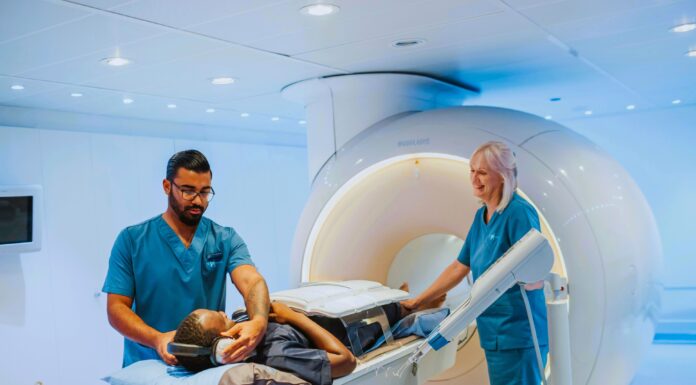
Whether it’s a persistent cough, chronic back pain, or routine breast screening, being referred for X-rays, CT scans, MRIs, or ultrasounds can feel overwhelming. Many patients come to a radiology practice unsure of what to expect.
Dr Jean de Villiers, radiologist and director of SCP Radiology, breaks down the journey from referral to report, answering some of the most common questions patients ask about medical imaging.
Before diving into the FAQs, it helps to understand the process: a doctor or clinician refers you for imaging.
A radiographer performs the scan, capturing the images. A radiologist, a medical doctor who has specialised in radiology, then analyses those images and compiles a detailed medical report.
Because the report is highly technical, it is sent to your referring doctor, who explains the findings and discusses the next steps with you.
Here’s what patients most want to know:
- Why do I need a referral for imaging?
According to Dr de Villiers, the referral system exists primarily for patient safety. “It ensures you are not exposed to more imaging than is necessary,” he explains.
Your referring doctor is trained to determine when imaging is essential, what type is appropriate, and how it fits into your broader medical care.
The results are then sent back to that doctor, who interprets them within the context of your symptoms and medical history.
The main exceptions to the referral rule are screening mammograms and bone density scans, which patients can often book directly.
- Will the radiographer give me my results after the scan?
No. While radiographers are highly trained healthcare professionals responsible for operating imaging equipment and capturing high-quality images, they are not qualified to interpret the results.
Their role is to ensure the images are accurate and clear enough for the radiologist to assess.
- Who interprets the images and writes the report?
That responsibility lies with the radiologist, a medical doctor who specialises in diagnosing and, in some cases, guiding treatment through imaging, such as X-rays, CT scans, MRIs, and ultrasounds.
Interpreting images is a detailed process. Radiologists often compare current scans with previous ones and carefully review the patient’s clinical history.
“Reports cannot be generated immediately,” says Dr de Villiers. “It takes time to study the images properly.”
For this reason, patients should not expect an instant diagnosis on the day of the scan.
- So I won’t receive the results directly from the radiologist?
In most cases, no. Once the radiologist completes the report, it is sent to your referring doctor.
Established medical protocols ensure that your doctor, who understands your overall health picture, explains the findings and outlines the next steps, whether that’s treatment, further tests or reassurance.
In mammogram screenings, a radiographer may sometimes indicate whether the scan appears clear or recommend an ultrasound for further assessment.
However, a radiologist still reviews the images, prepares the official report, and may recommend additional screening if necessary.
- How long does it take to get results?
Turnaround times vary depending on the type of scan and how urgent the case is. Generally, results are available within 24 hours, with urgent cases prioritised.
Your doctor will contact you once they’ve received and reviewed the report. This may involve scheduling a follow-up appointment or, in some cases, discussing the results over the phone.
- What does a radiologist’s report actually reveal?
Radiology reports are technical documents. They include details about the type of imaging performed, how it was conducted, relevant medical histories, and the information provided by the referring doctor.
The report describes what appears normal and highlights any abnormalities or suspicious findings.
It’s important to understand that while radiologists can identify abnormalities, including features that may suggest the presence of tumours, imaging alone cannot definitively diagnose cancer. Only a biopsy or tissue sampling can confirm that.
Patients may come across specific wording in reports, such as:
- “Most likely”—very high probability
- “Likely”—high probability
- “May”—intermediate probability
- “No visible sign of”—the condition cannot be seen on the image.
Radiologists may also recommend further imaging or additional investigations if needed.
- Am I allowed to view my results or get a copy of my X-rays?
Many radiology practices now offer patient portals where you can access your images and reports online.
Typically, results are released once your referring doctor has reviewed them, which may take a few days.
Alternatively, you can request copies of your images and reports directly from the radiology practice or your doctor.
Dr de Villiers encourages patients to speak up if they are unsure about any part of the process.
“If there are additional questions you want to ask, don’t hesitate to ask at the radiology practice where you are having the imaging done,” he says.


