


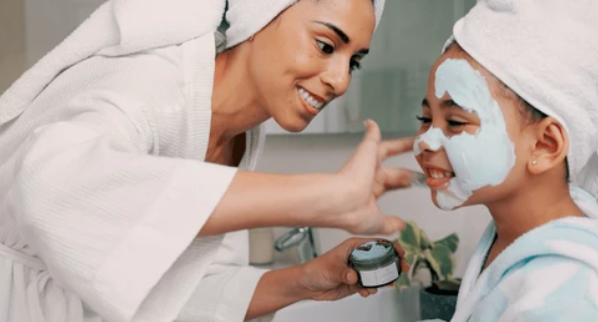
Skincare was once a rite of passage into adulthood, a concern linked to ageing, stress and environmental damage. Today, it has crept into childhood, and not quietly.
Across South Africa, children and teens are adopting multi-step skincare routines inspired by social media, beauty influencers and a global culture obsessed with flawlessness.
What is often framed as harmless self-care is increasingly raising red flags among dermatologists, psychologists and parents. As the beauty industry turns its gaze towards Generation Alpha, children born from around 2010 onwards, experts are asking whether the industry’s youngest consumers are being protected or exploited.
In a country already shaped by inequality, uneven access to healthcare and limited preventative education, this trend deserves urgent scrutiny.
Social media playing big role
Globally and locally, children are engaging with skincare at unprecedented ages. Some are barely in primary school yet already following elaborate routines copied from TikTok and Instagram. Analysts suggest that Generation Alpha is entering the skincare market up to five years earlier than Gen Zs did.
The concern is not basic hygiene or moisturising. It is the growing use of products designed for adult skin: exfoliating acids, anti-ageing serums and potent active ingredients that young skin simply does not need.
Dr Bradley Wagemaker, Medical Director and Product Formulator at Lamelle Research Laboratories, has warned that children’s skin is not miniature adult skin.
“It is still developing. And exposing it to potent active ingredients such as exfoliating acids or anti-ageing compounds can disrupt the skin barrier and lead to irritation, allergies and long-term sensitivity.”
UV protection still neglected
In South Africa, the risks are compounded by high UV exposure. Dermatologists agree that the only skincare children truly need is gentle cleansing and effective sun protection. Yet sunscreen, the most critical product, is often absent from these youthful routines.
Research shows that children receive up to 80% of their lifetime sun exposure before the age of 18. A single blistering sunburn in childhood can more than double the risk of melanoma later in life.
Despite this, sun protection remains poorly understood and underused. One multiracial study found that only 17% of parents practised ideal sun protection for their children.
“For most children, skincare should be simple,” says Dr Wagemaker.
“Gentle cleansing and effective sun protection are the only essentials. Anything beyond that is usually unnecessary and, in some cases, harmful.”
Ironically, while children are requesting multi-step routines, serums and masks. The one product that truly protects their future skin health is often overlooked.
Even children’s social spaces are changing. Parents report birthday parties themed around skincare, where children compare products and ingredients. A far cry from the sunscreen, hats and shade that actually matter.
Poor understanding of skin physiology
Dermatologists speaking on international skincare and wellness podcasts describe a worrying pattern. Children mimicking adult routines without understanding skin physiology.
Ingredients such as retinoids and alpha-hydroxy acids can compromise a child’s still-developing skin barrier. It can trigger irritation, allergic contact dermatitis and lifelong sensitivity.
“What concerns dermatologists most is that social media trends are encouraging children to follow complex routines without any understanding of skin biology or risk,” says Dr Wagemaker.
“Skincare is being treated like a fashion accessory rather than a health decision.”
Beyond physical harm, psychologists warn of a deeper impact. Early exposure to unrealistic beauty standards can fuel anxiety, comparison and body-image issues long before adolescence.
Clinicians are already seeing the consequences. While comprehensive data on Generation Alpha is still emerging, dermatologists and allergists report rising cases of skin reactions linked to inappropriate product use in children.
Contact dermatitis, persistent rashes, breakouts and even chemical burns have been documented in young users experimenting with exfoliating acids and active ingredients without medical guidance. Allergists caution that early exposure to fragrances and harsh chemicals can predispose children to lifelong sensitivities.
Reports of scarring after use of adult serums
There are also anecdotal reports of children suffering blistering and scarring after “playing beauty” with adult serums and peels at home or in stores. While not yet fully quantified, these cases highlight the real risks of damaging a child’s skin barrier at an early age.
The global beauty industry is worth more than $164-billion. Generation Alpha represents a fast-growing and highly lucrative market.
In South Africa, brands are increasingly targeting younger consumers through colourful packaging. Also through influencer campaigns and “kid-friendly” versions of adult products.
But critics argue that the pursuit of profit has blurred ethical lines.
“Brands have a responsibility to market responsibly. Chasing the Gen Alpha consumer without proper education and safeguards risks prioritising profit over children’s long-term skin health.”


