
Global air passenger demand started 2026 on a positive note, rising by 3.8% year-on-year in January, according to the International Air Transport Association (IATA).
The industry body reported that total demand, measured in revenue passenger kilometres, increased 3.8% compared to January 2025, while global capacity, measured in available seat kilometres, rose 3.5%. Airlines recorded a load factor of 82%—a record high for the month of January.
International travel was the main driver of growth, climbing 5.9% year on year, with capacity up 5.8% and load factors reaching 82.5%.
Domestic travel, however, remained largely flat, edging up just 0.1%, while capacity declined by 0.4%. The domestic load factor stood at 81.2%.
For African carriers—including airlines operating to and from South Africa—the rebound in international demand is particularly significant.
The continent has been steadily rebuilding long-haul connectivity to Europe, the Middle East and Asia, supporting tourism, trade, and business travel.
Stronger global seat capacity growth, projected to rise 5.2% by March 2026, could further benefit African hubs, such as Johannesburg, Cape Town, and Addis Ababa.
Geopolitical tensions
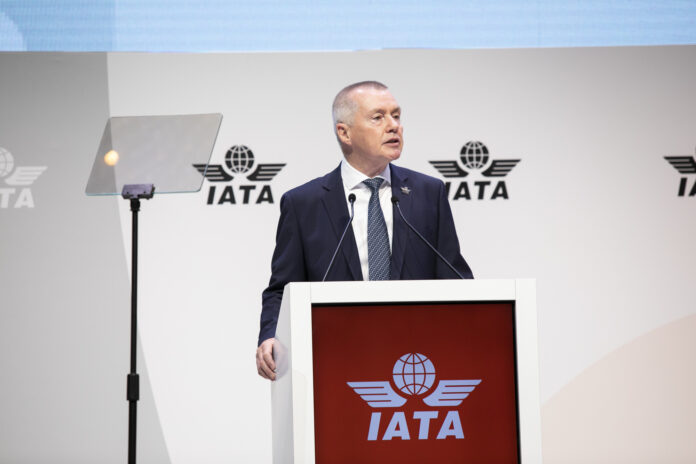
IATA director-general Willie Walsh said January’s figures were partly influenced by the Lunar New Year shifting from January in 2025 to February in 2026—a calendar change that makes this year’s growth appear slightly softer.
“The fundamentals are in place for demand to continue strong growth in 2026,” Walsh said.
However, he cautioned that recent geopolitical tensions could introduce uncertainty around traffic flows and fuel prices.
Encouragingly for travellers, average airfares are expected to decline in real terms during 2026, continuing the long-term trend of more affordable air travel.
This comes despite rising infrastructure charges, regulatory burdens and the mounting costs associated with aviation’s energy transition.
Walsh also warned that 2025 saw the slowest rate of new airline start-ups since 1999, calling on governments to address regulatory and cost pressures to protect competition and connectivity.
For South African travelers and airlines, the early 2026 growth signals cautious optimism for a year that could see stronger global passenger flows—provided geopolitical tensions stabilise.


