


The Department of Correctional Services has raised serious concern about the growing number of boys being left behind by the education system, warning that many later resurface inside correctional services facilities rather than classrooms.
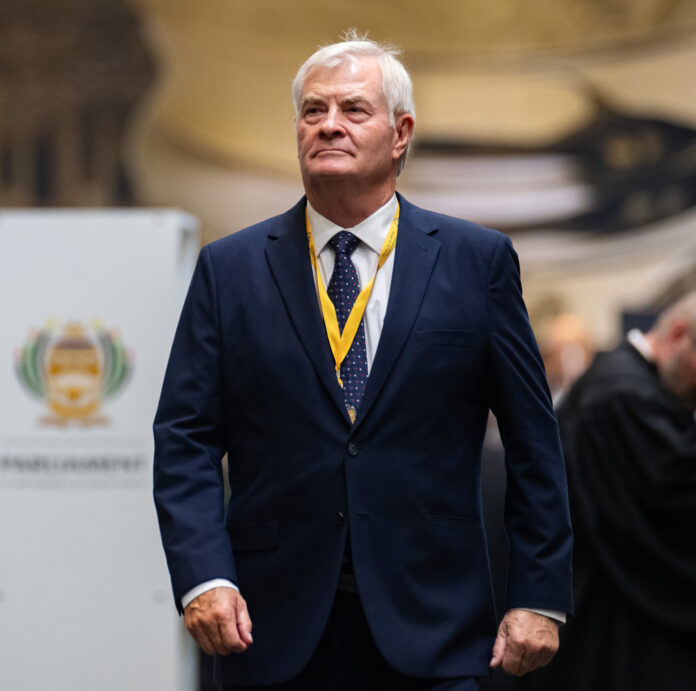
Speaking at the 2025 National Senior Certificate (NSC) results announcement at Goodwood Correctional Facility on Monday, Correctional Services Minister Pieter Groenewald said the boy child was increasingly vulnerable in South Africa’s schooling landscape.
“We must confront the growing challenge of the boy child being left behind in the education system,” Groenewald told the audience.
“Boys are increasingly underrepresented in matric cohorts and are less likely than girls to return through second-chance pathways.”
He said the imbalance was stark, noting that in the 2025 NSC examinations, girls outnumbered boys by 56% to 44%.
“Our inmate population is largely male, and many require educational redirection and support,” he said, adding that “corrections is a societal responsibility, just as education is a societal responsibility.”
Despite the concern, Groenewald said the latest matric results within correctional centres showed the power of education to redirect lives.
“Learning does not stop at prison walls, and hope, when nurtured through education, can flourish even in the most constrained environments,” he said.
Caution against dropping gateway subjects
The minister stressed that inmates writing matric were fully part of the national education system.
“They are not outside the system; they are within it. They matter. Their success matters. Their future matters.”
Correctional Services schools recorded a 94.4% pass rate in 2025, beating the national average of 88%.
Fifteen schools achieved a 100% pass rate, while inmates collectively earned 132 distinctions. Two schools, Usethubeni in KwaZulu-Natal and Baviaanspoort in Gauteng, have maintained a perfect record for 10 consecutive years.
Groenewald also cautioned against inmates dropping gateway subjects.
“Mathematics remains a critical gateway subject. This has to be corrected,” he said, referring to a trend of learners opting for mathematical literacy.
He emphasised that the credibility of prison-based education was non-negotiable.
“Our results are not a favour, but they are earned, and they are credible. Your past does not define your future.
“Education remains one of the most powerful tools for rehabilitation, reintegration, and nation-building.”


