


By 2050, nearly seven out of every 10 people on earth will live in cities.
That statistic is usually presented as an economic opportunity. It should also be read as a warning.
Cities will either become engines of health, safety and opportunity, or they will concentrate risk, trauma and instability. There is very little middle ground.
On World Cities Day last October, the World Health Organisation released a guide with an unusually direct message to city leaders: urban health is not a “health sector issue”.
It is the foundation on which public safety, social stability and economic productivity rest.
Get urban health right, and cities become safer.
Get it wrong, and no amount of policing, private security or emergency response will compensate.
This should matter deeply for South Africans, as local government is often where these failures become visible – and where upcoming municipal elections will shape decisions that affect daily life far more than most people realise and for much longer than we think.
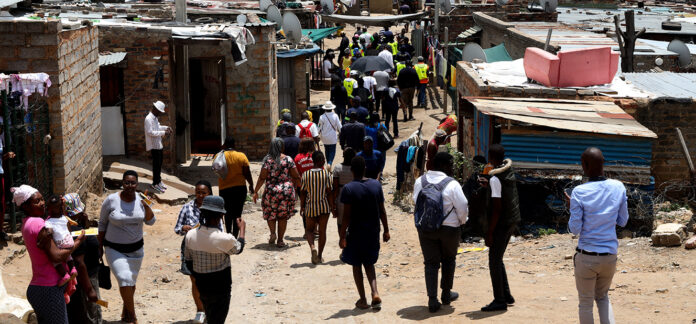
More than a billion people globally already live in informal settlements. In South Africa, this reality is familiar to an estimated 5-million people.
In these environments, unsafe housing, poor sanitation, unreliable transport and exposure to crime and violence are not separate problems – they reinforce one another.
Where environments are unsafe, health deteriorates. Where health deteriorates, trauma accumulates. And where trauma becomes the norm,
social instability follows.
This is not theory; it is our reality.
Children growing up amid violence, overcrowding and insecurity experience some of the highest levels of psychological distress anywhere in the world.
Post-traumatic stress is not an exception; it is an expected outcome. A 2025 study by the Foundation for Professional Development that screened adolescents and young adults for mental health conditions found that 25% were suffering from post-traumatic stress disorder, and more than 60% presented with anxiety and depression.
These are not just health consequences – they are long-term safety risks for cities that fail to intervene early.
Health and safety, in other words, are two sides of the same coin.
Clean air not only reduces respiratory disease; often strategies to reduce pollution are anchored in urban transformation geared to promoting walking and cycling, and reducing traffic injuries and collisions.
Green spaces lower rates of chronic illness while also deterring crime and building social cohesion. Safe transport systems prevent injury, connect people to work and school, and reduce the everyday stress that fuels violence.
If the goal is safer cities, the fastest route is not reactive enforcement; it is healthier urban design.
The mistake many municipalities make is to treat this as a long-term aspiration – something to be tackled once budgets allow or major infrastructure projects are approved.
The reality is that some of the most effective actions are neither expensive nor slow. They require coordination, not grand new plans. Cities can act now.
First, by making community voices central rather than symbolic. When residents help design public spaces, the results are safer and more durable.
Cities in Africa, Asia and Latin America have shown that community-led mapping and planning can reduce flood risk, violence and injury within months – not years – using existing engagement budgets.
Second, by reclaiming public spaces for safety. Better lighting, clear pedestrian routes, and managed parks sound mundane, but evidence shows they reduce assaults and injuries rapidly. Neglected spaces invite harm; cared-for spaces discourage it.
Third, by integrating data that already exists. Most municipalities collect health, crime and transport data in silos. Creating a shared public-facing “urban safety dashboard”, hotspots where interventions yield the greatest impact can rapidly be identified. This is not about new technology; it is about using information that municipal ratepayer already pay for.
Fourth, by prioritising safer streets. Traffic injuries remain one of the leading causes of death and disability, particularly among young people.
OECD research shows that once vehicle speeds reach around 60km/h (our urban speed limit), the probability that a pedestrian will die if struck by a car approaches 90% plus.
Low-cost cycling lanes, safer school zones and traffic-calming measures produce fast gains in both safety and health.
Road safety is one of the clearest indicators of whether a city is managed properly. Working streetlights and the absence of potholes are effective and visible indicators of performance.
Finally, municipalities should strengthen cross-sector leadership. Urban health does not belong to any single department.
Cities that move fastest are those that appoint someone as an urban health and safety coordinator with the authority to convene health, transport, housing, policing and environmental services around a shared mandate and who can be held accountable for rapid measurable outcomes.
Titles matter less than the power to break silos and act.
As municipal elections approach, voters will hear many promises about jobs, infrastructure and crime. These matter. But they will not succeed if urban health is treated as an afterthought.
A city that is unhealthy will not be safe. A city that is unsafe will not be prosperous.
The question for local political leaders is not whether they support health or safety, but whether they understand that the two are intertwined.
Urban health matters, and in the years ahead, the cities that recognise this fastest will be the ones that remain liveable, stable and secure for everyone. Even the rich cannot insulate themselves against floods, runaway fires, air pollution, social instability and unsafe streets.
The World Health Organisation guide is just what it says it is: A series of recommendations for developing comprehensive urban health strategies adaptable to local contexts. It is an evidence-based “how-to” manual that demonstrates what must be done to secure the long-term future of our cities.


