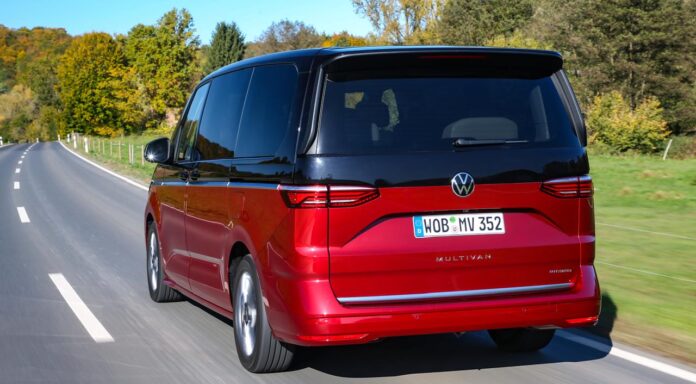
Volkswagen Group Africa (VWGA) has signalled its intent to strengthen its position across both the people-carrier and compact SUV segments with the unveiling of the all-new Caravelle plug-in hybrid and the second-generation T-Roc, two strategically important products showcased during the 2026 Volkswagen Indaba in Gqeberha.
This writer witnessed the unveiling of both models during the annual Indaba, where VWGA outlined its medium-term product strategy aimed at balancing electrification, versatility and strong value propositions tailored for the local market.
Evolution of one of the brand’s popular nameplates
The introduction of the new Caravelle marks a significant evolution of one of Volkswagen’s most recognisable and enduring nameplates.
More than seven decades after the first Volkswagen bus rolled out of the company’s Kariega plant, the latest Caravelle enters South Africa as a technologically advanced plug-in hybrid equipped with electric all-wheel drive.
The new Caravelle eHybrid 4Motion features a 19.7 kWh high-voltage battery, enabling an electric-only driving range of up to 95 km, depending on conditions.
This positions the Caravelle as a compelling option for families, shuttle operators and premium mobility providers seeking lower emissions without sacrificing practicality or performance. A notable first for the segment is standard electric stationary air conditioning, allowing emission-free cooling or heating while parked, charging or camping.
With its dual electric motors — one on each axle — combined with a 1.5litre turbocharged petrol engine, the Caravelle offers intelligent torque distribution and improved traction across varying conditions. Volkswagen says the model can charge at up to 11 kW on AC power and 50 kW on DC fast chargers, reinforcing its real-world usability.
Facing stiff competition
In the South African market, the Caravelle will compete directly with rivals such as the Toyota HiAce, Mercedes-Benz V-Class, Ford Tourneo and Hyundai Staria, although Volkswagen’s plug-in hybrid offering gives it a technological edge in a segment still dominated by conventional combustion engines.
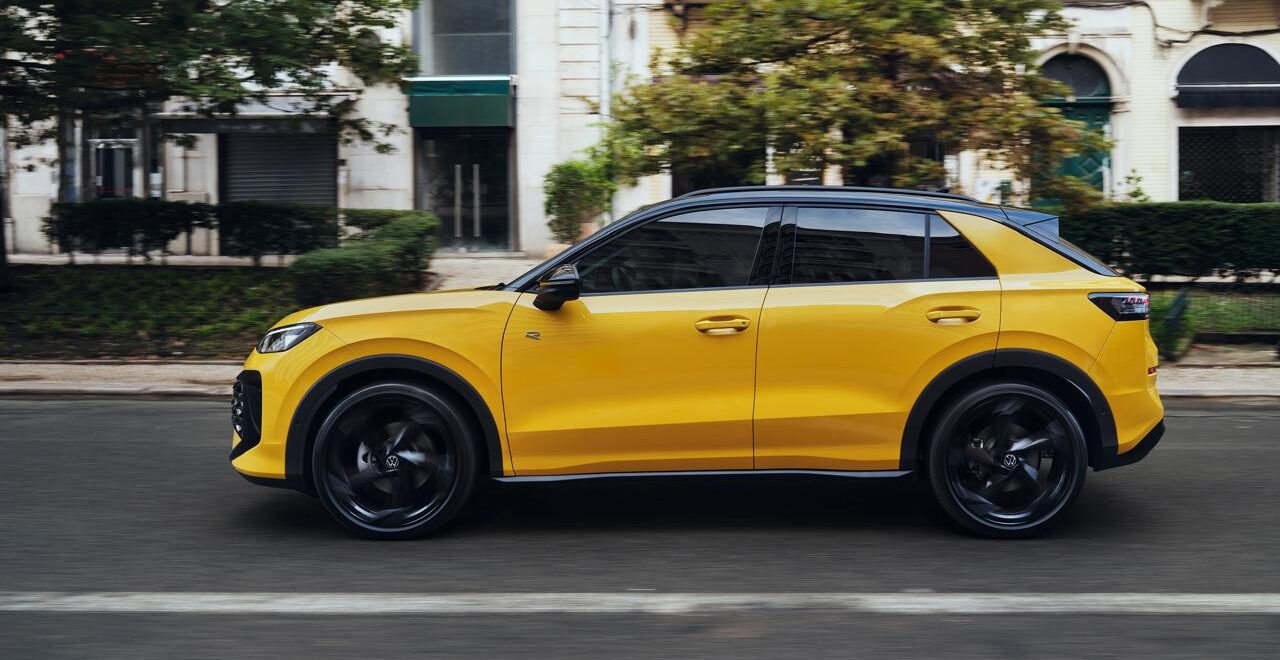
Complementing the Caravelle’s premium people-carrier appeal is the all-new Volkswagen T-Roc. It is set to launch locally in the second half of 2026.
Now in its second generation, the compact SUV has grown by 122mm in length. This gives it a more substantial road presence and increased interior space, while retaining its position between the Taigo and Tiguan in Volkswagen’s SUV line-up.
Built on the MQB evo platform, the new T-Roc benefits from technology previously reserved for larger Volkswagen SUVs, including IQ.LIGHT LED matrix headlights, illuminated VW logos, a windscreen head-up display and a redesigned Digital Cockpit Pro.
Caring for the planet
Volkswagen has also made notable strides in sustainability, This with around 20% of plastics used in the vehicle sourced from recycled materials.
Inside, the T-Roc aims to bridge the gap between mainstream and premium compact SUVs, offering higher-grade materials, optional 14-way electrically adjustable ergoActive seats with massage functionality, and a larger luggage compartment of 475 litres.
The compact SUV segment is one of the most competitive in South Africa. And the T-Roc will face stiff competition from established rivals such as the BMW X1, Audi Q3, Mercedes-Benz GLA, as well as high-volume players like the Hyundai Tucson and Toyota Corolla Cross.
VWGA intends to broaden its appeal across diverse customer needs, from electrified family and business mobility to lifestyle-oriented urban SUVs. As the brand navigates an increasingly competitive and electrification-focused market, these two models underline Volkswagen’s strategy of combining heritage, innovation and practical relevance for South African consumers.