


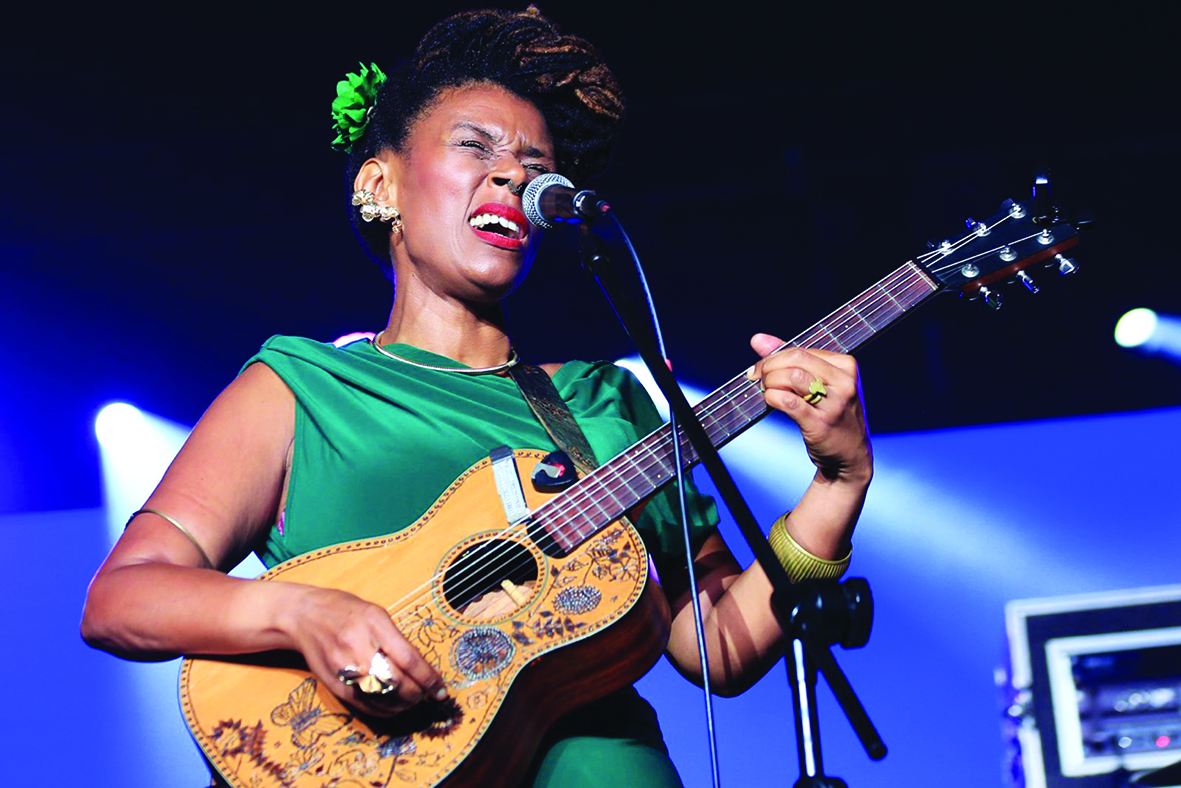
At the Standard Bank Joy of Jazz, the past did not feel distant. It lived in the music, in the voices of artists who have shaped South Africa’s jazz tradition and in younger musicians finding new ways to interpret a genre embedded in the country’s cultural history.
The annual festival opened its two-day programme at the Sandton Convention Centre on Friday night, bringing together established musicians, contemporary artists and international performers.
The programme showed how jazz can evolve without losing its connection to its roots.
Among the performances was legendary musician Madala Kunene, whose distinctive sound drew from traditions that helped shape South African jazz. His presence offered audiences a connection to an older generation of musicians and the musical traditions they preserved and developed.
The sense of musical memory continued with Judith Sephuma, whose set included A Cry, A Smile, A Dance and Mme Motswadi, songs familiar to generations of listeners.
Her performance brought nostalgia into an evening filled with varied interpretations of the genre and showed how certain songs become part of an audience’s collective memory.
The festival also used performance to remember artists whose influence continues beyond their lifetime. In the Busi Mhlongo Tribute, Buhlebendalo, Zawadi Yamungu and Xolisa Dlamini honoured the late musician’s contribution to music.
The tribute showed how legacies remain alive through reinterpretation, with another generation carrying familiar sounds into a new era.
The relationship between heritage and reinvention was especially evident in Echoes of Marabi, presented by Yonela Mnana and Benedikt Reising and featuring The Soultee Sisters.
Marabi is woven into the history of urban music and jazz. The performance brought its traditional sounds into conversation with contemporary jazz. It was a reminder that understanding where South African jazz is going requires an appreciation of where it came from.
Preserving jazz heritage, however, does not mean the music must remain unchanged. Young artist Internet Athi brought a new-age jazz sound, reflecting how a new generation is experimenting with the genre and challenging audiences to hear it differently. His performance contrasted with the established voices while remaining part of the same musical continuum.
International artists added another layer to the conversation. Ibrahim Maalouf & The Trumpets of Michel Ange Vol.2 opened the night with a dynamic performance, while American saxophonist Kamasi Washington brought an expansive contemporary interpretation of jazz.
Their presence demonstrated jazz’s international language: it can travel across borders while allowing musicians to bring their own histories and influences to the music.
On the Mbira Stage, British-American soul duo Floetry combined soul and poetry, further expanding the musical conversation across the festival.
For audiences moving between stages, the performances were a reminder that jazz is also an archive: its songs preserve memories, its musicians carry stories and its rhythms reflect the societies from which they emerged. Each generation that performs the music adds another chapter to that history.
That was the most striking element of the Joy of Jazz opening night. Heritage was not presented as fixed in the past; it was alive in Kunene’s performance, in Sephuma’s nostalgia, in the tribute to Mhlongo, in the marabi-inspired sounds of Echoes of Marabi and in the experimentation of younger artists.
The festival demonstrated that preserving jazz heritage is not just about remembering the musicians who came before. It is also about giving the music room to change. At Joy of Jazz, the old and the new showed that the future of jazz remains connected to the sounds, stories and musicians that built its foundation.
- The Standard Bank Joy of Jazz festival opened its two-day programme at the Sandton Convention Centre, featuring established musicians, contemporary artists, and international performers.
- Legendary musician Madala Kunene performed, connecting audiences to South African jazz traditions and an older generation of musicians.
- The festival included a Busi Mhlongo Tribute with Buhlebendalo, Zawadi Yamungu, and Xolisa Dlamini honoring the late musician’s influence.
- Performances such as Echoes of Marabi and Internet Athi’s new-age jazz showcased the blend of traditional and contemporary jazz interpretations.
- International artists like Ibrahim Maalouf & The Trumpets of Michel Ange Vol.2 and American saxophonist Kamasi Washington contributed to the festival’s global jazz dialogue.
At the Standard Bank Joy of Jazz, the past did not feel distant. It lived in the music, in the voices of artists who have shaped South Africa’s jazz tradition and in younger musicians finding new ways to interpret a genre embedded in the country’s cultural history.
The annual festival opened its two-day programme at the Sandton Convention Centre on Friday night, bringing together established musicians, contemporary artists and international performers.
The programme showed how jazz can evolve without losing its connection to its roots.
Among the performances was legendary musician Madala Kunene, whose distinctive sound drew from traditions that helped shape South African jazz. His presence offered audiences a connection to an older generation of musicians and the musical traditions they preserved and developed.
The sense of musical memory continued with Judith Sephuma, whose set included A Cry, A Smile, A Dance and Mme Motswadi, songs familiar to generations of ers.
Her performance brought nostalgia into an evening filled with varied interpretations of the genre and showed how certain songs become part of an audience’s collective memory.
The festival also used performance to remember artists whose influence continues beyond their lifetime. In the Busi Mhlongo Tribute, Buhlebendalo, Zawadi Yamungu and Xolisa Dlamini honoured the late musician’s contribution to music.
The tribute showed how legacies remain alive through reinterpretation, with another generation carrying familiar sounds into a new era.
The relationship between heritage and reinvention was especially evident in Echoes of Marabi, presented by Yonela Mnana and Benedikt Reising and featuring The Soultee Sisters.
Marabi is woven into the history of urban music and jazz. The performance brought its traditional sounds into conversation with contemporary jazz. It was a reminder that understanding where South African jazz is going requires an appreciation of where it came from.
Preserving jazz heritage, however, does not mean the music must remain unchanged. Young artist Internet Athi brought a new-age jazz sound, reflecting how a new generation is experimenting with the genre and challenging audiences to hear it differently. His performance contrasted with the established voices while remaining part of the same musical continuum.
International artists added another layer to the conversation. Ibrahim Maalouf & The Trumpets of Michel Ange Vol.2 opened the night with a dynamic performance, while American saxophonist Kamasi Washington brought an expansive contemporary interpretation of jazz.
Their presence demonstrated jazz’s international language: it can travel across borders while allowing musicians to bring their own histories and influences to the music.
On the Mbira Stage, British-American soul duo Floetry combined soul and poetry, further expanding the musical conversation across the festival.
For audiences moving between stages, the performances were a reminder that jazz is also an archive: its songs preserve memories, its musicians carry stories and its rhythms reflect the societies from which they emerged. Each generation that performs the music adds another chapter to that history.
That was the most striking element of the Joy of Jazz opening night. Heritage was not presented as fixed in the past; it was alive in Kunene’s performance, in Sephuma’s nostalgia, in the tribute to Mhlongo, in the marabi-inspired sounds of Echoes of Marabi and in the experimentation of younger artists.
The festival demonstrated that preserving jazz heritage is not just about remembering the musicians who came before. It is also about giving the music room to change. At Joy of Jazz, the old and the new showed that the future of jazz remains connected to the sounds, stories and musicians that built its foundation.


