


Corrupt prosecutors and lawyers are paid ridiculous retainer fees by dangerous criminals to secure bail for these lawbreakers, who afterwards return to communities and recommit crime.
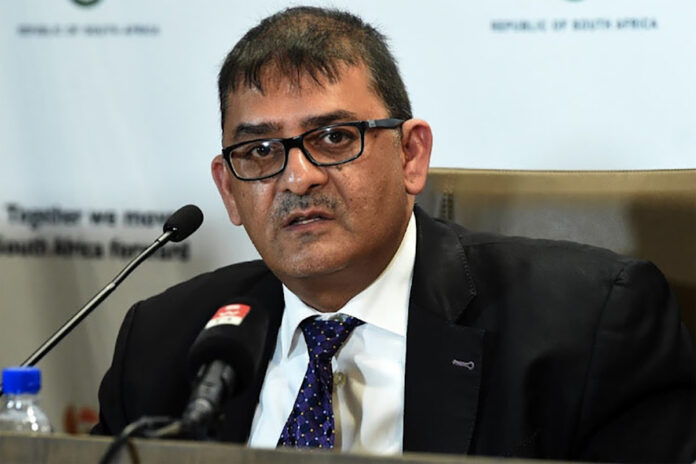
This is contained in a classified report penned by suspended Inspector-General of Intelligence (IGI) Imtiaz Fazel following oversight engagements with head honchos of the South African Police Service Crime Intelligence (SAPS-CI).
The report gives credence to KwaZulu-Natal police chief Lt-Gen Nhlanhla Mkhwanazi’s recent claims that the criminal justice system has been infiltrated by criminal syndicates and drug cartels.
Following Mkhwanazi’s claims in which he implicated suspended Minister of Police Senzo Mchunu, President Cyril Ramaphosa established a Madlanga Commission of Inquiry to investigate the top cop’s allegations.
In the report, which we have seen, Fazel expresses concern that dangerous criminals nabbed through intelligence-driven operations are easily back on the streets after being let free through bail in the courts.
He describes dangerous criminals as those involved in cash-in-transit (CIT) heists, kidnapping for ransom, and extortion-related crimes.
“It was pointed out during our oversight engagements with management of the division that some dangerous criminals apprehended through intelligence received from SAPS-CI are often released on bail only to return to society to commit more heinous crimes.
“This is due to pervasive corruption within the criminal justice system, especially the alleged involvement of corrupt prosecutors and attorneys who are paid retainer fees by criminal syndicates.”
“South Africa is besieged by high levels of crime, some committed by repeat criminal offenders who are released on bail for various criminal offences.
“The involvement of repeat criminal offenders in the commission of serious crimes such as CIT, extortion-related crimes, and kidnapping for ransom was highlighted as a serious impediment in tackling organised criminal networks and syndicates by SAPS-CI,” reads the report that was submitted to Mchunu and Ramaphosa, among others.
According to the report, which was authored in November 2024, even when CI had succeeded to reduce CIT heists significantly, the masterminds who were out on bail started branching into the now infamous extortion syndicates, also known as protection fee mafias, and kidnapped people for ransom.
Fazel said they were so frustrated by the release of dangerous criminals into society by giving them bail because some are out walking the streets with as many as 20 charges against them.
He emphasised that at the centre of these criminals’ freedom are their deep pockets, which enable them to pay lawyers ridiculous money to be able to cut deals with prosecutors.
“The criminal justice cluster is therefore obliged to develop strategies to disrupt and prevent threats posed by repeat criminal offenders operating within organised criminal syndicates terrorising communities,” the report states.
In the report, Fazel also slams CI for failing to deal with Zondo commission-related matters that affect members of the division.
He stated that certain investigations, as recommended by the state capture commission, had hit a brick wall due to those implicated or their allies withholding information and evidence.
Of the 10 Zondo commission cases relating to CI members, only one is at an advanced stage of investigation.
Fazel further states that two cases are before court, and another is at an inquiry stage, while in six matters criminal investigations were deliberately stopped.
“Whilst it would appear that criminal investigations in the majority of cases have been stopped, no reasons whatsoever have been provided in this regard.
“Does this mean that no further investigations will be undertaken or that it has been decided not to pursue these investigations?
“Whilst being mindful of the fact that SAPS-CI is not wholly responsible for the implementation of certain of the findings and recommendations of the Zondo commission, it is clear that there has been little or no progress since the previous reporting period.
SAPS-CI must play a more active role in ensuring that recommendations are implemented, as former and current members of SAPS-CI are implicated in criminality,” the report states.
The implementation of the recommendations of the Zondo commission, Fazel adds, should remain a priority and must be attended to with more urgency and focus.
“We will continue to monitor implementation and progress.”
- Corrupt prosecutors and lawyers are paid ridiculous retainer fees by dangerous criminals to secure bail for these lawbreakers, who afterwards return to communities and recommit crime.
- This is contained in a classified report penned by suspended Inspector-General of Intelligence (IGI) Imtiaz Fazel following oversight engagements with head honchos of the South African Police Service Crime Intelligence (SAPS-CI).
- The report gives credence to KwaZulu-Natal police chief Lt-Gen Nhlanhla Mkhwanazi’s recent claims that the criminal justice system has been infiltrated by criminal syndicates and drug cartels.
- Following Mkhwanazi’s claims in which he implicated suspended Minister of Police Senzo Mchunu, President Cyril Ramaphosa established a Madlanga Commission of Inquiry to investigate the top cop’s allegations.
- In the report, which we have seen, Fazel expresses concern that dangerous criminals nabbed through intelligence-driven operations are easily back on the streets after being let free through bail in the courts.


