


South Africa continues to face significant challenges in its fight against HIV/Aids and tuberculosis.
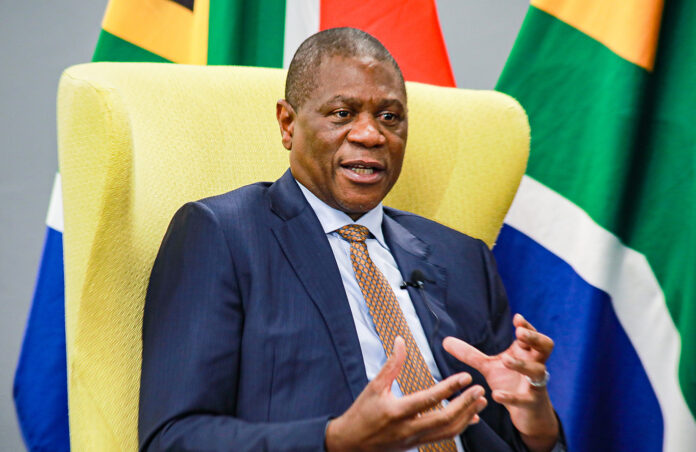
Deputy President Paul Mashatile said this at the national World AIDS Day commemoration in Ga-Masemola, Limpopo.
Despite progress in critical areas, he said the country is still struggling to keep many diagnosed people on treatment, and TB remains one of the biggest threats to public health.
Mashatile said South Africa has met two of the three global UNAIDS 95-95-95 targets, with national figures at 96-80-97.
The difficulty, he said, lies in the second target, which is ensuring that people stay on treatment once they have been diagnosed.
He explained that many patients stop taking their medication due to distance from clinics, negative experiences, fear of disclosure, or moving between provinces and losing continuity of care.
To tackle this, he said the 1.1-million “Close the Gap” Treatment Acceleration Campaign was launched in February.
Connecting people with health systems
“The 1.1-million gap in particular represents mothers who stopped treatment because transport was too costly, men who walked away after negative clinic experiences, young people who feared disclosure, and thousands who moved between provinces without continuity of care,” said Mashatile.
He said the campaign aims to reconnect people with the health system through coordinated government and community mobilisation.
He said the country must address stigma and inequality that still affect access to treatment, especially among vulnerable groups, such as women and girls, people who use drugs, sex workers, and the LGBTQIA+ community.
Mashatile also noted challenges in the fight against tuberculosis.
Citing the World Health Organisation’s 2025 Global Tuberculosis Report, he said TB remains the world’s leading infectious killer, causing 54 000 deaths in South Africa in 2024.
While TB incidence in South Africa has fallen by 61% since 2015, Mashatile said much more work is needed.
He highlighted the END TB campaign launched earlier this year, which aims to test 5-million people annually.
Between April and September, 1.8-million people were reached; this is 62% of the target.
Mashatile noted improvements in treatment access, including a new six-month regime for multi-drug-resistant TB with a treatment success rate close to 80% and a shorter four-month treatment for children.
He also reflected on 20 years of antiretroviral therapy (ARVs) in South Africa, saying the programme has significantly improved life expectancy and reduced mother-to-child transmission to below 2%.
Measures to improve treatment retention
He outlined new measures to improve HIV treatment retention, including the six-month multi-month dispensing model, which Health Minister Dr Aaron Motsoaledi launched recently.
The approach allows stable patients to collect six months’ supply of antiretroviral drugs in one visit, reducing transport costs and easing clinic workloads.
Mashatile also referred to the recent Global Fund 8th Replenishment Summit held alongside the G20 Summit in Johannesburg.
The campaign aims to raise 18 billion US dollars for HIV, TB and malaria programmes between 2027 and 2029.
So far, $11.3-billion (R188-billion) has been pledged globally. South Africa has committed 36.6 million US dollars through a public-private partnership.
Looking to the future, he said South Africa is preparing for new long-acting HIV prevention options, including Lenacapavir, a twice-yearly injection.
He said the South African Health Products Regulatory Authority is the first regulator in Africa to approve the drug, and discussions are underway about producing it locally
- South Africa continues to face significant challenges in its fight against HIV/Aids and tuberculosis.
- Deputy President Paul Mashatile said this at the national World AIDS Day commemoration in Ga-Masemola, Limpopo.
- Despite progress in critical areas, he said the country is still struggling to keep many diagnosed people on treatment, and TB remains one of the biggest threats to public health.
- Mashatile said South Africa has met two of the three global UNAIDS 95-95-95 targets, with national figures at 96-80-97.
- The difficulty, he said, lies in the second target, which is ensuring that people stay on treatment once they have been diagnosed.


