
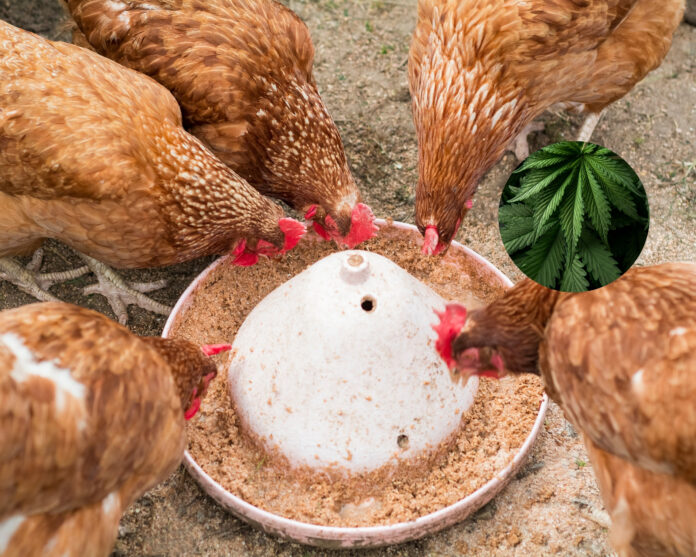
Morocco has begun exploring the use of hemp in animal feeds as demand for organic and antibiotic-free poultry products rises in one of Africa’s largest poultry markets.
In early January, Morocco’s cannabis regulator, the National Agency for the Regulation of Cannabis-Related Activities (ANRAC), rolled out a 10-month research programme to test the use of cannabidiol (CBD), said to be a non-intoxicating compound from the cannabis plant, in poultry feeds.
ANRAC signed an agreement with the country’s most prestigious university in agriculture, the Hassan II Institute of Agronomy and Veterinary Medicine, to conduct the study.
Shift away from growth-stimulating antibiotics
If successful, a CBD-based feed formulation will be developed to support a gradual shift away from growth-stimulating antibiotics, which are increasingly being restricted in Morocco amid food safety and public health concerns linked to antimicrobial resistance.
“The Veterinary Medicine Department at the institute will lead the research. It will study the role of the cannabis molecule in improving gut health in poultry, strengthening their immune systems, and increasing productivity in chicken farming,” Morocco World News reported in reference to a statement shared by ANRAC.
Preliminary studies have suggested that cannabis by-products could reduce mortality. They could also improve the meat quality and gut health of poultry. And they will do so without intoxicating or harming growth.
In what authorities described as the country’s first scientific study of its kind, researchers will also assess the economic impact of CBD feed additives on farm profitability.
Top consumer choice
Morocco Poultry market was valued at $4.08-billion in 2025, and is forecast to reach $5.16-billion by 2030. This is according to a latest outlook by research firm, Mordor Intelligence. Meat segment dominated the market with a 72.64% share in 2024. With the report citing fresh and chilled poultry products remaining the top consumer choice.
However, urban households and food service operators are increasingly opting for processed options such as nuggets, sausages and marinated chicken cuts.
The demand is also driven by high tourist foot traffic and consumption in major cities and tourist hubs. In 2024, Morocco recorded 17.4 million visitors, according to the Ministry of Tourism.
Preference for ethically sourced products
“In Casablanca and Rabat, demand for premium poultry products is increasing. This is driven by consumers willing to pay more for organic, free-range, and branded options. These trends highlight a shift in consumer preferences toward higher-quality and ethically sourced products,” Mordor Intelligence noted.
Export markets are also emerging as a major growth driver. This is supported by Morocco’s halal certification, proximity to European and African markets, and improving cold-chain logistics. Frozen and canned poultry products continue to serve niche institutional and export markets that require longer shelf life.
Production data from the Interprofessional Federation of the Poultry Sector (FISA) shows poultry meat output in Morocco rose to 582,000 tonnes in 2024. This is up from 560, 000 tonnes in 2023. While turkey meat production reached 152, 000 tonnes.
Per capita poultry consumption also increased to 20.9kg, from 20.6kg the previous year. Morocco legalised cannabis cultivation for medical, cosmetic and industrial purposes in 2021. Thus opening space for controlled research and innovation across the value chain while maintaining strict oversight.
Across Africa, a number of countries are also opening up to the legalisation of cannabis for various uses. Though it’s done cautiously.
Africa also embracing medicinal herb
According to Medical Use of Cannabis in Africa: The Pharmacists’ Perspective published by the National Library of Medicine, there are nine African countries that have passed different laws to regulate cannabis cultivation, process, storage, recreational usage, sales, export and distribution. Lesotho was the continent’s pioneer. It legalised medical cannabis cultivation in 2017. And it issued licences for commercial production and export.
Zimbabwe followed with a regulated framework allowing cannabis for medical and scientific use. In South Africa, private adult use has been decriminalised through court rulings. While medical cannabis and industrial hemp production are permitted under licence. This makes it one of Africa’s most advanced markets for research and cultivation.
Malawi has legalised cannabis for medicinal and industrial use with an export focus. Zambia and Rwanda have approved medical cannabis cultivation primarily for international markets under strict state controls.
Eswatini has also emerged as an early exporter after legalising medical cannabis cultivation through a licensing system. Ghana has amended its narcotics laws to allow the cultivation of low-THC cannabis for industrial hemp, with medical applications under development. Despite these reforms, recreational cannabis remains illegal across most of the continent. And regulatory approaches remain conservative.


