


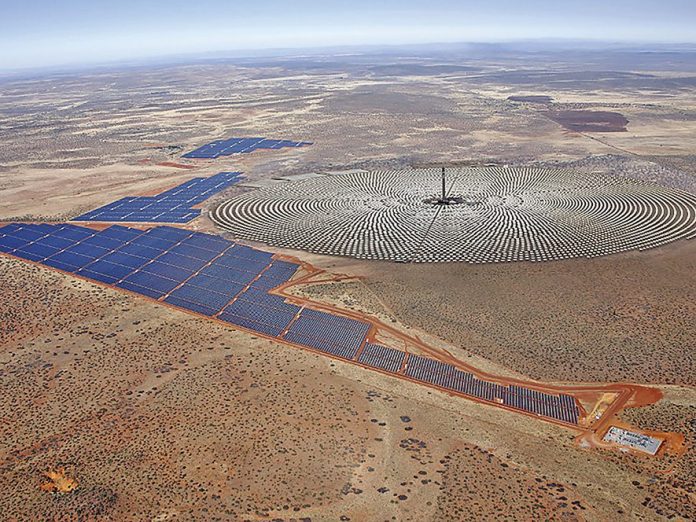
When Swartland Municipality announced plans to procure 10 MW of solar photovoltaic capacity through a 20-year power purchase agreement (PPA), the move marked another step in a growing municipal-led decarbonisation drive unfolding across the Western Cape.
A NERSA-registered (National Energy Regulator of SA) independent power producer will develop the proposed project on approximately 30 hectares of municipal land at Erf 327 near Malmesbury.
Project’s viability confirmed
Technical, grid and financial feasibility studies have already confirmed the project’s viability. While the site falls within an environmental exclusion zone, meaning no environmental authorisation is required.
All internal municipal approvals are complete. And Swartland aims to issue a formal Request for Proposals (RFP) in March/April 2026 once final documentation is ready. However, the current notice is not a bidding invitation and does not constitute an offer. Swartland reserves the right not to proceed, and interested parties will be able to engage after the RFP is issued.
While 10 MW is modest by national standards, a long-term PPA reduces tariff volatility, limits exposure to Eskom supply disruptions, and gradually lowers the carbon intensity of municipal electricity supply. This all occurs without requiring upfront capital investment from the municipality.
Physical decarbonisation assets
Swartland’s project forms part of a broader pattern across the Western Cape. This is where municipalities are moving beyond climate commitments and into physical decarbonisation assets.
In Mossel Bay, the municipality has invested R112-million in a solar PV and battery micro-grid at the Hartenbos wastewater treatment plant. The system allows critical infrastructure to operate independently during load shedding. Thus reducing reliance on diesel generators while cutting operational emissions.
On the other hand, Hessequa Municipality is pursuing a 10 MW solar project near Riversdale. It is aimed at supplying local demand and reducing exposure to scheduled outages. While small in absolute terms, such projects directly displace coal-generated Eskom electricity when municipal demand is at its highest.
A key reason the Western Cape has moved faster than most provinces is targeted institutional support. Through its Municipal Energy Resilience Programme, the provincial government has provided funding and technical assistance to help municipalities prepare renewable energy projects.
This includes support for feasibility studies, grid assessments, procurement documentation, and electricity master planning. These phases usually incur early-stage costs that often prevent smaller municipalities from entering the energy market.
Province’s market reform
Decarbonisation is also being driven by the Western Cape government’s market reform. It has published a municipal electricity wheeling toolkit, enabling private generators to sell renewable electricity to customers using municipal distribution networks.
Municipalities such as the City of Cape Town and George have begun implementing wheeling frameworks. This allows businesses to procure renewable power without installing on-site generation. For municipalities, this reduces infrastructure strain and diversifies revenue.
What distinguishes the Western Cape’s approach is that decarbonisation is being driven primarily by energy security and cost stability, not ideology. Every megawatt of locally generated solar power reduces diesel use, lowers exposure to Eskom tariff increases, and improves service reliability.
Small-scale embedded generation programmes and feed-in tariffs further reinforce this shift. They turn households and businesses into energy producers while gradually lowering municipal emissions.
Swartland’s 10MW solar PPA will not transform South Africa’s energy system on its own. But replicated across municipalities in other provinces, projects of this scale begin to add up. In the Western Cape, decarbonisation is no longer a distant policy goal. It is being built, megawatt by megawatt, into local infrastructure.


