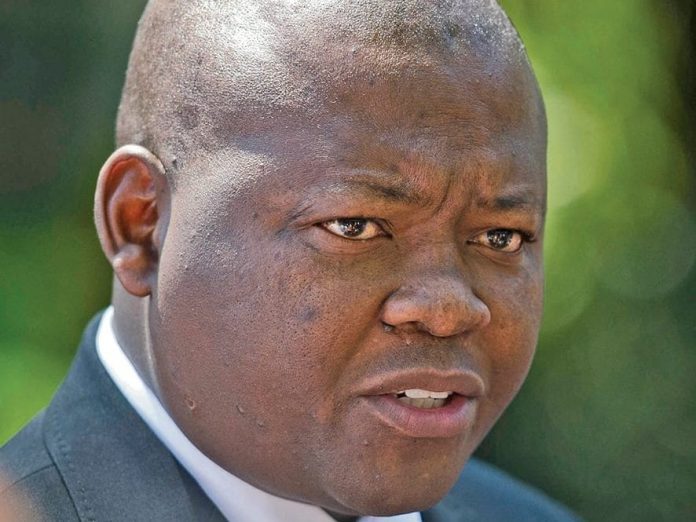
Barnabas Xulu, a seasoned lawyer and director of B Xulu and Partners Incorporated, has found himself at the centre of a legal battle that could shape the future of South Africa’s justice system.
His fight isn’t just about the appointment of the next National Director of Public Prosecutions (NDPP) — it’s about what he claims is a flawed and biased process that has led him to take President Cyril Ramaphosa to court.
The story begins in 2016, when Xulu’s firm was hired by the Department of Agriculture, Forestry, and Fisheries (DAFF) to handle complex legal matters, including the high profile Bengis case.
Panellist background questioned
The case involved illegal fishing and restitution claims. And Xulu’s firm was working alongside the National Prosecuting Authority (NPA) and international authorities to recover millions of dollars owed to South Africa.
It was during this time that Xulu alleges Advocate Hermione Cronje, then affiliated with the NPA, engaged in misconduct by leaking confidential information to external parties to manipulate the legal proceedings.
Fast forward to October 2025, when President Ramaphosa announced the formation of an advisory panel to recommend candidates for the NDPP position. Cronje was among the six shortlisted candidates, a decision that Xulu found deeply troubling.
On December 4, 2025, he submitted a formal objection to Cronje’s candidacy. A detailed 99-page document outlining allegations of unlawful information peddling and ethical violations.
Objection disregarded
The Advisory Panel acknowledged receipt of Xulu’s objection the following day. It assured him that his concerns would be considered. But when Cronje appeared before the panel for her interview on December 11, 2025, it became clear that she had not been provided with the objection.
Cronje dismissed the allegations. She claimed Xulu was not a neutral party due to his involvement in investigations and litigation against him. And she admitted familiarity with the Bengis case, but denied any wrongdoing.
The next day, the Department of Justice announced that the interview process had concluded. Also that the Advisory Panel would submit its recommendations to the president.
Xulu, however, was not ready to let the matter rest. On December 14, 2025, he sent a scathing letter to the panel, accusing it of gross negligence, bias, and unequal treatment of candidates.
Process tainted as a result
He argued that the panel’s failure to address his objection and its alleged preferential treatment of Cronje had tainted the process. He demanded that the panel withdraw its report and either conduct a supplementary interview with Cronje or restart the selection process entirely.
With the outgoing NDPP Advocate Shamila Batohi set to retire in January 2026, time is running out for the appointment of her successor. Xulu’s urgent application to the High Court seeks to prevent Ramaphosa from acting on the Advisory Panel’s recommendations. He claims they are unlawful and unconstitutional.
For Xulu, this fight is personal. His firm’s involvement in the Bengis case and subsequent allegations against Cronje have placed him in a unique position to challenge her candidacy.
Integrity, transparency and fairness
But his legal battle is about more than just one candidate. It’s about ensuring transparency, fairness, and integrity in the selection process for one of South Africa’s most critical public offices.
The appointment of the next NDPP will not only determine the future of the prosecutorial authority. It will also set the tone for the country’s commitment to justice and accountability. For Xulu, this is a fight worth having, even if it means taking on the president himself.