


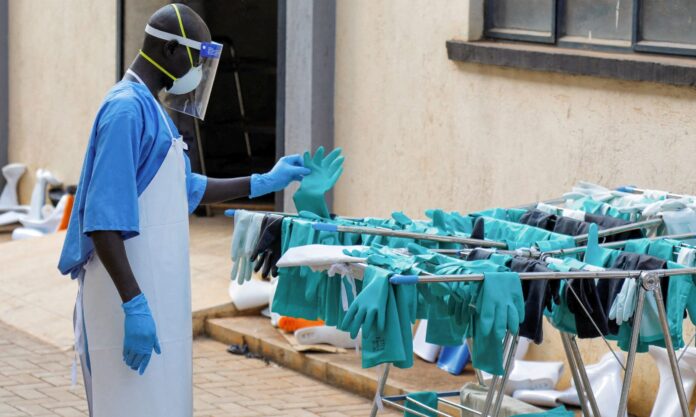
Six months into Congo’s Ebola outbreak, many cases are likely being missed, transmission in hospitals in some areas is rife and the virus is still spreading out of control, Médecins Sans Frontières said on Thursday.
With the number of confirmed cases now surpassing 11,000, the outbreak — declared in mid-May and caused by the rare Bundibugyo species of the virus, for which there are no approved treatments or vaccines — is the second-worst on record.
Help, however, is not reaching those who need it most, the medical charity said, pointing to untrained and unpaid staff, ambulances without fuel and a lack of surveillance teams and supplies to safely manage suspected cases.
“Despite the vast amounts of money provided for the response, many frontline responders are left trying to contain the outbreak with empty hands and empty pockets,” Dr. Javid Abdelmoneim, MSF’s international president, said on Thursday.
“Our teams are often left speechless by the dysfunctions they witness in many areas.
“Six months into the response, this situation is simply unacceptable,” he said.
READ MORE: Nurse killed as mob attacks health workers responding to Ebola in Congo
MSF called on the Congolese government and UN agencies, which include the World Health Organization, to ensure the resources that have been mobilised translate into support on the ground.
The Congolese government did not immediately respond to Reuters requests for comment.
Only half of cases likely detected
At a separate briefing on Wednesday, British epidemiologist Neil Ferguson, who has been working to model the outbreak in real time, said case detection remained a major challenge.
For that reason, he said it was likely transmission would still be ongoing a year from now and the outbreak could outstrip the 2014-2016 West African outbreak — the biggest ever — which saw more than 28,600 cases and killed more than 11,000 people.
“Throughout the outbreak, we think we’re probably only detecting about half of cases which are occurring,” said Ferguson, an epidemiologist and director of public health at Imperial College London.
His team estimated there are currently between 2,000 and 3,000 Ebola patients in Congo.
From lack of supplies to deadly attacks
MSF said different regions of Congo, some of which are conflict zones, faced varying challenges.
For example, in Ituri province, only 9% of Ebola patients treated by MSF were known contacts of existing cases.
Over the last month, close to two-thirds of reported Ebola-related deaths have occurred in communities rather than in treatment centres, MSF added.
A lack of supplies from water to chlorine in healthcare settings was also a risk, MSF said, citing the Beni health zone in North Kivu, where almost three-quarters of Ebola patients are believed to have contracted the disease in such locations.
READ MORE: WHO urges coordinated action as Ebola poses regional threat in Africa
Asked by Reuters about MSF’s criticisms, the WHO pointed to remarks made by its Director-General Tedros Adhanom Ghebreyesus on Tuesday in which he acknowledged issues like health worker payment delays.
He said the WHO was working with Congolese authorities, the Africa CDC and other partners to strengthen the response, but warned that insecurity, notably attacks on health facilities, had become one of the biggest obstacles to containing the outbreak.
An attack in the town of Cantine-Aloya in North Kivu last week killed 66 civilians, including 3 health workers, he said, double the initial death toll reported by local authorities. It also led to more than 1,000 contacts being lost to follow-up and 3 confirmed Ebola patients left unaccounted for.
- Congo's Ebola outbreak has surpassed 11,000 confirmed cases six months after it was declared, with transmission in hospitals widespread and many cases likely going undetected, according to Médecins Sans Frontières (MSF).
- The outbreak is caused by the Bundibugyo species of Ebola virus, for which there are no approved treatments or vaccines, making it the second-worst Ebola outbreak on record.
- MSF highlighted severe resource shortages including untrained staff, ambulances without fuel, and a lack of surveillance teams and supplies, hindering effective response efforts.
- British epidemiologist Neil Ferguson estimated only about half of Ebola cases are detected, predicting transmission could continue for a year and surpass the 2014-2016 West African outbreak in size.
- Attacks on health facilities have significantly impacted the response, with a recent attack in Cantine-Aloya killing 66 civilians including three health workers, leading to lost contact tracing and unaccounted Ebola patients.
Six months into Congo's Ebola outbreak, many cases are likely being missed, transmission in hospitals in some areas is rife and the virus is still spreading out of control, Médecins Sans Frontières said on Thursday.
With the number of confirmed cases now surpassing 11,000, the outbreak — declared in mid-May and caused by the rare Bundibugyo species of the virus, for which there are no approved treatments or vaccines — is the second-worst on record.
Help, however, is not reaching those who need it most, the medical charity said, pointing to untrained and unpaid staff, ambulances without fuel and a lack of surveillance teams and supplies to safely manage suspected cases.
"Despite the vast amounts of money provided for the response, many frontline responders are left trying to contain the outbreak with empty hands and empty pockets," Dr. Javid Abdelmoneim, MSF's international president, said on Thursday.
"Our teams are often left speechless by the dysfunctions they witness in many areas.
"Six months into the response, this situation is simply unacceptable," he said.
READ MORE: Nurse killed as mob attacks health workers responding to Ebola in Congo
MSF called on the Congolese government and UN agencies, which include the World Health Organization, to ensure the resources that have been mobilised translate into support on the ground.
The Congolese government did not immediately respond to Reuters requests for comment.
At a separate briefing on Wednesday, British epidemiologist Neil Ferguson, who has been working to model the outbreak in real time, said case detection remained a major challenge.
For that reason, he said it was likely transmission would still be ongoing a year from now and the outbreak could outstrip the 2014-2016 West African outbreak — the biggest ever — which saw more than 28,600 cases and killed more than 11,000 people.
"Throughout the outbreak, we think we're probably only detecting about half of cases which are occurring," said Ferguson, an epidemiologist and director of public health at Imperial College London.
His team estimated there are currently between 2,000 and 3,000 Ebola patients in Congo.
MSF said different regions of Congo, some of which are conflict zones, faced varying challenges.
For example, in Ituri province, only 9% of Ebola patients treated by MSF were known contacts of existing cases.
Over the last month, close to two-thirds of reported Ebola-related deaths have occurred in communities rather than in treatment centres, MSF added.
A lack of supplies from water to chlorine in healthcare settings was also a risk, MSF said, citing the Beni health zone in North Kivu, where almost three-quarters of Ebola patients are believed to have contracted the disease in such locations.
READ MORE: WHO urges coordinated action as Ebola poses regional threat in Africa
Asked by Reuters about MSF's criticisms, the WHO pointed to remarks made by its Director-General Tedros Adhanom Ghebreyesus on Tuesday in which he acknowledged issues like health worker payment delays.
He said the WHO was working with Congolese authorities, the Africa CDC and other partners to strengthen the response, but warned that insecurity, notably attacks on health facilities, had become one of the biggest obstacles to containing the outbreak.
An attack in the town of Cantine-Aloya in North Kivu last week killed 66 civilians, including 3 health workers, he said, double the initial death toll reported by local authorities. It also led to more than 1,000 contacts being lost to follow-up and 3 confirmed Ebola patients left unaccounted for.


