


The Democratic Republic of the Congo (DRC) has recorded more than 9,000 confirmed Ebola cases since May, as preparations for a vaccine trial near completion.
The country’s task force on Ebola released a situation report on Tuesday, showing that 9,066 confirmed cases and 4,381 deaths had been recorded as of October 11, bringing the overall case fatality rate to 48.3%. A total of 2,389 patients have recovered.
The outbreak has affected 65 health zones across seven provinces. The eastern province of Ituri remains the epicenter, accounting for 73.8% of all confirmed cases, followed by North Kivu Province, which has recorded the highest case fatality rate at 57.1%.
READ: Ebola outbreak expands to two more health zones in DR Congo
Earlier this month, DRC Health Minister Roger Kamba said that the outbreak was becoming increasingly localised, with several affected health zones reporting no new cases for weeks.
However, World Health Organization Director-General Tedros Adhanom Ghebreyesus warned on October 7 that while the epidemic was slowing in some areas, it continued to grow in others. He also highlighted persistent challenges, including the high proportion of deaths occurring in communities and gaps in contact tracing.
The outbreak was caused by the Bundibugyo ebolavirus, for which no vaccine or treatment has yet been specifically approved, although clinical trials are underway.
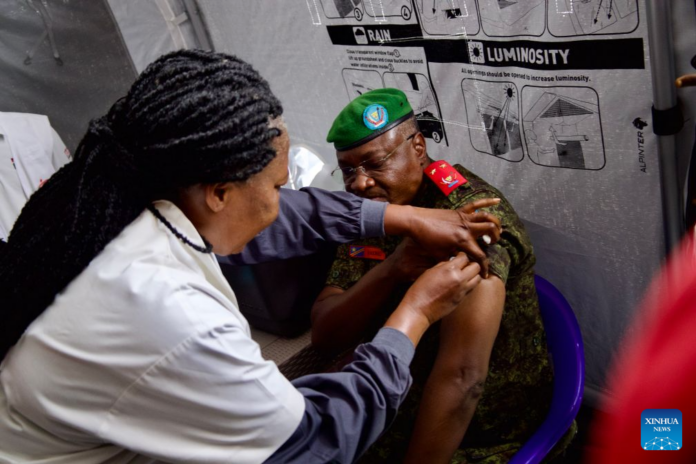
Ervebo, a vaccine approved against the Zaire ebolavirus, is being administered to frontline health workers under research protocols and through compassionate-use arrangements.
According to the latest situation report, 399 frontline workers had been vaccinated in Haut-Uele province as of October 11. Yet its effectiveness against the Bundibugyo ebolavirus remains unproven.
READ: DRC expands Ebola vaccination to Ituri, over 3 700 people vaccinated
The Coalition for Epidemic Preparedness Innovations announced Tuesday that final preparations were underway for Tumaini, a pivotal Phase 2/3 clinical trial to evaluate vaccine candidates against the Bundibugyo virus.
The trial, expected to begin in the coming weeks pending ethical and regulatory approval, will likely evaluate Ervebo first, followed by vaccines specifically developed against the strain as they become available.
Declared on May 15, the outbreak has become the largest and deadliest Ebola outbreak ever recorded in the DRC and the second-largest worldwide, after the 2014-2016 epidemic in West Africa.
- The DRC has recorded 9,066 confirmed Ebola cases and 4,381 deaths as of October 11, with a fatality rate of 48.3%.
- The outbreak affects 65 health zones across seven provinces, with Ituri province accounting for 73.8% of cases and North Kivu having the highest fatality rate at 57.1%.
- The Ebola outbreak is caused by the Bundibugyo ebolavirus, for which no specific vaccine or treatment is yet approved, though clinical trials are underway.
- 399 frontline health workers in Haut-Uele province have been vaccinated with Ervebo, a vaccine approved against Zaire ebolavirus, under research protocols despite its unproven effect on Bundibugyo ebolavirus.
- The Coalition for Epidemic Preparedness Innovations is preparing for a Phase 2/3 trial called Tumaini to evaluate vaccines against Bundibugyo virus, expected to start in the coming weeks pending approvals.


