


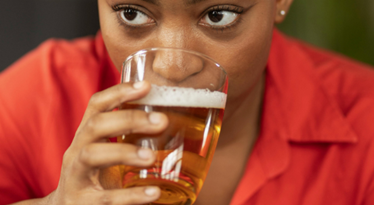
A young woman from the Free State remembers drinking, and arriving home safely. But she can’t remember what happened next – how she undressed and got into bed. “When I wake up like that, I feel so ashamed,” she says. “I ask myself, when I don’t remember what I have done, what other things have I done?”
The inflation-pegged tax increases of 3.4% on beer, wine and spirits, which Finance Minister Enoch Godongwana announced on Wednesday, might encourage young women to have fewer mornings like that.
And a consistent body of evidence shows that increasing the price of alcohol makes people drink less.
Enoch Godongwana’s budget speech
Speaking to teenage girls and young women
Researchers have found that making alcohol more expensive is one of the most effective tools available to reduce drinking. The World Health Organisation’s SAFER initiative, which was launched in 2018, advocates for higher prices, together with restricting advertising. It’s something that President Cyril Ramaphosa included in his recent State of the Nation address, saying government plans to tackle the country’s drinking problem.
Researchers spoke to 68 teenage girls and young women aged 15–24 around the country.
It became very clear that higher alcohol prices alone may not be enough.
So they tried to understand the world in which these young women are drinking.
Drinking has become normalised
The girls and women revealed how alcohol is woven into the fabric of everyday life, from funerals and traditional ceremonies, to Friday nights at the tavern. Many say their generation drinks more than adults, and that binge drinking has become “fashionable” and “trendy”, especially for young women. Yet along with the “vibes”, drinking brings with it headaches, liver pain, crushing regret, missed school, and even financial debt.
The interviews, conducted in isiZulu, Sesotho, Setswana, Afrikaans, isiXhosa and English, paint an intimate picture of how alcohol use among girls and young women has become normalised, even expected, and how social and economic pressures ensure the cycle continues.
Taverns on every corner and rules don’t matter
Girls and women in the study describe how easy it is to get a drink, even when you are under 18. There are often taverns, shebeens and liquor stores nearby, and age restriction signs are often little more than decoration.
As one young woman in Mpumalanga explained that girls often buy their own drinks:
“It is not easy to tell our age, because of the things we wear—the makeup”.
Even when girls live in communities with strictly enforced age restrictions, they find a way to get their drinks. One teenager from the Eastern Cape explained, “It is very strict here, but we make super sure we get that alcohol, we do anything to get it”.
Laws and rules are not deterrents
In areas where drinking venues are stricter, girls talk about “making a plan” to get alcohol, even when taverns turn them away.
They often then head to informal house sellers who do not care about age, “as long as the stock is sold out”.
Asking adults to buy alcohol for a small “tip” can put the girls at risk of being cheated or exploited.
Drinking for “vibes”, fun, fashion, and fitting in
For many girls, alcohol is not only about enjoying yourself, but also about belonging. Drinking with friends is framed as fun, fashionable and almost a requirement for social acceptance.
“Drinking alcohol is fashion, it’s trendy,” one young woman from Gauteng explained, echoing peers who say they drink “for vibes”.
Girls describe alcohol as something that makes it easier to talk and socialise. It boosts confidence, makes them feel “alive, young, carefree and stress-free,” and gives them the courage to dance, meet people, making them feel like they “own the world”.
Social media amplifies these norms: images of parties, bottles and branded drinks set the tone for what looks aspirational and “cool”. A teenager from the Free State told us that girls who don’t drink might get teased and spurned by friends, “so you end up drinking trying to prove a point”.
Social influences on drinking
We used research on social influences – ideas that explain how a person’s thoughts, feelings, friends, family and community members influence their drinking – to make sense of the findings. Drinking has become a way to gain status, a sign that you are part of the group, and a way to avoid “stupid” or “boring” labels. When girls believe “everyone else” is drinking, heavy use starts to feel like the norm rather than the exception.
Drinking and the family
Alcohol is not only a peer activity, it is also a family affair. Many girls say they drink with siblings, cousins, partners and sometimes older relatives. In homes where adults drink regularly, girls describe copying what they see: “people at home drink so us girls end up drinking too.”
Drinking at traditional ceremonies, funerals, birthdays and “after-tears” is described as normal, expected and central to how communities mark important events. The findings from our research show that this is a powerful form of learning by example: when alcohol is present at every key life event and consumed by the adults close by, it becomes part of “being grown-up”, long before you turn 18.
“Be safe, drink at home”
It is also considered safer to drink with family at home.
>Girls are often unsafe in public spaces, so some caregivers actively encourage them to rather drink at home: “My granny always says I should not go to the tavern if I don’t have money, because she knows what happens if girls go to taverns without money.”
The reality is that alcohol is a currency that men use to buy sex from girls who will do anything for a drink.
Alcohol as an escape
Alongside the fun, a darker theme emerged from the interviews: many girls use alcohol to cope with grief, stress and depression.
Some girls told us that even though they drink to “forget about problems”, escape difficult family situations, or numb pain, it is short-lived: “In the moment, you forget about everything … but it will come back the following day”.
Others describe mood swings and anger when they are drunk, followed by heavy emotional crashes the next day. Girls know that the substance they use to feel better leaves them more depressed, ashamed and mentally “messed up” afterwards. But in communities where formal mental healthcare is scarce, reaching for a bottle feels like the easiest and most accessible solution.
The hidden costs to bodies, school and finances
In the morning after, the “vibes” have a price – and girls know it.
The effects are not only physical, with pounding headaches, vomiting, pain and fear of causing long-term damage to their livers and brains, but also emotional. Many girls told us they feel shame and regret. Some nights they might black out, waking up the next day at home without remembering how they got there or what they did, and having to piece the night together from friends’ stories.
Economically, there is regret about money “wasted” on alcohol when it is needed elsewhere: “The following day I have a lot of needs and my money got depleted on alcohol.”
Schooling also takes a hit. Girls speak of coming home at 4am and trying to be in class a few hours later, struggling through the day hungover, or sometimes even dropping out altogether. Some say drinking is a doorway to crime or transactional sex, “selling their bodies” when the money runs out.
- A young woman from the Free State remembers drinking, and arriving home safely.
- But she can’t remember what happened next – how she undressed and got into bed. “When I wake up like that, I feel so ashamed,” she says.
- “I ask myself, when I don’t remember what I have done, what other things have I done?” The inflation-pegged tax increases of 3.4% on beer, wine and spirits, which Finance Minister Enoch Godongwana announced on Wednesday, might encourage young women to have fewer mornings like that.
- And a consistent body of evidence shows that increasing the price of alcohol makes people drink less.
- Enoch Godongwana’s budget speech Speaking to teenage girls and young women Researchers have found that making alcohol more expensive is one of the most effective tools available to reduce drinking.


