


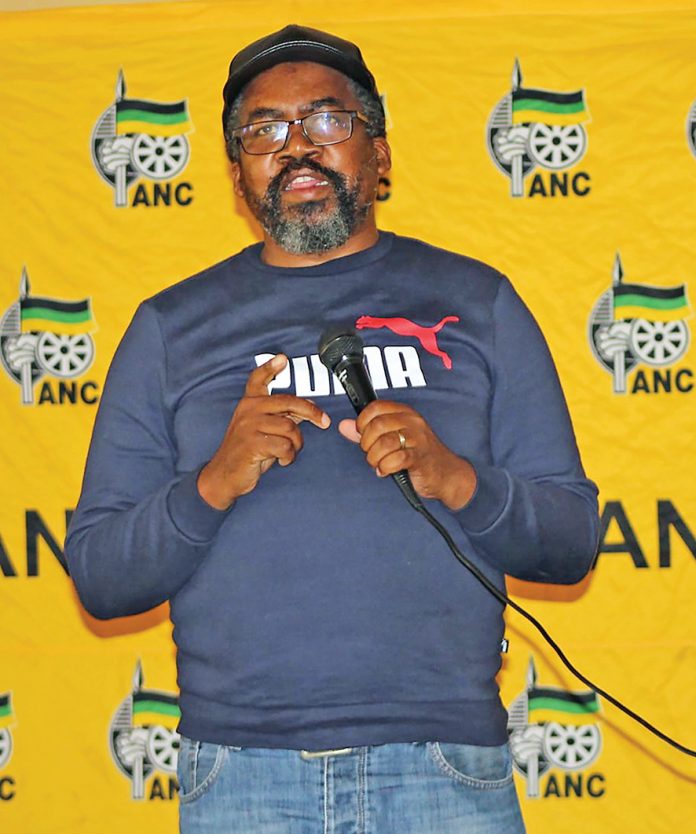
ANC Eastern Cape provincial secretary Lulama Ngcukayithobi has scored a massive victory in his cold war with ANC secretary-general Fikile Mbalula, whose authority has come under direct assault.
This is after the Eastern Cape High Court intervened decisively, issuing an order that does not merely pause a political event—the provincial conference that was scheduled to start tomorrow—but confirms a breakdown in the internal processes of the ANC.
The upcoming event is the watershed conference where ANC provincial chairperson Oscar Mabuyane is seeking a third term against Ngcukayitobi.
In clear and unambiguous terms, the high court in KuGompo, through Judge Babalo Metu, ordered that it was “interdicting and restraining the respondents [ANC] from holding the provincial elective conference of the Eastern Cape province of the ANC, scheduled to be held from 26 to 29 March 2026.”
Bogus verification report
This is not a routine procedural ruling; it is a judicial finding that the processes leading to the conference were sufficiently compromised to warrant urgent intervention.
The court went further, directing that “the respondents [must] comply with the ANC’s governance instruments, including, but not limited to, the ‘conference guidelines’ and its constitution.”
The case was a result of three aggrieved members who rushed to court, claiming, among other things, that Mbalula had signed a bogus verification report for the conference.
The court ruling is a defining institutional moment that puts the conference in abeyance pending the submission of supplementary papers by the ANC.
This is one of those rare occasions when a court must instruct a liberation movement to comply with its constitution, affirming what had already been raised internally by Ngcukayitobi but dismissed by Mbalula.
Mbalula had gone on to buoyantly boast that he was the alpha and omega of ANC processes, exclaiming that “i-ANC i run(wa) ndim” (I run the ANC) and adding that “only a tsunami” would stop the disputed provincial conference.
He was mocking Ngcukayitobi, who last week wrote to the ANC’s national officials, raising grave concerns about “membership system failure, manipulation, and inconsistent application of guidelines”.
More decisively, Ngcukayitobi had cautioned that organisational processes must remain “credible, free, fair, and democratic… without undue influence, interference, manipulation and patronage”.
Mbalula’s conduct under scrutiny
Mbalula trivialised Ngcukayitobi’s cries, characterising a genuine concern over flouting of processes as a “factional letter”.
The court order now confirms that these were not mere speculative claims, but rather grounded concerns that directly impact the integrity of the organisation.
This places the conduct and posture of the secretary-general under direct scrutiny.
The dismissive tone adopted toward these concerns—both at the Amathole regional conference and in subsequent public engagements—now stands in sharp contrast to the court’s findings. What was trivialised politically has now been affirmed judicially.
At the centre of the crisis is the erosion of organisational neutrality. The office of the secretary general, constitutionally mandated to provide oversight and administrative integrity, is now widely perceived to have crossed into operational control of outcomes.
This is particularly evident in the centralisation of verification and conference processes through the office of the national organizer.
This approach stands in direct contradiction to the December 2025 national general council resolution, which affirmed that regional conferences and delegate verification must be driven at the branch and regional levels.
What has unfolded instead is a consolidation of control over processes that determine leadership outcomes.
ANC ordered to pay costs
The urgency of the matter is telling. The court ruled: “Non-compliance with the rules… is hereby condoned, and the matter is heard and determined as one of urgency.”
The court has not yet finalised the matter. Key issues have been “postponed sine die…” with the interdict operating as interim relief pending final determination. Legal scrutiny will therefore deepen.
There are already consequences. The court ordered that the ANC pays the costs. This is not symbolic—it is both a financial and reputational consequence flowing from flawed processes.
The Eastern Cape is a historic electoral anchor for the ANC, not just another province.
Alongside Limpopo—and previously KwaZulu-Natal—it has carried a substantial share of the party’s national mandate. With KwaZulu-Natal weakened, instability in the Eastern Cape presents a national political risk.
A troubling pattern is emerging, where internal political disputes are increasingly resolved in courts rather than within organisational structures.
Each such intervention weakens internal authority and normalises litigation as a political instrument. What has been interrupted is not merely a provincial conference; it is a trajectory.
And whether that trajectory is corrected or continued will define the future of the organisation.


