


The Department of Trade, Industry and Competition (DTIC) said the United States’ one-year extension of the African Growth and Opportunity Act (AGOA) will provide some relief to South African products exported under the scheme.
In a statement, DTIC Minister Parks Tau said the extension will help South African exporters in the short term. But he also noted that its limited duration raised “red flags” for investment planning.
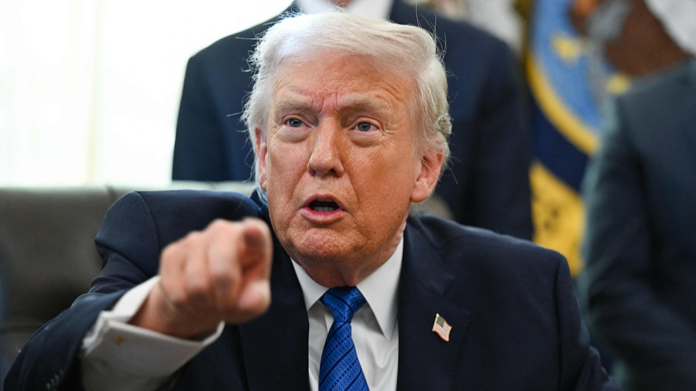
Tau was responding to US President Donald Trump’s signing of the one-year extension of AGOA, which grants eligible sub-Saharan African countries duty-free access to the US market for over 1,800 products, in addition to the thousands already covered under the Generalised System of Preferences.
Diplomatic tensions between US and SA
For South Africa, continued participation in the scheme provides relief amid ongoing diplomatic tensions between Washington and Pretoria. These were fuelled primarily by the former’s unfounded allegations that South Africa is persecuting white farmers.
The signing also comes after a last-minute intervention by the United States Senate, which amended a House of Representatives proposal for a three-year renewal into a shorter extension. The Senate passed the revised Bill on Monday and referred it to Trump for approval.
Tau also noted some concerns over the period of extension.
“We hope the United States will use this opportunity provided by the short extension towards a programme that will provide certainty around investment and purchasing decisions. AGOA was designed to promote export diversification and encourage investment,” said Tau.
Announcing the reauthorisation, US Trade Representative Ambassador Jamieson Greer framed the programme within Washington’s evolving trade doctrine.
“AGOA for the 21st century must demand more from our trading partners. And it must… yield more market access for US businesses, farmers, and ranchers to build upon the benefits it has historically provided to Africa and the United States,” Greer said.
Trump’s America First Trade Policy
“We must also make sure that the programme enhances US-Africa trade. And we will work with Congress over the next year to modernise the programme to align with President Trump’s America First Trade Policy.”
The business implications for the South African economy are significant. The US is South Africa’s third-largest export destination and one of its most important trade partners. In 2024, total bilateral trade stood at about $15-billion. This with South Africa exporting $8-billion and importing $7-billion, producing a trade surplus of roughly $1-billion.
Tau said South Africa continues to engage with the US on an Agreement on Reciprocal Tariffs (ART). This is aimed at easing the 30% tariff imposed by the US on certain South African goods.
“We continue to engage constructively with the US administration. And we believe that a healthy trade relationship benefits both our countries,” Tau said.
- The Department of Trade, Industry and Competition (DTIC) said the United States’ one-year extension of the African Growth and Opportunity Act (AGOA) will provide some relief to South African products exported under the scheme.
- In a statement, DTIC Minister Parks Tau said the extension will help South African exporters in the short term.
- But he also noted that its limited duration raised “red flags” for investment planning.
- Tau was responding to US President Donald Trump’s signing of the one-year extension of AGOA, which grants eligible sub-Saharan African countries duty-free access to the US market for over 1,800 products, in addition to the thousands already covered under the Generalised System of Preferences.
- Diplomatic tensions between US and SA For South Africa, continued participation in the scheme provides relief amid ongoing diplomatic tensions between Washington and Pretoria.


