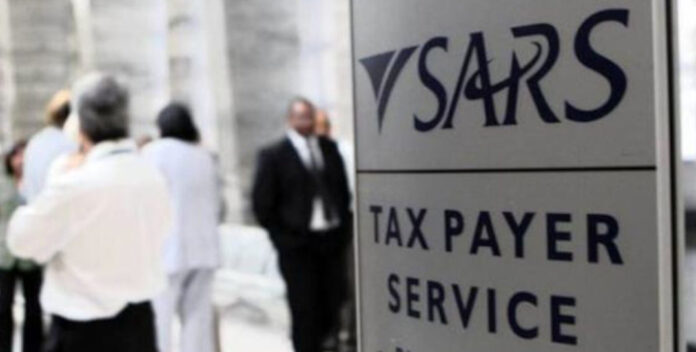
Finance minister Enoch Godongwana has proposed an income tax relief after the taxman’s revenue collection outperformed previous estimates by over R21-billion.
“Last year’s Budget announced that R20-billion in tax increases would be proposed in the 2026 Budget to fund new and persistent spending pressures.
“Given the opportunity presented by higher-than-expected in-year revenues and the projected achievement of key fiscal targets, this proposal is withdrawn. Medium-term revenues are forecast to remain stable. And the tax-to-GDP ratio will average 26.1% through to 2028/29,” said Godongwana while delivering the 2026 Budget Speech.
Stronger revenue collection
“Government remains on track to achieve its fiscal targets over the medium term without burdening taxpayers with further increases or harming the nascent economic recovery.”
He noted that revenue collection for the current year was stronger than expected at the time of the 2025 Budget.
“The expected outcome for tax and non-tax revenue for 2025/2026 is revised to R1.98-trillion in the latest estimates. Thus up from R1.95-trillion in the 2025 Budget, due to steady economic growth and commodity price increases.”
He stated that higher-than-expected net value added tax, corporate income tax and dividends tax collections improved the in-year outlook. However, he warned that personal income tax and specific excise duty collections were expected to fall short of 2025 Budget projections.
Godongwana’s attempts last year to hike the value added tax last in the 2025 Budget Speech were shot down. He, however, further displayed a softer side on Wednesday, saying no further tax hikes were on the cards.
Increase in tax base
He instead argued for an increase in the tax base. And he added that taxpayers have not been granted full relief from the effects of inflation in the last two budgets due to fiscal constraints.
“As a result, personal income tax revenue increased as a percentage of total tax revenue, continuing a trend that began in 2007,” he said.
Delving into income categories shouldering the most tax burden, Godongwana said the top 13% of individual taxpayers pay over 60% of personal income tax. And 7.7% of taxpayers with taxable income above R1-million per year foot nearly half of personal income tax bill.
He also raised concern that both personal and corporate income tax contributions to total tax revenue. He lamented these being higher in South Africa than the average across Organisation for Economic Co-operation and Development (OECD) countries.
“South Africa has become heavily reliant on these two direct taxes, which accounted for approximately 55% of total tax revenue in 2023. The 2018 VAT Panel Report also estimated that individuals in the top four income deciles account for over 75% of value-added tax (VAT) revenue. Even though this is a broad-based tax,” he said.
Managing the tax burden
“These factors illustrate the importance of managing the tax burden to ensure it remains sustainable and efficient.”
The minister further warned that high direct taxes erode disposable income and consumption expenditure. And they may incentivise stronger avoidance measures.
“Beyond a certain point, increases in tax rates may not generate additional revenue. And they are detrimental to economic growth. Ultimately, the best option to increase revenue is by broadening the tax base and growing the economy,” he said.
The gross tax revenue estimate for 2025/26 is revised up by R21.3-billion from the 2025 Budget estimate. This despite lower-than-expected nominal GDP. The tax-to-GDP ratio is expected to increase from 25.1% in 2024/25 to 25.9% in 2025/26.
Visit SW YouTube Channel for our video content
- Finance minister Enoch Godongwana has proposed an income tax relief after the taxman’s revenue collection outperformed previous estimates by over R21-billion.
- “Last year’s Budget announced that R20-billion in tax increases would be proposed in the 2026 Budget to fund new and persistent spending pressures.
- “Given the opportunity presented by higher-than-expected in-year revenues and the projected achievement of key fiscal targets, this proposal is withdrawn.
- Medium-term revenues are forecast to remain stable.
- And the tax-to-GDP ratio will average 26.1% through to 2028/29,” said Godongwana while delivering the 2026 Budget Speech.