


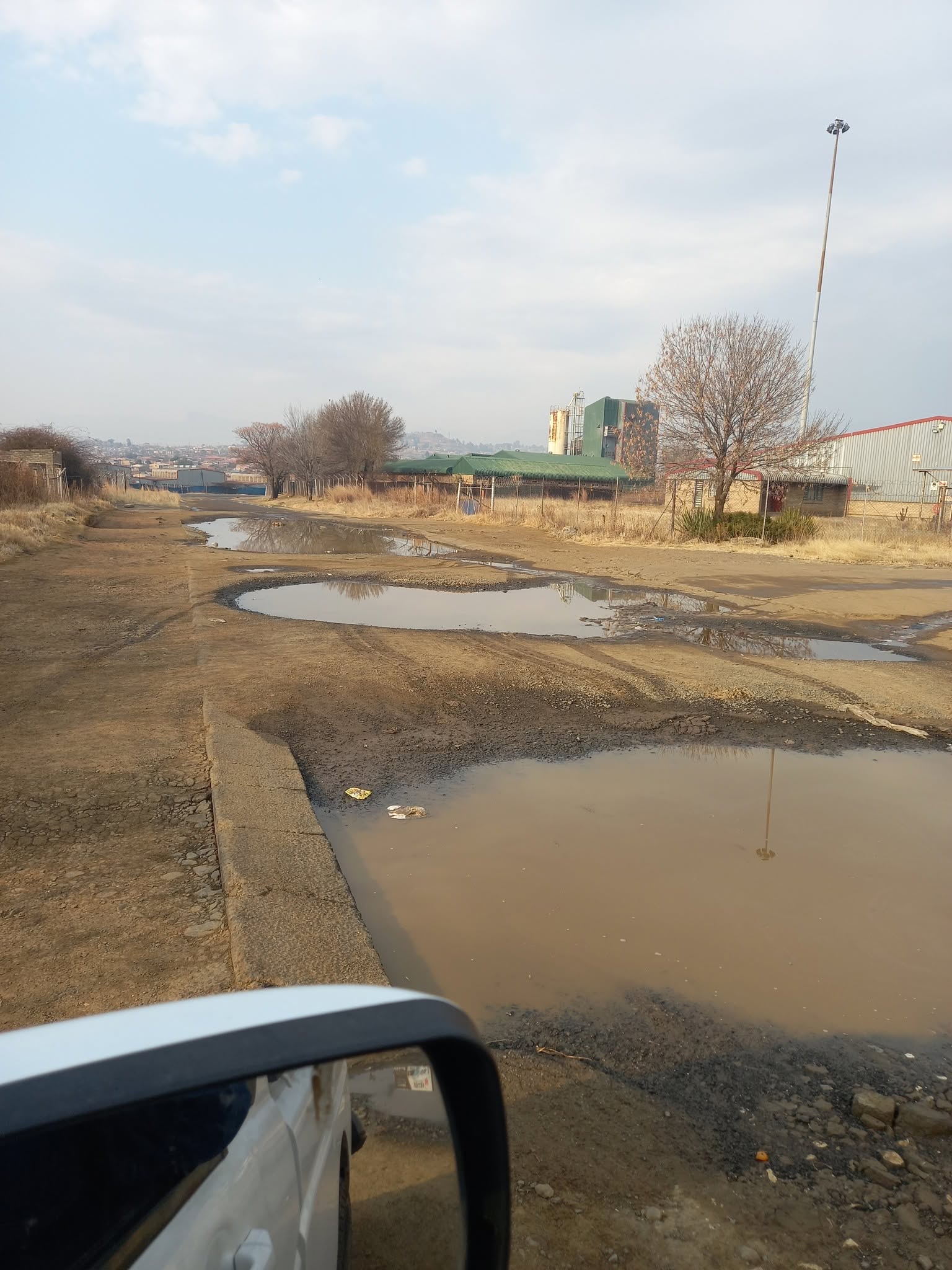
QwaQwa’s story is one of ambition, achievement, political transition and, ultimately, a painful question: how could a community that once built the foundations of its own development find itself battling failing infrastructure, unemployment, deteriorating public services and a shrinking local economy?
For the Dikwankwetla Party of South Africa (DPSA), the answer lies in the contrast between what was built before 1994 and what has happened since democracy. But beyond party politics, QwaQwa raises a broader question about whether government has preserved public infrastructure, created jobs and translated political promises into improvements in people’s daily lives.
READ: Maluti-a-Phofung chaos as ANC mayor ousted
When Dr T.K. Mopeli and the DPSA came to power in QwaQwa in 1975, the area was emerging from the deprivation and restrictions of apartheid-era homeland administration. Development was limited, infrastructure inadequate and communities faced enormous challenges in accessing water, education, healthcare and economic opportunities.
The DPSA leadership inherited difficult circumstances and operated within a political system designed to marginalise black South Africans. Its historical account is that, despite these constraints, it established infrastructure and institutions intended to sustain a functioning community.
Mopeli’s refusal to embrace nominal independence on Pretoria’s terms became central to the party’s identity. His position was that QwaQwa and its people belonged to South Africa and should not be permanently separated from the country.
The DPSA argues that the infrastructure and institutions established during that period should have been protected, modernised and expanded after 1994. Instead, years of poor municipal management and political neglect have, in its view, squandered much of that legacy.
Building the foundations
Water and sanitation were among the major priorities of the early DPSA administration.
The party credits its former government with expanding water reticulation, developing sewer infrastructure and building the Metsi Matsho and Fika-Patso dams. These were not simply engineering projects. They were investments in public health, dignity and the possibility of sustained economic development.
Today, water insecurity and sewage spills are among the central grievances in Maluti-a-Phofung. The DPSA argues that infrastructure designed for a much smaller population has not been matched by sufficient investment in new capacity, maintenance and repairs.
READ: ANC axes defiant mayor in Maluti-A-Phofung, Free State
The contradiction is stark: communities living alongside infrastructure built to improve their lives still contend with leaking pipes, unreliable water supplies and sewage flowing through residential streets.
A water system cannot be judged by the number of dams or kilometres of pipes constructed decades ago. It must be judged by whether water reaches households reliably today. Government must maintain what exists while expanding capacity to meet a growing population.
Same principle applies to roads and municipal machinery
The DPSA era is remembered by supporters for its so-called yellow fleet — graders, tipper trucks, rollers and other machinery used to maintain roads and respond to infrastructure problems. The party argues that the equipment was subsequently allowed to deteriorate, leaving communities dependent on private contractors and unable to secure timely road maintenance.
If public institutions own equipment, they must maintain it, deploy it efficiently and account for its use. Where outsourcing is necessary, contracts must deliver value for money.
Education and healthcare
The DPSA places education at the centre of its historical record, pointing to the expansion of schools, teacher-training institutions and technical colleges. The University of QwaQwa, established in 1982 according to the party’s account, became an important part of that vision and its successor, the University of the Free State’s QwaQwa Campus, continues to serve the region.
These institutions represent more than political achievements. Universities, colleges and schools build human capability and create opportunities for communities that might otherwise remain on the margins of the economy.
QwaQwa needs more than classrooms. It needs functioning laboratories, safe sanitation, maintained buildings and accessible vocational training linked to employment opportunities.
READ: Free State MEC backs Treasury move against municipal financial mismanagement
Healthcare presents a similar test of public accountability. The party recalls the development of Mofumahadi Manapo Mopeli Hospital, Elizabeth Ross Hospital and a network of clinics intended to bring medical services closer to communities. It argues that inadequate staffing, medicine shortages and deteriorating facilities have undermined the promise of accessible healthcare.
Hospitals and clinics require reliable budgets, competent management, adequate staffing, essential medicines and functioning equipment. Restoring healthcare must therefore be treated as a practical management priority rather than a campaign slogan.
The collapse of the local economy
Perhaps the most damaging aspect of QwaQwa’s decline has been the erosion of its industrial base.
The DPSA recalls a period when the Phuthaditjhaba industrial area supported textile, clothing, footwear, furniture and food-related businesses. Factories provided employment, circulated money through local shops and supported families whose livelihoods depended on wages.
The party cites factory closures and job losses as evidence of an economy that has contracted dramatically.
Whatever the precise scale of that decline, the broader challenge is clear: communities cannot achieve lasting prosperity when local production and employment opportunities disappear without viable replacements.
READ: ACM leader Hlaudi Motsoeneng dishes out ‘guaranteed jobs’ to potential voters
Industrial development requires dependable electricity and water, functioning roads, access to markets, skilled workers and predictable municipal administration.
QwaQwa has opportunities in agro-processing, textiles, footwear manufacturing, tourism and services linked to the university. Agricultural products such as apples, peaches and potatoes could support local processing and packaging if producers can secure infrastructure, investment and markets.
The objective must be to ensure that more of the value created by local resources remains in the local economy. Unemployment is not simply a statistic. It determines whether young people can establish independent lives and whether families can withstand rising living costs.
Democracy must deliver
The establishment of Maluti-a-Phofung Municipality in 2000 marked a new phase in local government. The ANC subsequently became responsible for governing a municipality whose development challenges had accumulated over decades. The DPSA argues that the years since the transition have been marked by deteriorating infrastructure, declining industry and the failure to protect public assets.
That criticism must be tested against municipal performance, audited expenditure, service-delivery records and the condition of public facilities. Political parties should not be exempt from scrutiny because they claim a superior historical record. But the passage of time is no excuse for poor governance. Residents have the right to demand functioning sanitation, reliable water, safe roads, decent healthcare and credible plans to create employment.
READ: Maluti-A-Phofung is falling apart – residents
The lesson from QwaQwa is that building infrastructure is only half the task. Maintaining it, managing it transparently and expanding it as the population grows are equally important.
The DPSA’s 2026 offer
As South Africa approaches the November 4 local government elections, the DPSA is seeking to turn its historical record into a contemporary programme for Maluti-a-Phofung. Its proposals include rebuilding water and sanitation capacity, acquiring road-maintenance machinery, renovating schools, strengthening healthcare, reopening technical training opportunities and attracting investment to the industrial area. These priorities speak directly to residents’ concerns. But they require credible implementation plans, realistic budgets, clear timelines and transparent reporting.
The party proposes acquiring 30 machines for municipal maintenance, developing a new Kgoptjane Dam and desilting existing dams. Such plans would require feasibility studies, environmental authorisations, water-resource assessments and secured funding.
It also proposes renovating 200 schools and reopening technical colleges as skills centres offering training in plumbing, electrical work and welding. Success would depend on suitable facilities, accreditation where required, employer partnerships and pathways into employment.
Healthcare proposals include restoring Mofumahadi Manapo Mopeli Hospital’s referral capacity, extending clinic services and reintroducing mobile clinics. These would require cooperation with the provincial health department, staffing and sustainable budgets.
READ:Greedy salary thieves destroy SA economy
The DPSA also proposes 10,000 student beds near the University of the Free State’s QwaQwa Campus, industrial incentives for factories employing local residents and interest-free funding of between R50,000 and R500,000 for small businesses.
These commitments raise important questions about affordability and governance. How would the proposed funds be capitalised? Who would qualify? How would applications be assessed and political favouritism prevented?
Voters deserve clear answers before election day.
Ultimately, the DPSA is asking voters to believe that a party associated with QwaQwa’s earlier development can once again provide the leadership needed to restore public services and rebuild the local economy.
Its historical experience gives it a platform from which to make that argument. But history is not a substitute for proof, and nostalgia is not a governing programme.
The party must demonstrate that its proposals are financially viable, that its leaders will be held accountable and that public resources will be managed transparently.
For the ANC and every other party contesting Maluti-a-Phofung, the challenge is equally clear: residents should not have to accept failing services as the price of democracy.
QwaQwa was built through the work, sacrifices and aspirations of generations of residents. Its future cannot depend solely on which political party claims credit for its past. It depends on whether those seeking public office can turn promises into measurable improvements.
READ: Free State MEC backs Treasury move against municipal financial mismanagement
QwaQwa does not need another round of grand promises followed by years of disappointment. It needs a government that can repair what is broken, protect what remains and build an economy in which people can find work and live with dignity.
The question facing voters on November 4 is not simply whether QwaQwa was better governed in the past. It is who can credibly deliver a better future.
As the DPSA says: “We built QwaQwa once and can build it again.” The task now is to convince residents that this is more than a campaign declaration — and to show, in practical and measurable terms, how it intends to make it happen.
- Lebesa is the president of the Dikwankwetla Party of South Africa.
- QwaQwa’s story is one of ambition, achievement, political transition and, ultimately, a painful question: how could a community that once built the foundations of its own development find itself battling failing infrastructure, unemployment, deteriorating public services and a shrinking local economy?
- For the Dikwankwetla Party of South Africa (DPSA), the answer lies in the contrast between what was built before 1994 and what has happened since democracy.
- But beyond party politics, QwaQwa raises a broader question about whether government has preserved public infrastructure, created jobs and translated political promises into improvements in people’s daily lives.
- READ: Maluti-a-Phofung chaos as ANC mayor ousted When Dr T.K.
- Mopeli and the DPSA came to power in QwaQwa in 1975, the area was emerging from the deprivation and restrictions of apartheid-era homeland administration.


