


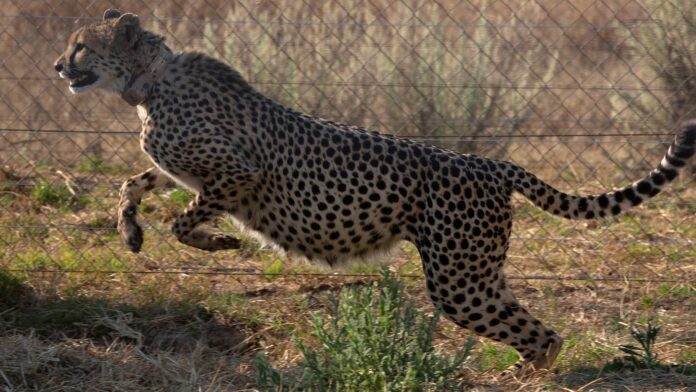
South Africa has relocated six cheetahs to Zambia’s greater Luangwa ecosystem, where the species has been absent for nearly three decades, the Endangered Wildlife Trust (EWT) said on Wednesday.
The organisation said in a statement that the translocation marks the first phase of a long-term reintroduction programme led by Zambia’s Department of National Parks and Wildlife in partnership with regional and international conservation organizations.
Genetic diversity and demographics
According to the statement, the six cheetahs were carefully selected from South Africa’s managed cheetah metapopulation, with consideration given to their genetic diversity and demographics.
They underwent quarantine before being flown to a remote section of North Luangwa National Park in Zambia.
Upon arrival, the animals will be released into a 2 000-hectare predator-proof sanctuary, where they will acclimatise, establish territories and adapt to their new surroundings before being released into the greater Luangwa ecosystem. Another six cheetahs are expected to be translocated later this year, the EWT said.
Each cheetah has been fitted with a satellite-tracking collar and will be closely monitored by trained conservation teams to assess its health, movements and adaptation, the organisation added.
‘A major milestone’
In a statement, Zambia’s Ministry of Tourism welcomed the arrival of the cheetahs, saying it marks a major milestone in the country’s wildlife conservation and ecosystem restoration efforts.
According to the International Union for Conservation of Nature (IUCN), cheetahs are classified as vulnerable on its Red List of Threatened Species, with an estimated global population of around 6 500 mature individuals.
The IUCN said the species has declined by about 37% over the past 15 years due to habitat loss, human-wildlife conflict, illegal wildlife trade and declining prey populations.
- South Africa has relocated six cheetahs to Zambia's greater Luangwa ecosystem, where cheetahs have been absent for nearly 30 years.
- This translocation is part of a long-term reintroduction program led by Zambia's Department of National Parks and Wildlife with partners like the Endangered Wildlife Trust (EWT).
- The cheetahs were selected based on genetic diversity and demographics, quarantined, and released into a 2,000-hectare predator-proof sanctuary for acclimatization before full release.
- Each cheetah is fitted with a satellite-tracking collar for health and adaptation monitoring; six more cheetahs are planned for relocation later this year.
- Zambia’s Ministry of Tourism calls this a major conservation milestone, amid global cheetah population declines due to habitat loss, human conflict, and illegal trade, with about 6,500 mature cheetahs remaining worldwide.


