


Every struggle has its heroes. As we celebrate them, as we should, we must also remember those who carried the consequences of their heroism.
While some went into exile, others kept homes together.
While some organised and mobilised, others absorbed the fear, uncertainty and disruption that followed.
While some became the public face of resistance, others became the custodians of family, community and hope.
These were often women.
They were the women who came after the raid.
The women who swept broken glass from the floor. The women who comforted frightened children. The women who visited prisoners, maintained households, raised families in the absence of loved ones and kept communities functioning under impossible circumstances.
They were not always on the podium. They were not always in the photographs. Many never held leadership positions or wrote memoirs. Yet without them, much of the endurance of South Africa’s liberation struggle would have been impossible.
The recovery mechanism of the struggle
Across South Africa, countless women lived under the long shadow of apartheid. They endured surveillance, harassment, the detention of loved ones, exile, uncertainty and loss. Many carried responsibilities they never chose and burdens that were rarely acknowledged.
The apartheid state disrupted.
Women repaired.
The struggle survived not only because people resisted oppression, but because women repeatedly restored what oppression sought to destroy.
When activists were arrested, women adjusted. When homes were raided, women restored order. When fathers, husbands and sons left for exile, women raised the children. When communities were paralysed by fear, women maintained a sense of normality.
They became the recovery mechanism of the struggle.
Among them were the women of the Black Sash, whose quiet resistance helped challenge injustice and defend human rights during some of South Africa’s darkest years.
The names we often forget
History remembers Solomon Mahlangu. Less often does it remember Martha Mahlangu, the mother who carried the burden of his sacrifice.
History remembers Dr Fabian Ribeiro. Less frequently does it remember Florence Ribeiro.
History remembers Nelson Mandela. Yet while the world focused on the prisoner, Winnie Madikizela-Mandela endured the daily consequences of struggle outside prison walls.
History remembers George Bizos. Women’s Day should also remember Priscilla Jana.
History often remembers the hero. It remembers the speech, the march and the sacrifice. Less often does it remember the mother, the wife, the sister or the woman who remained standing long after the crowds had dispersed.
Yet their contribution was no less significant.
Is this what they marched for?
Commemoration alone is not enough.
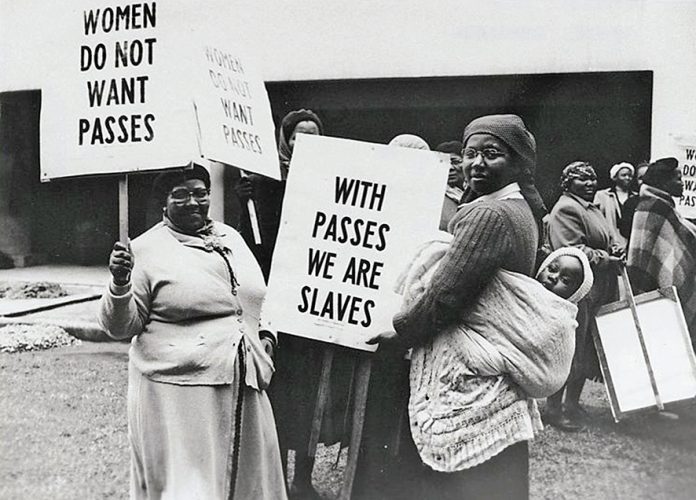
The women of 1956 marched for dignity, justice and a better future. The question South Africans must ask today is whether that future is being protected.
There is a difference between survival and destruction.
Selling nyaope and crystal meth is not empowerment. Allowing homes to become distribution points for drugs is not self-reliance. A livelihood built on the destruction of other people’s children is not a hustle.
It is a betrayal.
Nor can society claim to honour the women of 1956 while remaining indifferent to gender-based violence.
Freedom was never meant to be a moment. It was meant to be a responsibility.
The new threats to communities
Reverend Smangaliso Mkhatshwa once observed that there are many graves that should never have existed.
Today, there are still too many unnecessary graves in South Africa.
The difference is that many are no longer being dug by the machinery of the apartheid state.
They are being dug by the collapse of community responsibility, the scourge of drugs, gender-based violence and the steady erosion of the moral fabric that once held communities together.
The women who resisted apartheid confronted the power of the state.
The challenge facing South Africans today is to confront the failures within their own communities.
Choosing responsibility over indifference
The women who came after the raid understood something that South Africa risks forgetting.
Communities do not repair themselves.
Someone must pick up the broom. Someone must comfort the child. Someone must challenge the drug dealer. Someone must protect the vulnerable. Someone must choose responsibility over indifference.
The women of 1956 did that in their time.
The question is whether the current generation is willing to do it in theirs.
The women who came before us fought to keep communities alive.
They marched for dignity.
They marched for community.
They marched for a future.
Our task is not merely to remember them.
It is to deserve them.
- Rosemary Mashaba is a former High Commissioner to Botswana. She writes in her personal capacity.
- Women played a crucial role in supporting South Africa's liberation struggle by maintaining households, comforting children, visiting prisoners, and keeping communities functioning during apartheid disruptions.
- The apartheid state imposed surveillance, harassment, detention, exile, and loss on women, who often carried unacknowledged burdens and responsibilities to restore order and normality.
- Notable women figures like Martha Mahlangu, Florence Ribeiro, Winnie Madikizela-Mandela, and Priscilla Jana are less frequently remembered than their male counterparts despite their significant contributions.
- Current social issues in South Africa such as drug abuse, gender-based violence, and community breakdown contrast with the dignity, justice, and future community vision pursued by the women who marched in 1956.
- The legacy of resistance women involves choosing responsibility over indifference by actively protecting vulnerable community members and confronting new threats rather than merely commemorating past struggles.


