


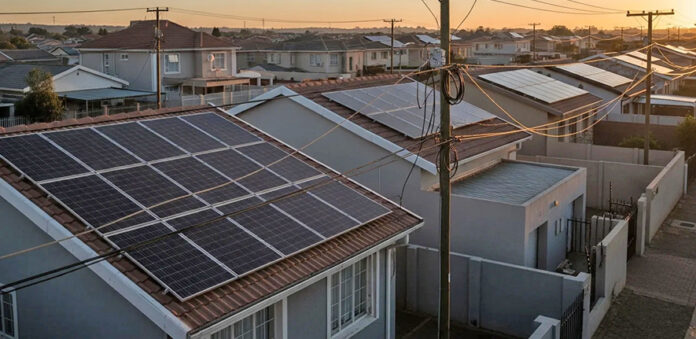
South Africa’s energy regulator has moved to calm the growing public anxiety around the registration of rooftop solar and other small-scale embedded generation systems, clarifying that only grid-connected installations fall within its regulatory net.
The National Energy Regulator of South Africa (Nersa) issued the clarification after reports and public commentary suggested that households and businesses could face fines or disconnection if they failed to register their solar systems. The regulator said these claims risked misrepresenting the legal framework governing embedded generation and unnecessarily alarming consumers.
At the centre of the issue is South Africa’s amended Electricity Regulation Act (2025) and the Exemption and Registration Notice, which together set out when electricity generation facilities must be licensed, registered, or exempt.
According to Nersa, registration requirements hinge on two factors only: whether a system is connected to the grid and its installed capacity.
Nersa confirmed that fully off-grid systems, including solar installations paired with batteries that have no physical connection to Eskom or a municipal network, are not required to register.
For grid-connected systems, however, registration is mandatory. Installations with a capacity of up to 100 kW must be registered with the relevant electricity distributor, either Eskom or a licensed municipality. Systems above 100 kW must register directly with Nersa.
Crucially, the regulator emphasised that registration obligations do not depend on whether electricity is exported to the grid. Even systems designed solely for self-consumption must register if they are grid-connected.
The clarification follows heightened scrutiny from civil society groups, including the Organisation Undoing Tax Abuse, which raised concerns about uneven enforcement and communication by some municipalities.
Nersa said its intent was not to discourage private investment in renewable energy but to ensure that embedded generation is integrated in a way that protects grid stability and other users.
South Africa has seen rapid growth in rooftop solar installations since 2022, driven by load-shedding, declining panel costs, and tax incentives.


