


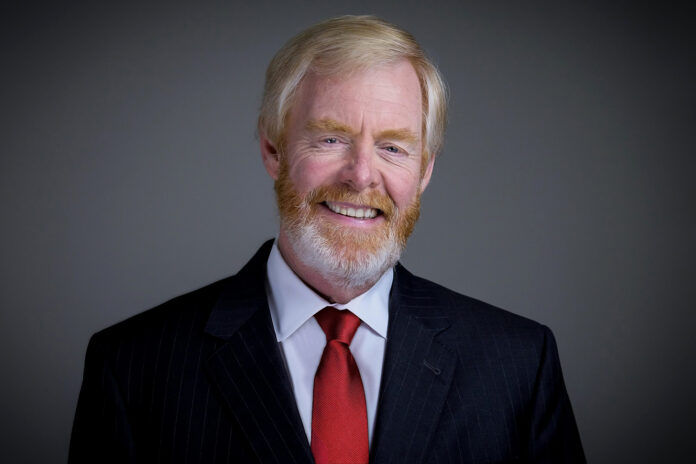
The United States Ambassador to South Africa has apologised after his comments at a business conference appeared to question the controversial “Kill the Boer, kill the farmer” court ruling.
The Department of International Relations and Cooperation (DIRCO) confirmed on Wednesday that Ambassador Leo Brent Bozell III expressed regret during a diplomatic meeting after Pretoria raised concerns about his speech earlier this week.
SA calls Bozell to order
The country démarched Bozell to explain what it calls “undiplomatic remarks” about the country’s policies and institutions. This signalled a rare moment of diplomatic tension between the two countries.
Minister of International Relations and Cooperation Ronald Lamola said government had called in the US envoy following public comments that Pretoria believes were out of line.
“While South Africa welcomes active public diplomacy and the strengthening of bilateral ties, such engagement must remain consistent with established diplomatic etiquette and international protocols,” Lamola said.
Bozell ruffles diplomatic feathers
Some of Bozell’s remarks, made during recent public engagements in South Africa, have ruffled diplomatic feathers.
His speech at the BizNews Conference in Hermanus addressed issues affecting the South Africa-US relationship, including rural safety and investor confidence.
Some viewed Bozell’s references to violence against farmers and rhetoric linked to the struggle-era “Kill the Boer” chant as criticism of South Africa’s judiciary.
A court had ruled that the chant is protected political speech when used in a historical or political context.
‘Undermining SA’s judiciary’
DIRCO Director-General, Zane Dangor confirmed on Wednesday that Pretoria interpreted the remarks as undermining South Africa’s judiciary.
“We had a discussion today, which was in fact our second discussion since he came to South Africa,” Dangor said.
“Regarding the comments that were reported yesterday, Mr Bozell expressed his regrets that these comments detracted from any impression that he wanted to work with us constructively.”
US mission in SA issues apology on social media
The United States mission in South Africa has also issued a public apology on social media, acknowledging the government’s concerns.
Bozell recently visited several historical sites, including the Apartheid Museum and the District Six Museum, where he reportedly made some other controversial comments.
Lamola said that the ambassador had acknowledged South Africa’s complex historical legacy during the meeting with government officials.
“In the engagement he acknowledged that, given our history, South Africa needs leadership, and he expressed a willingness to work with us constructively,” Lamola said.
Discussions also about investment
Discussions also touched on broader policy issues raised by Washington, including economic cooperation and how South Africa’s redress measures intersect with investment.
The diplomatic exchange comes at a sensitive time for the bilateral relationship as both governments seek to balance policy differences with maintaining strong economic ties.
‘SA-US relationship is mutually beneficial’
Pretoria emphasised that despite the diplomatic disagreement, the United States remains a key partner for South Africa across several sectors.
Lamola stressed that the relationship between the two countries was mutually beneficial, extending beyond politics into trade and investment.
“This relationship is not a one-sided relationship. South African companies also maintain a significant presence in the United States in sectors such as energy and chemicals,” Lamola said.
“South Africa remains a leading supplier of critical minerals to the US, and we believe this partnership should continue to grow.”
Efforts to stabilise SA-US relationship
More than 500 American companies operate in South Africa, employing over 250,000 people. The United States is one of the country’s largest investment partners.
Despite the controversy, officials on both sides indicated that dialogue would continue as they seek to stabilise the relationship and address areas of disagreement.
- The United States Ambassador to South Africa has apologised after his comments at a business conference appeared to question the controversial “Kill the Boer, kill the farmer” court ruling.
- The Department of International Relations and Cooperation (DIRCO) confirmed on Wednesday that Ambassador Leo Brent Bozell III expressed regret during a diplomatic meeting after Pretoria raised concerns about his speech earlier this week.
- SA calls Bozell to order The country démarched Bozell to explain what it calls “undiplomatic remarks” about the country’s policies and institutions.
- This signalled a rare moment of diplomatic tension between the two countries.
- Minister of International Relations and Cooperation Ronald Lamola said government had called in the US envoy following public comments that Pretoria believes were out of line.


