


As Global South nations seek stronger healthcare resilience and pharmaceutical self-sufficiency, BRICS is turning political commitments into tangible health cooperation. From vaccine development to medical training, traditional medicine, technology transfer and hospital financing, the group is building an increasingly integrated health architecture across the developing world.
Vaccine and drug development
The BRICS Vaccine Research and Development Centre has moved from virtual coordination to operational reality. At its third meeting, in Brazil in September 2025 during Brazil’s BRICS chairship, representatives from governments, scientific institutions and regulatory agencies advanced discussions on governance, regulatory cooperation and a proposed TB vaccine.
Medical talent training
Under the BRICS framework, cross-border training is deepening long-term medical partnerships. The Heart Sapling Programme launched in April 2023 trains young cardiovascular specialists from BRICS and Belt and Road countries at Xiamen Cardiovascular Hospital for up to one year. According to the hospital, the programme has trained 46 physicians from 18 countries as of September this year. Many graduates have become key practitioners at cardiac treatment institutions in their home countries. Brazilian cardiologist Eric Rodrigo Morales Mercado said he aimed to bring the techniques back to Brazil.
Traditional medicine exchange
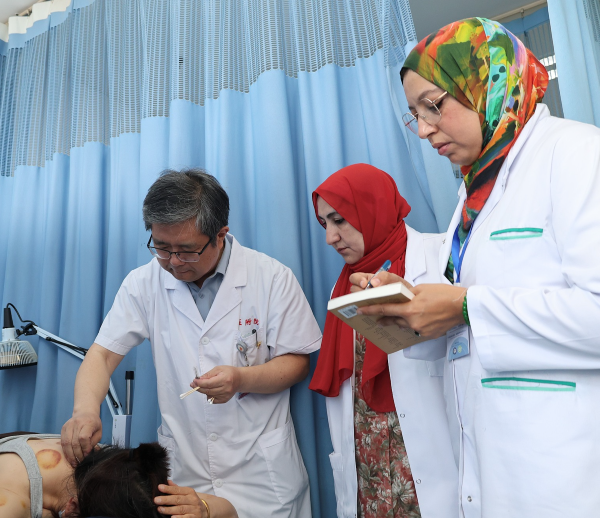
In July this year, BRICS formally elevated traditional medicine by establishing a new Expert Working Group on Traditional, Complementary and Integrative Medicine. The group is dedicated to enhancing exchanges and mutual learning in traditional medicine, promoting the integrated development of traditional medicine and modern medicine, advancing scientific and technological progress and academic prosperity in the field of traditional medicine, and contributing to the sustainable development of the global health system, jointly serving the health and well-being of humanity.
Technology transfer and innovation
The BRICS Technology Transfer Centre, inaugurated in Kunming in 2018, has become the group’s first official technology transfer mechanism. According to the centre, in 2023 alone it signed 23 key science and technology cooperation projects worth more than 7.2 billion yuan (R17bn). The efforts promote cross-border connectivity in biomedical R&D and production and apply AI and information sharing to public health.
New hospital financing
In January 2026, Brazil’s first public smart hospital project received about 1.7 billion reais (R5 billion) in financing from BRICS’ New Development Bank, according to the NDB and the Brazilian government. Located in Sao Paulo, the hospital is designed with 800 beds and 25 operating rooms and is expected to treat about 190 000 inpatients annually. It is planned to begin operations in 2029. The hospital will house a national centre for medical innovation and translation, focusing on precision medicine, health data science and medical device validation, and will deploy AI-assisted diagnosis and robotic surgery systems.
Together, the initiatives have established a solid institutional foundation for biomedical cooperation among BRICS members and the broader Global South. As BRICS countries account for nearly half of the world’s population and around 30% of global economic output, their health cooperation is increasingly shaping a more equitable global health landscape.
- The BRICS Vaccine Research and Development Centre advanced governance, regulatory cooperation, and a proposed TB vaccine at its third meeting in Brazil in September 2025.
- The Heart Sapling Programme, launched in April 2023, has trained 46 cardiovascular specialists from 18 countries at Xiamen Cardiovascular Hospital as of September 2025.
- BRICS established an Expert Working Group on Traditional, Complementary and Integrative Medicine in July 2025 to promote the integration of traditional and modern medicine.
- The BRICS Technology Transfer Centre signed 23 science and technology cooperation projects worth over 7.2 billion yuan (R17bn) in 2023 to enhance biomedical R&D and public health.
- Brazil's first public smart hospital received R5 billion financing from BRICS' New Development Bank in January 2026 and aims to open in 2029 with 800 beds and advanced medical technologies.


