As the finance minister prepares to deliver the 2026 Budget Speech on Wednesday, the atmosphere feels different from the budget brinkmanship that nearly collapsed our economy and the fiscus a year ago.
The 2026 State of the Nation set a tone of cautious triumph, bolstered by data that suggests the country is finally turning a corner. The Stats SA reports from February 17 and 18, indicate a meaningful uptick in employment for Q4 2025, while January’s CPI data shows a continuation of cooling of inflation compared to December.
These are not just technical wins; they represent some optimism of stability of the centre that has weathered the initial frictions of coalition governance.
However, the central strategic question remains unanswered: Where will inclusive growth come from? The minister must be cautioned that the defensive fiscal strategies of the past, focused on austerity, fiscal consolidation, and narrow debt-reduction targets, may have contributed to the current supply chain stability. But they are insufficient for the next phase of our development, to improve human developmental indicators.
While Operation Vulindlela has unblocked critical supply-side bottlenecks in energy and logistics, a purely defensive posture now risks trapping South Africa in a low-growth equilibrium.
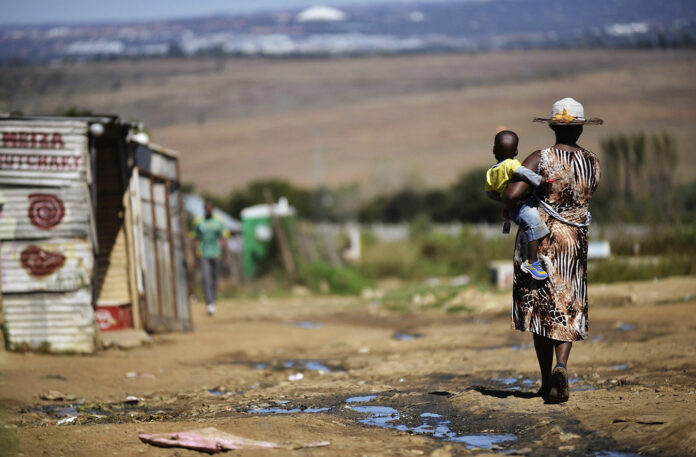
The 2026 Sona proposed further supply-side interventions, including a R20 billion-a-year Transformation Fund, a National Dialogue, and an Innovation Fund. But for the layman in Majemantsho Village or Khayelitsha, integrity, GDP growth rates, fiscal stability or credibility are not edible assets.
The 2025 Sustainable Development Report highlights a sobering decline in developmental indicators; poverty, hunger, and inequality remain entrenched despite macro-stability.
What the economy requires now is an offensive fiscal strategy, one where the state takes a proactive, interventionist role to lead inclusive growth rather than merely waiting for the market to respond to structural reforms. In his response to the Sona debate, the president reaffirmed this necessity, explicitly stating that the 3% growth target is a directive and mandate to the Treasury, rather than a mere projection, signalling that the budget framework must now be made to fit this national development strategy.
The minister must also be wary of further defensive interventions, such as the rigid fiscal rules or debt anchors currently proposed by the IMF. The fund had acknowledged that: strict or rigid application often hinders economic growth, fails to account for development needs, and suffers from poor compliance.1 While mainstream theory suggests these rules bolster credibility, evidence in emerging markets often shows they lead to pro-cyclicality, cutting much required investment exactly when the economy needs a stimulus. Any move toward such rules must be backed by rigorous, evidence-based modelling that proves they will lead to inclusive growth, rather than just satisfying lenders.
Without such proof, a developmental oversight model in Parliament should reject these strategies as they have historically been disastrous for improving macroeconomic performances in the Global South.
State capacity remains the Achilles’ heel of our developmental trajectory. The 2026 Sona acknowledged slow progress in local government, citing failures in infrastructure, governance, and financial health amongst others.
The minister of finance must detail specific interventions, beyond the president’s plan for ring-fenced water and electricity utilities, to ensure that municipal sectors can actually deliver services to households.
This requires a bold shift from merely monitoring failures to an offensive fiscal stance that funds the immediate professionalisation and infrastructure rehabilitation of the local state.
Crucially, the president’s Sona debate response reaffirmed the importance of this alignment, signalling a shift from mere monitoring to direct intervention through professionally managed utilities with the authority to override local administrative bottlenecks.
The lessons from 2025, where the budget process was nearly derailed by coalition disagreements, prove that business as usual is no longer an option. We must transition to a developmental oversight model.
Parliament and provincial legislatures have a strategic role in ensuring the budget is not just political theatre but is strictly aligned with the 2024– 2029 MTDP apex priorities.
Ultimately, the central strategic question remains: where will inclusive growth come from?
The 2026 Budget must move beyond the celebratory stability of the centre to address the widening delivery gap at the edges, inequality, poverty and unemployment.
Inclusive growth will not emerge as a passive byproduct of structural reform or market predictability alone; it must come from a deliberate and intentional use of fiscal policy framework to drive structural transformation.
This requires an offensive pivot away from defensive austerity toward a framework where the state’s balance sheet is leveraged to de-risk strategic industrial sectors and create productive assets that generate long-term value.
As we approach the 2026 elections, the minister must recognise that a professionalised local state is the primary engine for social wage protection.
By prioritising the financial health and infrastructure rehabilitation of our municipalities, and anchoring these efforts in a developmental oversight model, we can finally ensure that our macroeconomic performance and successes translate into a lived reality for all South Africans. If we have built the foundation of stability; it is now time to fund the house of inclusive growth.
Prof Jantjies is a lead macroeconomic and fiscal analyst, professor of practice at the University of Johannesburg, and chairperson of the African Network of Parliamentary Budget Offices.
- As the finance minister prepares to deliver the 2026 Budget Speech on Wednesday, the atmosphere feels different from the budget brinkmanship that nearly collapsed our economy and the fiscus a year ago.
- The 2026 State of the Nation set a tone of cautious triumph, bolstered by data that suggests the country is finally turning a corner.
- The Stats SA reports from February 17 and 18, indicate a meaningful uptick in employment for Q4 2025, while January’s CPI data shows a continuation of cooling of inflation compared to December.
- These are not just technical wins; they represent some optimism of stability of the centre that has weathered the initial frictions of coalition governance.
- However, the central strategic question remains unanswered: Where will inclusive growth come from.