


From now on, China is eliminating tariffs on all products imported from 53 African countries with which it maintains diplomatic relations. The sweeping tariff exemption seeks to remove market-access barriers, as China moves further to open its domestic market to the African continent and deepen economic ties.
For China and Africa, both key partners within the Global South, trade is vital to economic, social, and industrial development. Last year, trade between China and Africa hit another milestone amid rising global trade protectionism. Data from China’s General Administration of Customs show China-Africa trade volume surged to a record $348-billion, up 17.7% year on year. Of this total, China’s imports from Africa reached $123-billion, a 5.4% annual expansion. For China, Africa’s largest trading partner over the past 17 years, imports from the continent, including minerals and agricultural products, are essential inputs for its manufacturing value chains and support food security.
Africa key export market for China
Home to abundant natural resources, including 65% of the world’s arable land, 30% of the world’s mineral reserves, 12% of the world’s oil reserves, and a population of more than 1.5-billion people, Africa is a major source of strategic resources and a key export market for China.
By expanding the zero-tariff policy to include 53 African countries, which aligns with trade-friendly policies enshrined in the African Union’s Agenda 2063 and the 2030 Agenda. This initiative has the potential further to unlock new growth opportunities in the Chinese market.
For these low-income African countries, which are highly susceptible to economic and environmental shocks, tariff-free market access to a stable, predictable demand from the Chinese market offers the opportunity to accelerate economic diversification, unlock value-addition potential, modernize agriculture, and foster industrialization.
As China shifts towards consumption-led, technology-driven expansion to sustained high-quality, inclusive, green, and balanced growth, the attempt to institutionalise tariff-free market access for all African imports could be a central part of the country’s economic strategy.
The 15th Five-Year Plan
From now and into the future, China, guided by the 15th Five-Year Plan (2026-2030), identifies the transition to consumption-led growth and the development of ‘new quality productive forces’ as the overarching policy priority. With this policy focus, the zero-tariff policy, complemented by various initiatives such as the “green channel”, has the potential to increase the availability, variety and affordability of African goods on the Chinese market – and ultimately help stimulate consumption levels, raise productivity and support a higher standard of living.
Also for China, a rapidly growing African market offers long-term trade partnerships, attracts investment, and serves as a destination for strategic resources. For example, this month, Zimbabwe, Africa’s top lithium producer, became the first country on the continent to export locally processed lithium sulfate, thanks to Chinese firm Zhejiang Huayou Cobalt. In 2025, trade between China and Zimbabwe expanded by 14.7% year on year. Zimbabwe ended the year with a $720-million trade surplus with China, among which Zimbabwe exported to China 5 200 metric tons of macadamia nuts valued at $11.62-million, reflecting growing demand for high-value African agricultural products on the Chinese market.
Forum on China-Africa Cooperation framework
Under the Forum on China-Africa Cooperation framework, China announced in November 2021 the “green channel” to facilitate imports of African agricultural products. By June 2023, the initiative had supported 16 agricultural products from 11 African countries to enter the Chinese market. Benefitting from the “green channel” initiative, which has helped streamline inspection and quarantine processes, China’s consumer market has in recent years witnessed a growing number and wider range of African agricultural goods. By 2024, China’s imports of agricultural products from the continent had grown to $5.3 billion, compared to $190 million in 2000, making Africa its second-largest market for agricultural goods.
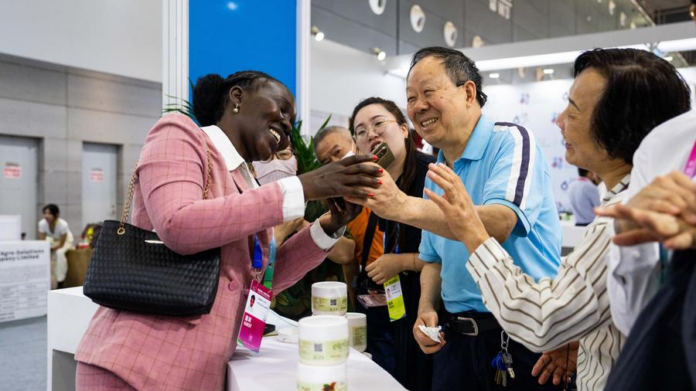
Supported by initiatives such as the “green channel,” Belt and Road Initiative, African Continental Free Trade Area, and a host of international trade exhibition events, including the China-Africa Economic and Trade Expo, which brings together participants from the two sides, the expanded zero-tariff policy could further integrate African value chains into the Chinese market and unlock new growth opportunities for both parties and beyond.
- Alexander Ayertey Odonkor, a special commentator for CGTN, is a global economist with a keen interest in the social, environmental, and economic landscapes of developed countries, emerging markets, and developing economies, particularly in Asia-Pacific, Africa, Europe, and North America. The article reflects the author’s opinions and not necessarily the views of CGTN.
- China is abolishing tariffs on all products from 53 African countries to enhance market access and strengthen economic ties.
- China-Africa trade reached a record $348 billion in 2023, with imports from Africa growing due to minerals and agricultural products vital for China's industrial chains and food security.
- Africa, rich in natural resources and a large population, is a key export market for China, with the zero-tariff policy supporting Africa’s economic diversification and industrialization.
- The tariff exemption aligns with China's 15th Five-Year Plan, aiming for consumption-led, high-quality growth by increasing availability and affordability of African goods in China.
- Initiatives like the "green channel," Belt and Road, and trade expos complement the tariff policy, facilitating agricultural imports and deeper integration of African value chains into China’s market.


