
As the war in the Middle East enters its third week, economists have suggested that the government needs to cut the fuel levy to shield low-income households from rising fuel prices.
The suggestion comes as more economies across the world, including South Africa’s, are increasingly becoming vulnerable to recession, jobs bloodbath and high food prices due rising spot price of Brent crude oil, which has settled above the $100-a-barrel mark since the US and
Israel began attacks on Iran.
Countries such as Brazil this week cut fuel taxes to protect low-income households, while South Korea and Thailand announced fuel price caps.
But leading economists doubt the Reserve Bank will increase the repo rate when the Monetary Police Committee communicates its latest decision on Thursday, saying they expect it to take a wait-and-see approach for six months.
Forecasts from the Central Energy Fund show an underrecovery on diesel of nearly R7/l from the previous month and the underrecovery on unleaded petrol at just below R4/l. This means diesel and unleaded petrol are likely to increase by those amounts.
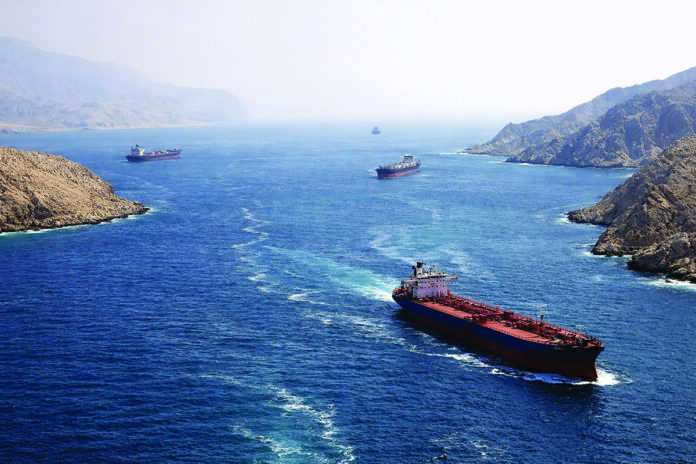
Unisa academic Dr Eliphas Ndou said the war in the Middle East could lead to a spike in inflation if the Strait of Hormuz, through which a fifth of the world’s oil and energy supply passes, remains shut. “With less supply and high demand, we are likely to see more prices going up, and this will feed through SA’s inflation rate because it is going to come into fuel pricing. The increase in the price of oil per barrel from $70 to $100 is going to have significant inflationary pressures in South Africa for motorists.”
Ndou said low- and middle-income households are likely to be impacted by the “transitory shock”. “For middle- and low-income households whose expenditure is largely on food and other related basic commodities, they are going to experience a very big squeeze in their budget in the coming months.”
He predicted that the domestic economy would slow down.
On Friday, US President Donald Trump told Fox Radio that he will stop attacking Iran “when I feel it in my bones”, according to CNN.
This was a sharp U-turn from the recent Fifa Peace Prize winner’s Wednesday statement when he said the conflict would soon be over in response to oil prices
skyrocketing to over $100 a barrel. In a desperate attempt to prevent the oil price from rising further, Trump’s administration waived sanctions for a month on countries procuring oil from Russia.
Amidst the uncertainty, economists said the Middle East conflict would batter the South African economy.
“There’s no doubt that our main economic indicators will show strain in the form of the high landed price of crude and the compounding impact of a weaker US dollar/rand on the economy. How the economy responds will make for an interesting take,” said another independent economist, Mandla Maleka.
“Inflation will be hit hardest, together with the possible unprecedented price of fuel at the pumps. If we were to go with Central Energy Fund, then fuel prices could be as high as R30 (diesel in particular) by mid-year on linear basis with no mitigation. Diesel is the energy of choice for the trucking industry and railways. And goods transported would be at added costs and industries will finally off-load to consumers. As for the interest rate regime, it’s clear, in hindsight, that we could have cut interest rates in January. Now we are contending with a possible upward adjustment in May,” said Maleka.
Economist Azar Jammine said if the war lasts for more than a “month or so”, the economy could slide dangerously towards a recession. “Prior to the war, there was an oversupply of oil, people were starting to talk about the oil price falling from around $60 to $50 a barrel. So, fundamentally, there is no shortage of oil, it’s just the Strait of Hormuz (being affected).
“The key is how long the Strait of Hormuz will remain closed. It’s a question of the duration of the war or whether America will be able to intervene with the ships [after they said] they will escort ships through the Strait of Hormuz, though they haven’t managed to do it yet. Assume that they do, and the oil starts flowing through the strait, the price of oil will fall sharply.”
However, if the US loses control over the situation, the world economy will be hard hit.
The oil supply chain disruptions will negatively impact the prices of byproducts like petrol, diesel, gas used to produce microchips in Taiwan, petroleum jelly, plastics and nitrogen, which is used in fertiliser production.
Jammine warned that with oil prices at current levels, inflation could pass the 4% marker, the upper end of the inflation target.
“If inflation goes above 4%, you could argue that the Reserve Bank will then increase interest rates. I believe it’s too early for them to make such a decision at this stage, in the same way that no other country has yet increased interest rates in a hurry because everyone is waiting to see just long this [war] will actually last.
“If oil prices remain at current levels or rise further, you could well see some increase in the interest rates, which should be bad for economic activity, also, the very fact that people will have to spend 30% more on fuel than they were doing before, said Jammine.


