


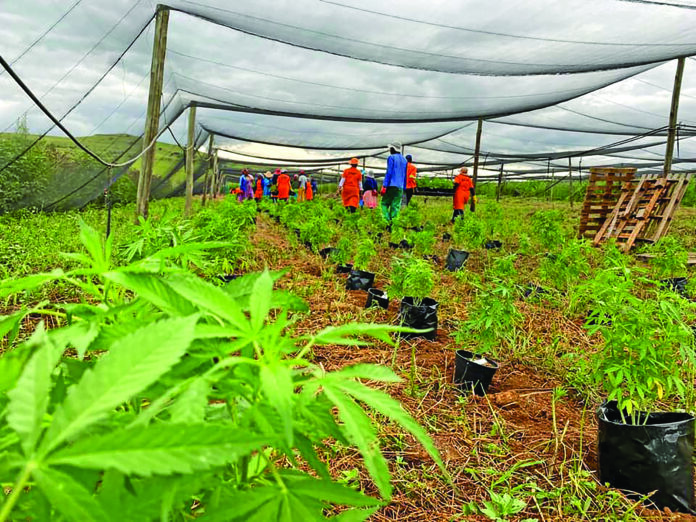
There is still room for advancing the cannabis and hemp industries in South Africa. But we cannot position these as major game-changers in our agricultural sector’s growth trajectory; they are mainly an addition, like other commodities. Still, some work remains to finalise the legislative and regulatory framework in this area.
I know many people and organisations are hard at work with the government to complete the regulatory matters. Others, like the good folks at the Agricultural Research Council (ARC), are working to advance cannabis and hemp research and, importantly, seed breeding for this plant.
I must admit, though, that we have been slow in this cannabis and hemp path. A few years ago, this was a hot issue. And now, globally, the mood is somewhat downbeat on cannabis. Still, that is no reason to change our focus in South Africa. There are cycles in these things, as with other soft commodities.
Clear regulatory path
We need to move and ease the environment for commercial production, and reduce the talk and announcements about the plant. The announcements often seek to position the plant as if it will solve all our problems, but that is not the case.
We have been slow to provide a new, clear regulatory path for this plant, and the licensing fee has been somewhat prohibitive for some people.
But my caution about the overexcitement about the plant is not that I’m pessimistic. Indeed, it is likely that when we finally progress with cannabis and hemp research, regulations and a clear policy framework, the plant could create opportunities for cannatourism, particularly in rural areas of the Eastern Cape, KwaZulu-Natal, and Limpopo. Of course, life won’t drastically change because of this plant, but it will bring some value.
Importantly, we need to consider practical ways to ensure that production and value chains don’t mainly develop in areas that have always been the leading agricultural zones and urban areas with better access to investment.
The communities of the Mpondoland region of the Eastern Cape have been growing this plant in the shadows of the law for many years. They should benefit from its liberalisation, along with KwaZulu-Natal and Limpopo. Incentives to drive the industry towards these regions will be necessary.
- There is still room for advancing the cannabis and hemp industries in South Africa.
- But we cannot position these as major game-changers in our agricultural sector’s growth trajectory; they are mainly an addition, like other commodities.
- Still, some work remains to finalise the legislative and regulatory framework in this area.
- I know many people and organisations are hard at work with the government to complete the regulatory matters.
- Others, like the good folks at the Agricultural Research Council (ARC), are working to advance cannabis and hemp research and, importantly, seed breeding for this plant.


