


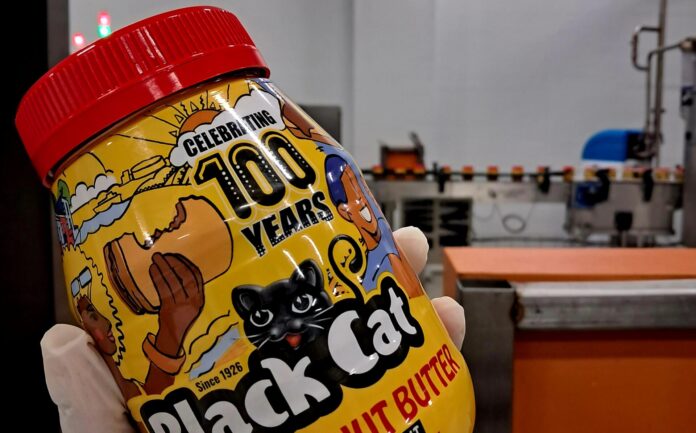
A new sourcing approach by the Black Cat peanut butter brand could be expected to open more opportunities for emerging black farmers as the brand begins testing a model to clean and process nuts directly from producers.
According to Circana data for March 2026, the South African peanut butter category is valued at about R1.1-billion, with a modest growth of 0.5% in value and 2.5% in volume.
Black Cat has at least 24% of the market share by value, making it the second-largest peanut butter brand in the country and a strong player in the mid-to-upper-income consumer segments.
The company receives between 8 000 and 9 000 tonnes of groundnut inputs annually and produces at least 92 tonnes a day, resulting in 2.5-million jars annually.
The move to source nuts from black farmers, which started its testing phase on Tuesday, marks a potential shift in how peanuts are sourced for Black Cat peanut butter under Tiger Brands.
The peanut butter company has been involved in cleaning their nuts more thoroughly after being received from the suppliers and wants to now source directly from farmers.
Support for growth of BEE
Sipho Modiba, the procurement manager for agricultural crops and vegetables at Tiger Brands, said the idea was sparked by groundnut-cleaning machinery acquired as part of a R300-million investment in the company’s 8 610m² facility in Chamdor, west of Johannesburg.
Modiba explained that, by mechanisation, the plan is not to replace the groundnut cleaners that they already source products from but rather to extend the market to emerging groundnut farmers.
As it stands, supply is largely handled through its long-standing partner Triotrade, which aggregates, cleans and grades groundnuts from multiple farmers before supplying them to the manufacturer.
Triotrade currently plays a key role by consistently supplying volumes from different regions across seasons.
Modiba said the proposed model would mean that Black Cat would take on part of this process itself, working more closely with farmers and sourcing nuts directly.
The initiative is expected to support the growth of black economic empowerment (BEE) farmers by improving access to markets.
“Our mechanical team is still individually checking the machines to ensure that there is no risk to them; they have been sitting for a long time, and it is important that they be thoroughly checked mainly for safety.
“Once they are operational, we monitor the process closely and send a report back to Tiger Brands because the project requires support from them; they would need to approve and fund the expansion and the vision we have on supporting emerging farmers,” said Modiba.
The new model could shorten the supply chain by allowing Black Cat to engage farmers earlier in the process if implemented.
This may improve traceability, reduce delays and potentially increase earnings for producers.
Acquiring expensive machines
He said established farmers are able to purchase sophisticated equipment and tools to farm efficiently at great scale but emphasised that it may be difficult for an emerging farmer to access these expensive machines, and this is when the mother company is expected to step in.
The opportunity became clearer during a tour of two groundnut farms in the northwest. The two farms, which supply Triotrade, showcased both the potential and challenges within the local supply chain.
Fields of groundnuts stretched across moist soil but sandy at the surface level, with farmers carefully managing crops under tough conditions.
Despite unpredictable weather and rising input costs, the farmers demonstrated resilience and the use of manual labour to ensure the safety of the nuts.
The main challenge experienced this year was attributed to heavy rains received, which are said to cause too much moisture and expose the nuts to the danger of aflatoxin contamination.
At one farm, workers sorted the nuts into heaps to protect them from heavy rains, but they still had concerns about the unharvested parts.
- Black Cat peanut butter brand is testing a new sourcing model to clean and process groundnuts directly from emerging black farmers, potentially transforming their supply chain.
- The South African peanut butter market is valued at R1.1-billion with Black Cat holding 24% market share, producing 2.5 million jars annually from 8,000-9,000 tonnes of groundnuts.
- The initiative is supported by Tiger Brands' R300-million investment in mechanization at their Chamdor facility and aims to enhance black economic empowerment (BEE) by giving emerging farmers better market access.
- This new approach could improve supply chain efficiency by shortening the process, increasing traceability, reducing delays, and potentially boosting farmers’ earnings.
- Challenges for emerging farmers include limited access to expensive farming machinery and risks of aflatoxin contamination due to heavy rains, which Black Cat aims to mitigate through closer collaboration and support.


