


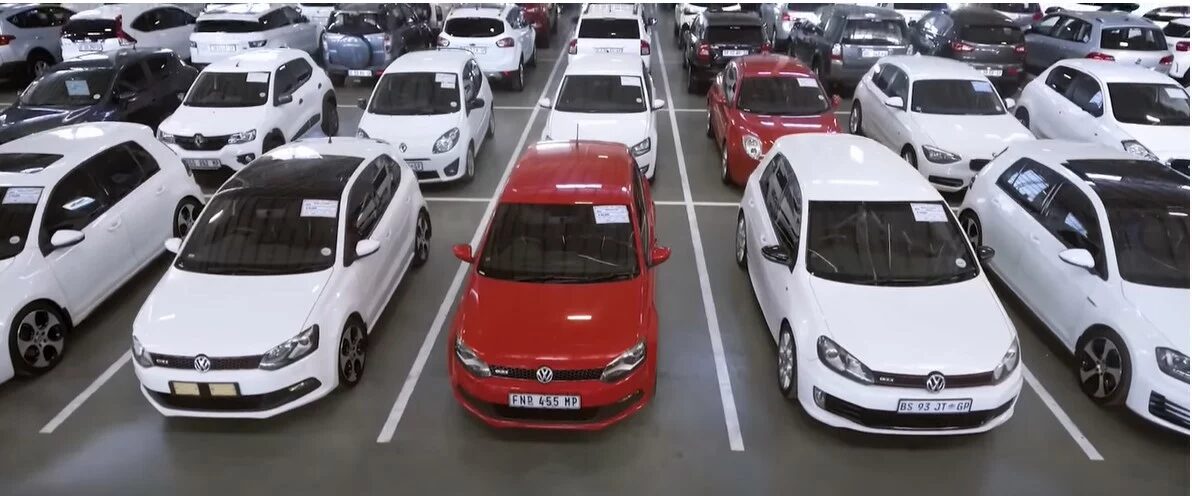
WeBuyCars saw its revenue and vehicle volumes increase in the year ended September 30, 2026, but a sharply more competitive vehicle market, margin pressure and higher operating costs weighed on profitability despite continued expansion across South Africa.
The company reported revenue of R28.3 billion, up 7.2% from R26.4 billion the previous year, while vehicles sold rose 4% to 186,220 units and vehicles bought increased 3% to 185,943. The group also expanded its market share of used vehicle registrations to 10.7% from 10.3%.
READ: Transaction Capital shares crash as CEO is driven out
Profit drivers
Despite weaker earnings, the group’s core operations continued to generate substantial cash and revenue growth. Vehicle sales remained the main earnings engine, contributing R27.7 billion of total revenue, while finance and insurance commissions generated a further R580 million.
WeBuyCars also recorded strong operational momentum, achieving a record monthly sales volume of 17,209 vehicles in March 2026 and exceeding 15,500 vehicle sales in six of the final 12 months of the year.
A significant positive was cash generation. Net cash generated from operating activities increased 48.2% to R1 billion from R677.3 million a year earlier, reflecting disciplined inventory management and the group’s cash-generative business model.
The acquisition of a 49% stake in GoBid (Pty) Ltd, a digital salvage vehicle auction platform, also contributed positively. The investment generated equity-accounted income of R36.5 million during its first nine months and management said performance exceeded expectations.
Shortcomings and financial weaknesses
Revenue growth did not translate into earnings growth. Operating profit fell 17.1% to R1.11 billion, while headline earnings declined 18.5% to R764.2 million. Headline earnings per share dropped 18.6% to 182.8 cents.
The primary reason was pressure on gross margins in what management described as a deflationary used vehicle market.
The rapid growth of new vehicle sales, particularly lower-priced Chinese and Asian brands, forced WeBuyCars to reduce vehicle selling prices to remain competitive and maintain inventory turnover.
READ: Chinese brands dominate as Jetour T2 wins 2026 SA Car of the Year
The company also faced higher input costs. Fuel and logistics expenses increased by R26 million compared with the previous year after adjusting for volume growth.
Inventory write-downs increased to R126 million from R91 million, reflecting lower vehicle values and the group’s strategy of clearing higher-priced stock that faced competition from cheaper new vehicles.
Shareholders felt the impact through a reduced final dividend of 17 cents per share compared with 30 cents the previous year.
Key challenges
Management highlighted a changing South African vehicle market as its biggest challenge. New vehicle sales grew 12.5% during the year, supported by lower interest rates and aggressively priced Chinese and Asian brands whose share of the passenger vehicle market increased to 20% in 2026 from 13.8% in 2025.
This trend contributed to declining used vehicle prices and compressed margins across the sector. WeBuyCars responded by adjusting its pricing models and becoming more selective in vehicle acquisitions, resulting in lower offer acceptance rates and lower inventory levels at year-end.
The group also dealt with a regulatory issue during the year. It reached a settlement with the National Consumer Commission, paying a R2.5 million administrative penalty and R3.4 million in redress and refunds to consumers, while revising certain sales agreement terms.
Expansion plans
Despite the tougher trading environment, WeBuyCars continued to expand aggressively. During the year it opened supermarkets in Montana, Lansdowne, eMalahleni and Bloemfontein, while relocating its commercial vehicle operation to a larger site on the R21 highway in Centurion. These projects increased parking capacity by 25.4% to 16,194 bays.
The group spent R314.8 million on property and infrastructure during the year, with much of the investment directed towards the new supermarkets. Property, plant and equipment increased 11.6% to R1.9 billion.
Management’s medium-term objective remains ambitious. The company is targeting volumes of 23,000 vehicles bought and sold per month by financial year 2028 and says progress remains on track.
Future expansion will include a new capital-light supermarket development in Polokwane, where the group recently secured 2.7 hectares of land. The facility is expected to open during 2027 and will consolidate vehicle preparation and trading activities into a single site.
The company is also continuing to invest heavily in technology. The roll-out of its Inspectify vehicle inspection platform has now been completed across all supermarkets, while further investment is being made in digital systems and pricing technology designed to improve efficiency and customer transparency.
READ: Transaction Capital’s investment in WeBuyCars bears sweet fruits
- WeBuyCars' revenue increased by 7.2% to R28.3 billion, with vehicle sales rising 4% to 186,220 units in the year ended September 30, 2026.
- Operating profit declined 17.1% to R1.11 billion and headline earnings fell 18.5% to R764.2 million due to margin pressure and higher operating costs.
- The group increased its market share of used vehicle registrations from 10.3% to 10.7% and generated net cash from operating activities of R1 billion, up 48.2%.
- WeBuyCars acquired a 49% stake in GoBid (Pty) Ltd, generating equity-accounted income of R36.5 million in its first nine months.
- Despite challenges, the company expanded by opening new supermarkets and relocating its commercial vehicle operation, increasing parking capacity by 25.4% to 16,194 bays.


