


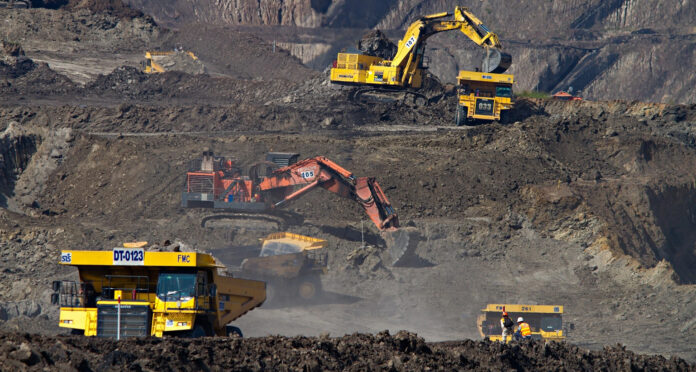
The Democratic Republic of Congo (DRC) has taken a decisive step that could reshape the global critical minerals landscape. On January 20 2026, Kinshasa formally shared a vetted shortlist of state-owned mineral assets with the US, offering access to projects spanning manganese, copper-cobalt, lithium, gold and other strategic metals under a newly established bilateral minerals partnership.
The move places the DRC at the centre of intensifying geopolitical competition for the raw materials that underpin the clean-energy transition, from electric vehicles and battery storage to renewable power infrastructure and defence technologies.
US critical minerals list
In late 2025, the US sharpened its own strategic focus by releasing an updated US Critical Minerals List. This was compiled by the US Geological Survey under the Department of the Interior.
The list expanded to 60 minerals deemed essential to economic resilience and national security. And explicitly reflect clean-energy demand, supply-chain concentration, and geopolitical risk. Notably, copper was formally designated as critical, alongside lithium, cobalt and rare earths. Also uranium and other inputs vital to electrification, grid expansion, and advanced manufacturing.
The list now serves as a guiding framework for US domestic production policy and international partnerships. Permitting reforms and strategic stockpiling, it signals a clear intent to secure diversified and reliable mineral supply chains.
The DRC’s mineral endowment is unmatched in several critical categories. According to the International Trade Administration (ITA), the country holds an estimated 6 million metric tons of cobalt reserves (more than 50 percent of known global reserves). It produced approximately 220,000 metric tons of cobalt in 2024. This accounts for roughly 75% of global supply.
Copper mining in the Copperbelt
Cobalt extraction is closely linked to copper mining in the Copperbelt. There, annual copper production has risen from 2.5 million to over 3 million metric tons. This is positioning the DRC among the world’s top copper producers and contributes more than 10% of global output.
Financially, copper and cobalt dominate the country’s export profile and government revenue base. It is generating the bulk of foreign exchange earnings and a significant share of fiscal income through taxes and royalties.
The strategic urgency surrounding Congolese minerals is reinforced by global supply and demand projections. According to the International Energy Agency’s (IEA) Global Critical Minerals Outlook 2025, demand for lithium, cobalt, nickel, copper, graphite, and rare earth elements is set to grow sharply through 2040 across all policy scenarios.
Electric vehicles, grid-scale storage and renewable energy infrastructure are the primary demand drivers. Lithium demand is expected to multiply several-fold. And copper demand is rising by roughly 30% even under moderate climate policy assumptions.
Crucially, the IEA warns that planned mining capacity remains insufficient for several core materials. Copper faces a potential supply gap of up to 30% by the mid-2030s. While lithium markets remain structurally tight.
Opportunity to rebalance partnerships
For the DRC, opening mineral assets to US investors offers an opportunity to rebalance partnerships. To also attract long-term capital and potentially raise mining standards beyond the license to operate by enforcing stricter compliance, transparency and accountability.
However, challenges, such as environmental degradation, water contamination, labour conditions, artisanal mining practices, and governance weaknesses continue to shape negative perceptions about mining in Congo.
The success of the US-DRC minerals partnership will therefore hinge on alignment with international standards. This is including the IFC Performance Standards, the Extractive Industries Transparency Initiative, and robust human-rights due diligence. If strategic mineral security is to coexist with sustainable development.
Congo’s mineral outreach to the US is a real-time test of whether the global energy transition can secure the materials it needs without reproducing the environmental harm, social inequities and governance failures of past resource booms.
With demand accelerating and supply risks mounting, the choices made now will shape not only critical mineral markets, but the credibility of ESG commitments worldwide.


