


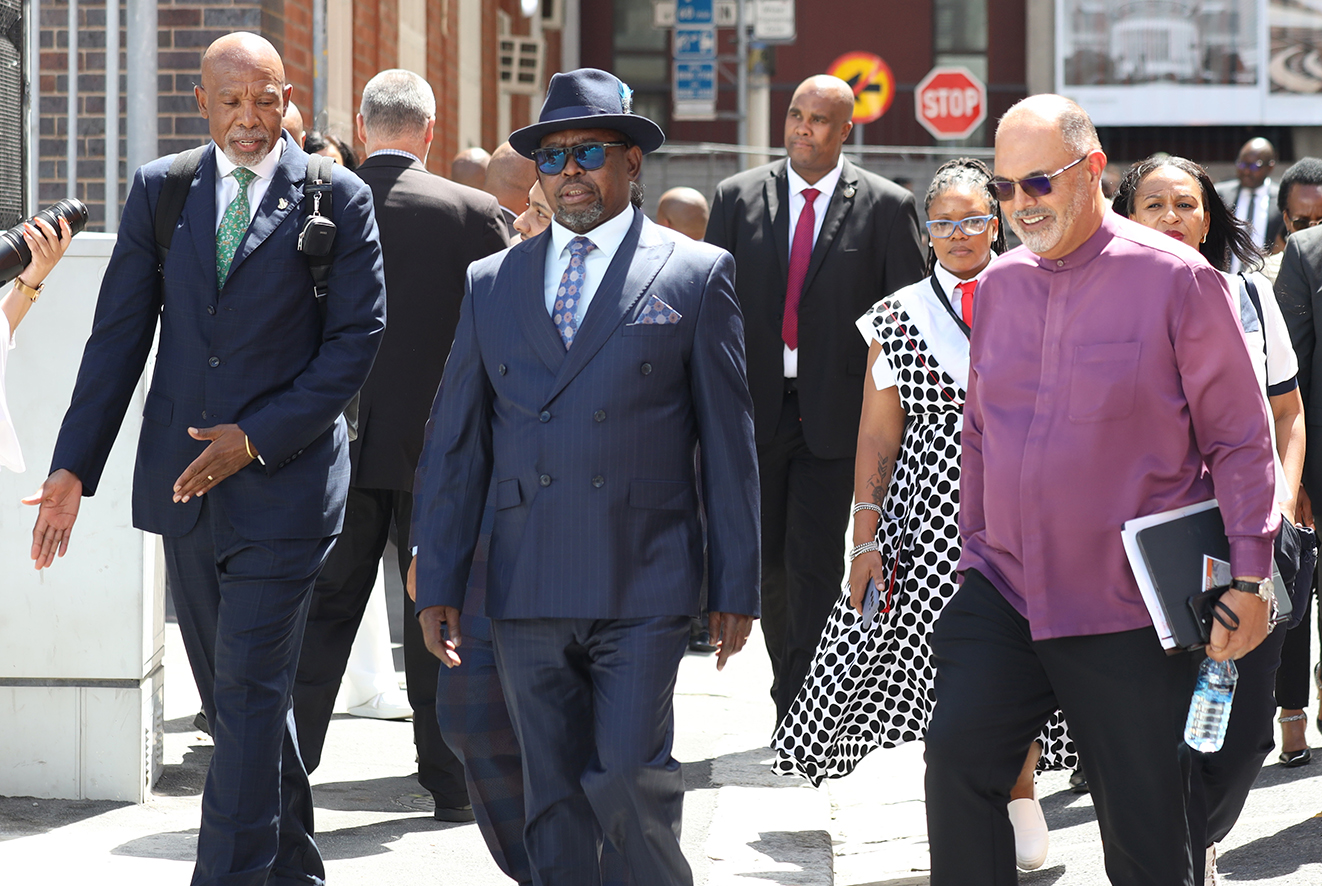
Finance minister Enoch Godongwana faces a delicate balancing act when he delivers Tuesday’s Medium-Term Budget Policy Statement (MTBPS), with stronger-than-expected public finances giving Treasury room to manoeuvre but slowing economic growth, rising spending pressures and stubbornly high unemployment limiting its options.
Investors, businesses and households will be looking beyond the deficit and debt numbers to determine whether Treasury has a plan to translate fiscal gains into infrastructure investment, job creation and faster economic growth, while reducing government debt.
Difficult backdrop
The policy statement comes against a far more difficult backdrop than Treasury anticipated a year ago. Growth projections of 1.6% for this year, rising to 1.8% next year and 2% in 2028 have been undermined by economic disruptions linked to geopolitical tension in the Middle East, renewed conflict involving Russia and Ukraine, higher energy prices and global uncertainty.
The economy contracted by 0.2% in the second quarter, while the South African Reserve Bank now expects growth of about 1.2% this year.
Revenue position
Yet government’s revenue position has strengthened.
Miyelani Maluleke and Sello Sekele, economists from Absa Group, say fiscal consolidation remains on track because of stronger-than-expected and broad-based revenue collection combined with relatively contained spending growth.
Revenue increased by 9.5% year on year in the first five months of the fiscal year, exceeding the pace required to meet Treasury’s annual target.
Bank of America (BofA) estimates that government could collect R70-billion more revenue than projected in February, largely due to higher corporate tax payments from gold and precious-metals producers. It expects the budget deficit to narrow to 3.5% of GDP, below Treasury’s target of 3.7%, potentially resulting in South Africa’s lowest deficit in a decade.
Critical test
The key question, however, is “how much of the revenue windfall Treasury chooses to save rather than spend,” BofA says.
The concern is echoed by Dr Simphiwe Madikizela, an economist from the Unisa School of Business Leadership, who says fiscal stability alone will not solve the country’s South structural economic problems.
Madikizela says the MTBPS will face a critical test in convincing investors that South Africa can strengthen public finances while generating the economic growth needed to create jobs and ease pressure on households.
He warns against using temporary mining-related windfalls to finance permanent spending commitments. Rather than broad spending cuts, Madikizela says government should prioritise infrastructure, education and healthcare while improving spending efficiency, procurement controls and accountability. Investments in electricity supply, freight rail, ports, water systems and municipal infrastructure are essential to lowering business costs, attracting investment and supporting employment growth.
Competing spending demands
Treasury also faces competing spending demands.
The pending court case around the Social Relief of Distress grant remains a fiscal risk. Absa says Treasury has estimated that expanding the grant could cost roughly R90-billion annually, potentially placing additional strain on finances.
Municipal finances are another concern. Treasury has identified local government finances as a growth and fiscal risk, with 162 municipalities assessed as being in financial distress.
Investors will be looking for reforms aimed at improving governance, infrastructure maintenance and service delivery.
Debt picture
There are, however, signs that the debt picture is improving.
Absa expects gross government debt to decline to 76.3% of GDP from 78.3%, while BofA forecasts debt stabilising between 76% and 77% of GDP. Treasury has secured about 60% of its annual financing requirements, while debt-service costs have increased by 0.5%, the slowest growth rate in over a decade.
Improving fiscal metrics are also beginning to influence sovereign credit ratings. BofA believes Moody’s could upgrade South Africa’s rating this year, while a move by S&P Global Ratings could restore investment-grade status for its local-currency rating.
- Finance Minister Enoch Godongwana will deliver the Medium-Term Budget Policy Statement on Tuesday amid stronger-than-expected public finances but slowing economic growth and high unemployment.
- South Africa's economy contracted by 0.2% in Q2 2024, with growth projections revised down to about 1.2% for this year by the South African Reserve Bank.
- Government revenue increased by 9.5% year on year in the first five months of the fiscal year, potentially allowing a budget deficit narrowing to 3.5% of GDP.
- Treasury faces fiscal risks such as the potential R90-billion annual cost of expanding the Social Relief of Distress grant and financial distress in 162 municipalities.
- Government debt is expected to decline to around 76-77% of GDP with slower debt-service cost growth, possibly leading to a Moody’s credit rating upgrade and restoration of investment-grade status by S&P.


