


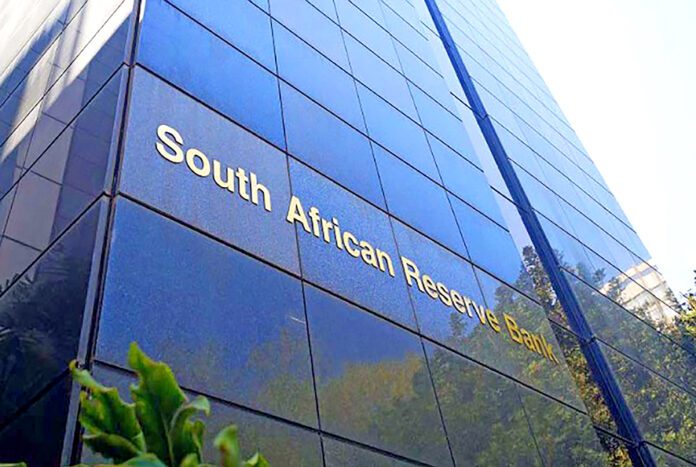
Economists and consumer experts have revealed that the decision to keep the repo rate unchanged reflect a balance between improving economic conditions and persistent risks.
While inflation is close to the 3% target and growth is expected to pick up this year, analysts warn that global uncertainty and rising administered costs mean policymakers are not yet ready to cut interest rates.
As such, South African Reserve Bank governor announced that the Monetary Policy Committee (MPC) decided to keep the repo rate at 6.75%.
Significant growth improvement
Lead economist at KPMG South Africa, Frank Blackmore, said the decision was taken despite encouraging signals in the South African economy. He said growth is expected to improve this year, rising above 1% mark. This would be significant improvement compared with the average growth of 0.7% seen over the past decade.
On inflation, Blackmore noted the 3.2% average inflation while inflation increased to 3.6% in December. He said this increase was driven by temporary factors, and is expected to be the peak in the Reserve Bank’s forecast as the country moved into 2026.
However, he said the MPC chose to leave interest rates unchanged due to ongoing risks.
“Although these risks are viewed by the Reserve Bank as broadly balanced, they still pose upside risks to inflation. Most notably, these include external risks such as geopolitical and trade-related pressures facing South Africa. As well as internal risks, including potential increases in administered prices. Particularly electricity tariffs,” said Blackmore.
Hayley Parry, Money Coach and Facilitator at 1Life’s Truth About Money, argued that the decision will disappoint consumers who were hoping for an interest rate cut. Especially as some economists are forecasting reductions of up to 0.5 percentage points by the end of the year.
She said the decision might not reduce financial pressure. But it helps households plan better as repayments remain unchanged. And consumers are able to manager their budgets more effectively and avoid unexpected shocks.
Significant time for households
“Importantly, this decision comes just as the South African government prepares to announce its annual budget in February. This makes it an opportune time for households to review their own budgets for the year ahead. If they have not already done so.
“Knowing that interest rates have not changed gives consumers the chance to stabilise their finances. To identify areas where spending can be controlled, and prepare for the future,” said Parry.
If interest rate cuts do come later, she said, households could use the stability to reduce debt faster. Or to increase savings and investments.
Tando Ngibe, Senior Manager at Budget Insurance, agreed. He said keeping the repo rate as it is means the prime interest rate remains at 10.25%. For most households, this means monthly debt repayments will stay the same.
Ngibe said home loans, vehicle finance, personal loans and credit cards linked to the prime rate will not see any change in instalments.
Inflation under control
He said the Reserve Bank remains cautious due to global uncertainty. This includes decisions by the US Federal Reserve and risks such as rising electricity costs.
Ngibe added that inflation remains under control. And that a stronger rand has helped reduce some cost pressures. With inflation still within the target range, price increases are expected to remain moderate in the short term.
For consumers, he advised using this period of stability wisely by paying down high-interest debt. By building an emergency fund and avoiding unnecessary new credit.
Elna Moolman, Standard Bank Group Head of South Africa Macroeconomic Research, said the decision reflected concerns on global economics as the repo rate remains unchanged despite positive inflation.
However, she said the forecasted 0.75 basis points cut for 2026 and 2027 would still be possible and quicker. This considering the rand performance.
- Economists and consumer experts have revealed that the decision to keep the repo rate unchanged reflect a balance between improving economic conditions and persistent risks.
- While inflation is close to the 3% target and growth is expected to pick up this year, analysts warn that global uncertainty and rising administered costs mean policymakers are not yet ready to cut interest rates.
- As such, South African Reserve Bank governor announced that the Monetary Policy Committee (MPC) decided to keep the repo rate at 6.75%.
- Significant growth improvement Lead economist at KPMG South Africa, Frank Blackmore, said the decision was taken despite encouraging signals in the South African economy.
- He said growth is expected to improve this year, rising above 1% mark.


