


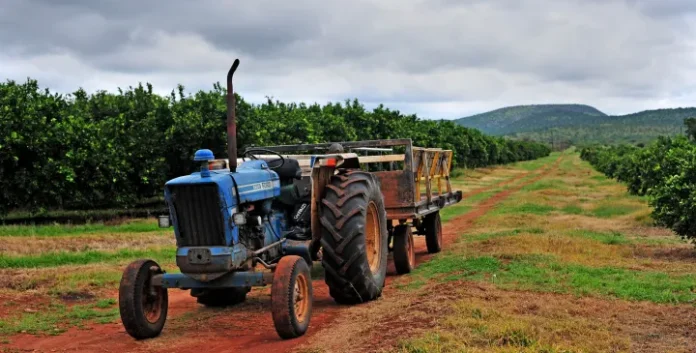
The expected increase in fuel prices on December 3 comes at a busy time for South Africa’s agriculture, as we continue summer grain and oilseed plantings.
The diesel price (0.05% wholesale inland) could increase by 61 cents per litre, while the petrol price (95 ULP inland) could rise by 26 cents per litre.
Fuel accounts for a notable share of grain farmers’ input costs, about 13%. We are also in a busy period for winter grains and oilseeds, with harvest underway.
Beyond farmers, fuel price increases also affect agribusinesses, particularly those involved in logistics.
It is worth noting that roughly 81% of maize, 76% of wheat, and 69% of soybeans in South Africa are transported by road.
A significant portion of other agricultural products, including 75% of the nation’s grains and oilseeds, are transported by road.
Meanwhile, the wheat farmers in South Africa are working hard to complete the harvest for the 2025/2026 season.
They have already made impressive progress. But the harvest will likely continue into early January 2026 in some areas.
Mild decline expected in Western Cape
The farmers have delivered about 960 378 tonnes to commercial silos since the start of October 2025, marking the beginning of this new marketing year. This crop was planted at the beginning of May 2025.
This volume delivered so far equals 47% of South Africa’s expected 2025/2026 wheat harvest of 2.03-million tonnes. The expected harvest is up 5% from the 2024/2025 season.
The annual improvement is boosted by the expected better harvest in the Northern Cape, Free State, Eastern Cape, and Limpopo.
The Western Cape, which accounts for over half of South Africa’s winter wheat production, is expected to experience a mild decline in the harvest this year compared to the 2024/2025 season due to unfavorable weather conditions in some parts of the province.
When the Crop Estimates Committee reviewed the harvest this week, they left the wheat production estimate roughly unchanged from last month (down just 0.3%).
As I noted in my previous letters, the potential wheat harvest of 2.03-million tonnes implies that South Africa may need to import approximately 1.74-million tonnes in the 2025-26 season to meet our annual needs.
These imports are expected to be down 5% from the 2024-25 season.
The import activity is not expected to be a significant challenge, given ample global wheat supplies.
Record global wheat harvest forecast
The International Grains Council forecasts a record 2025-26 global wheat harvest of 827 million tonnes, up 3% from the previous season.
These ample global wheat supplies continue to add downward pressure on global wheat prices, which is beneficial to importing countries such as South Africa.
An important fact to keep in mind about South Africa is that we have a wheat import tariff, which may minimize the benefit of lower global wheat prices, as it is aimed at providing some level of support to domestic producers.
Still, the fact that there are ample global wheat supplies and prices are under pressure supports the view I have long shared here: we are heading towards a continuous moderating food price inflation path in 2026 in South Africa.
On November 28, 2025, South Africa’s wheat pot price traded around R5 755 per tonne, down 3% from a year ago.
- The expected increase in fuel prices on December 3 comes at a busy time for South Africa’s agriculture, as we continue summer grain and oilseed plantings.
- The diesel price (0.05% wholesale inland) could increase by 61 cents per litre, while the petrol price (95 ULP inland) could rise by 26 cents per litre.
- Fuel accounts for a notable share of grain farmers’ input costs, about 13%.
- We are also in a busy period for winter grains and oilseeds, with harvest underway.
- Beyond farmers, fuel price increases also affect agribusinesses, particularly those involved in logistics.


