


The Gauteng government has signed a landmark agreement aimed at finally delivering the long-delayed Kopanong Precinct Project, 23 years after the initiative was first conceived.
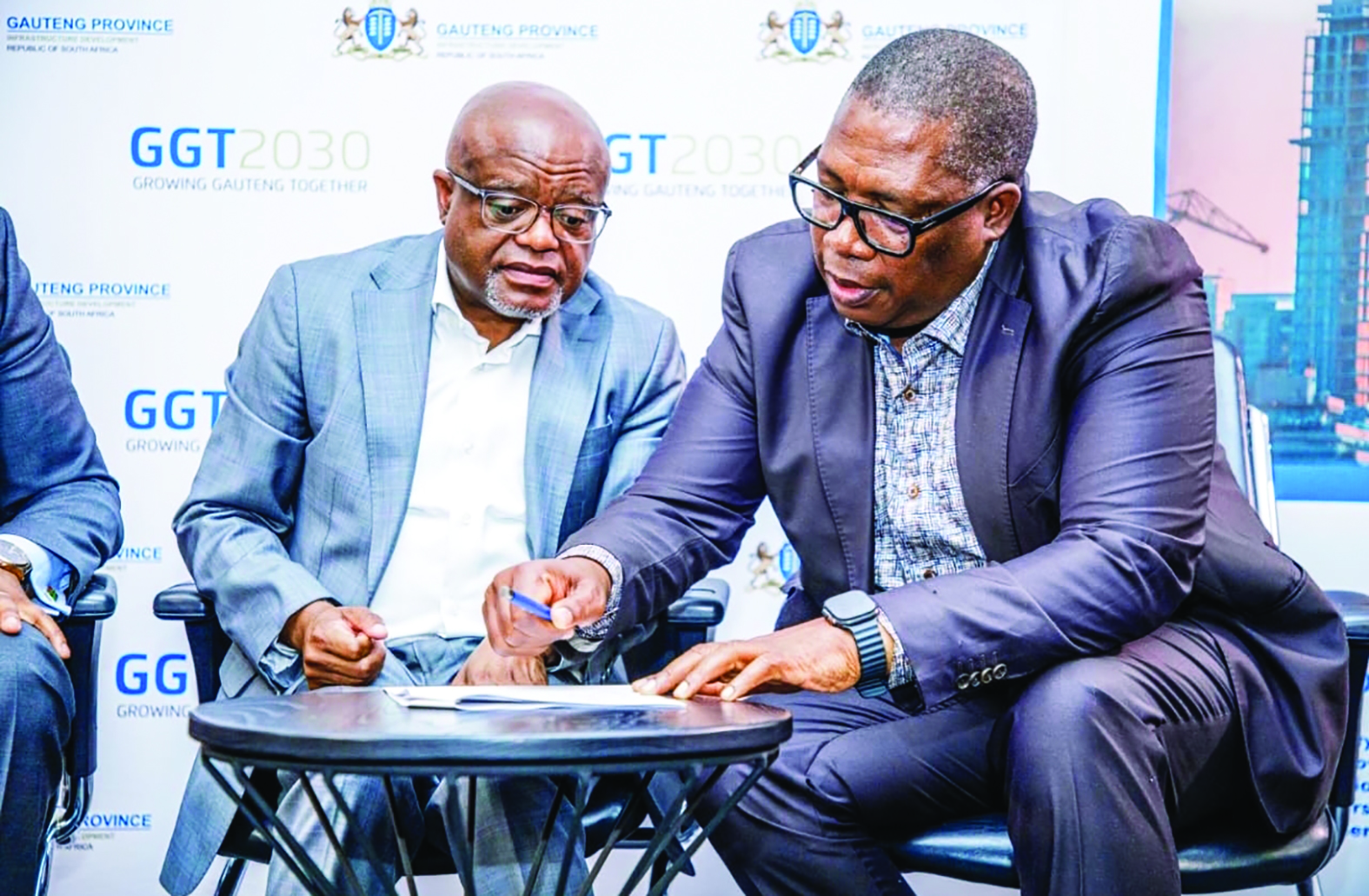
Premier Panyaza Lesufi, Johannesburg Mayor Dada Morero and the Development Bank of Southern Africa (DBSA) last week put pen to paper on an infrastructure development agreement, estimated to be worth R16 billion and intended to accelerate the regeneration of Johannesburg’s CBD.
The project, unveiled in 2003 during former premier Mbhazima Shilowa’s administration, aims to attract private-sector investment through a blended-finance model combining municipal assets, development finance and private capital.
Central to the agreement is the implementation of the Gauteng Precinct Development Project, known as the Kopanong Precinct Project.
The initiative seeks to transform government properties into a modern, integrated precinct designed to stimulate economic activity, improve public infrastructure and enhance the delivery of government services.
The project will be implemented through a partnership between the provincial government, represented by the Gauteng Infrastructure Funding Agency and the DBSA.
The initiative forms part of the broader Johannesburg CBD Revitalisation Programme, which aims to tackle decades of urban decay.
Through the blended-finance model, the City of Johannesburg, the Gauteng government and the DBSA hope to unlock funding from property developers, institutional investors and infrastructure financiers, channelling investment into the CBD and surrounding areas.
The regeneration programme is expected to boost Johannesburg’s property market through the development of affordable and social housing, student accommodation, mixed-use developments and the refurbishment of distressed buildings.
It also seeks to consolidate scattered provincial government offices into one administrative hub in the CBD.
Officials believe the interventions could improve occupancy rates, increase property values and attract residential and commercial tenants back to the inner city.
The programme also aims to support small businesses and informal traders through the development of markets, trading facilities, business hubs and incubators.
Speaking at a CEOs’ breakfast hosted by the Gauteng Department of Infrastructure Development, Lesufi acknowledged the project’s lengthy delays.
“This project started when I was a student. I became a premier and it’s still not finished.
“Those who want to criticise government only need to look at the Johannesburg CBD and the challenges we face.”
Lesufi said the city needed to become more competitive with leading global urban centres.
“What will make me happy is to see those old buildings being demolished, dust rising and construction vehicles moving in as we rebuild our inner city. We can’t compete with Paris and Dubai with this city,” he said.
The proposed partnership is expected to generate substantial economic benefits, particularly through the refurbishment of buildings, housing developments, upgrades to water, electricity and transport infrastructure, and investment in digital and smart-city projects.
Beyond the construction phase, officials expect long-term employment opportunities to emerge as businesses, residents and services return to revitalised precincts.
Over time, increased economic activity could strengthen municipal revenues through higher property rates collections and service payments, while heritage restoration and tourism initiatives may support growth in the hospitality, cultural and creative sectors.
The agreement also seeks to establish a pipeline of catalytic projects aimed at restoring investor confidence in the inner city and encouraging further private-sector development beyond projects linked to the programme.
Morero said the precinct development would play a critical role in attracting investment back into the inner city.
“The development of the precinct will help us attract as much investment as possible into the Johannesburg CBD and accelerate the revitalisation of the inner city.”
- The Gauteng government, Johannesburg Mayor Dada Morero, and the Development Bank of Southern Africa signed a R16 billion agreement to deliver the Kopanong Precinct Project 23 years after its conception.
- The Kopanong Precinct Project aims to transform government properties into a modern precinct to stimulate economic activity, improve infrastructure, and enhance government service delivery.
- The project is part of the Johannesburg CBD Revitalisation Programme, which seeks to combat urban decay through affordable housing, mixed-use developments, and business support facilities.
- The initiative uses a blended-finance model combining municipal assets, development finance, and private capital to unlock investments from developers, investors, and financiers.
- Officials expect the project to generate economic benefits including increased property values, employment opportunities, infrastructure upgrades, and growth in heritage, tourism, and creative sectors.


