


Veteran businessman Saki Macozoma has heaped praise on black economic empowerment (BEE), saying a transaction that will see his company being paid over R11-billion for the acquisition of manganese assets is proof that the policy works.
Macozoma said this during an interview with Sunday World after his company Ntsimbintle Holdings, and its strategic partner OM Holdings, on Thursday concluded an R11.7-billion sale of their manganese assets to Exxaro Resources following regulatory approval.
This means Exxaro Resources’ subsidiary ManganExx will acquire 100% of the issued shares of Ntsimbintle’s subsidiary Tshipi é Ntle Mining and 19.99% of the issued shares of Australian-based Jupiter Mines.
Both Tshipi and Exxaro said the transaction has become unconditional and is expected to be implemented on or before February 27.
Exxaro was under pressure to diversify from its coal asset base, as the company had cash on hand as of December 31 of R19.7-billion and net cash of R11.8-billion. The sale comes amidst growing demand for manganese worldwide as it is a critical component in the production of renewable energy.
To Macozoma, who chairs Tshipi é Ntle, the transaction means BEE policy isn’t doomed.
“The transaction is very significant to the debate about and around BEE at the moment. The policy is under attack from domestic naysayers to the friends of the current administration in the US. The main line of attack is that BEE is just a form of patronage for the politically connected and never resulted in the creation of new businesses. This transaction puts paid to this notion.”
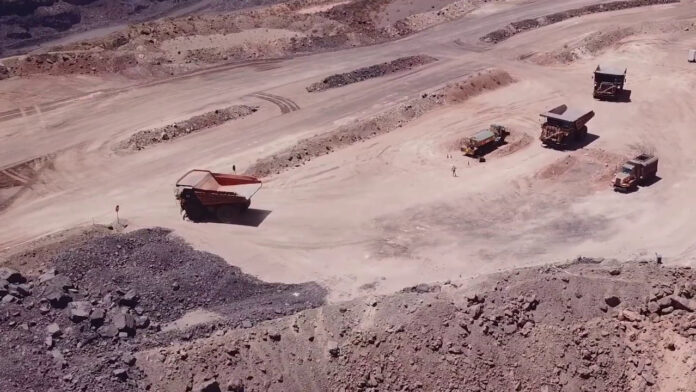
Reflecting on the company’s beginnings, he said Tshipi was created from a permit that gave them the right to prospect for manganese in 2004 in an area between Kathu and Hotazel, in Northern Cape. These rights were held in Tshipi é Ntle Manganese Mining.
The Tshipi mining entitlement request garnered approval in 2010, and after a 20-month building and activation period, the Tshipi Borwa Mine dispatched and shipped its initial manganese mineral.
“We did not borrow a cent from any institution or anyone. Today we have this gem, which is one of the biggest producers and sellers of manganese ore in the world. We are involved in the entire value chain from mining, processing, logistics and shipping, and marketing through a Singapore-based company to trading in China with the ultimate customers.”
He said they created thousands of sustainable jobs and careers and enabled significant community development through the Kgalagadi Trust, which owns 15% of the company without ever incurring cost.
Macozoma said the deal with Exxaro was testimony that opportunities in the right hands can create value for South Africa.
“The main reason we are happy to sell to Exxaro is that they will continue with our legacy and build more.
“We believe that Exxaro has a vision and the resources to catalyse these opportunities for Tshipi…[and] that Exxaro has the financial and institutional muscle to lead the consolidation of the Kalahari Manganese Field.
“For these reasons we believe that the transaction is good for South Africa. We are happy that the regulators agreed with our submissions to them and approved the transaction in record time.”
Macozoma said the proceeds of the sale would go straight to shareholders, and they will decide how to deploy them.
“I believe that most of the proceeds will be ploughed back into the regional and national economies. Many will diversify their investments and thereby build resilience for their companies.
“Let us remember that the Kgalagadi Trust in the Northern Cape holds 15% of Ntsimbintle and they will be able to invest in development in Northern Cape. They will also be able to build resilience in their balance sheet.
“The local investors in Ntsimbintle will also plough back the proceeds into the provincial economy and diversify its exposure beyond manganese. I see a multiplier effect from this in the Northern Cape province. That is what BEE is capable of doing, as it has done through Tshipi, Exxaro and others.”
On his experience as a black businessman, Macozoma lamented the lack of support from private financial institutions and state-owned development finance institutions.
“We experienced this when we needed to build the mine. After we had built the mine, we wanted to list the company so we could have resources for consolidation. Again we were snubbed.
“What hurt the most is that state funding institutions such as the Industrial Development Corporation and Public Investment Corporation would not touch us with a barge pole whilst they were lending to and supporting dubious businesses.
“I learnt that success built on integrity and hard work does not guarantee support in South Africa from both the private and the public sectors.”
He thanked shareholders for sticking by the project at difficult times, especially in the immediate post Polokwane ANC conference in 2007, “when scare tactics were applied to them that they must not deal with me or they would face the consequences”.
“The few who yielded to this pressure regret their decisions. Our shareholders needed the cash that we were using to build the company, but they had patience with us when we explained our rationale and our strategy. The experience of building a new mining company from scratch, from employee number one to one of the top mining and exporting companies in South Africa and the world, is a great exhilarating positive.”
Ben Magara, CEO of Exxaro, said, “This transaction puts together two strong BEE companies who are both consistent dividend payers and positions Exxaro as a formidable and diversified mining company of reference in South Africa, and I am delighted that we can utilise our strong coal resources as a base to prudently accelerate our asset portfolio to include transition minerals and to grow our energy solutions business. This acquisition provides Exxaro with a strong entry point into the manganese sector.”
- Veteran businessman Saki Macozoma has heaped praise on black economic empowerment (BEE), saying a transaction that will see his company being paid over R11-billion for the acquisition of manganese assets is proof that the policy works.
- Macozoma said this during an interview with Sunday World after his company Ntsimbintle Holdings, and its strategic partner OM Holdings, on Thursday concluded an R11.7-billion sale of their manganese assets to Exxaro Resources following regulatory approval.
- This means Exxaro Resources’ subsidiary ManganExx will acquire 100% of the issued shares of Ntsimbintle’s subsidiary Tshipi é Ntle Mining and 19.99% of the issued shares of Australian-based Jupiter Mines.
- Both Tshipi and Exxaro said the transaction has become unconditional and is expected to be implemented on or before February 27.
- Exxaro was under pressure to diversify from its coal asset base, as the company had cash on hand as of December 31 of R19.7-billion and net cash of R11.8-billion.































BBBEE, giving the wealth opportunity to one more. What about the other few million South African citizens, when are they given dignity through opportunity?