


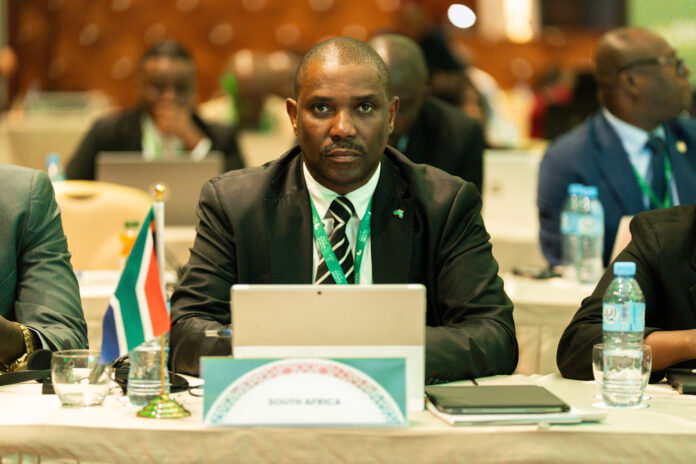
New South African Revenue Service (SARS) commissioner-designate, Ngobani Johnstone Makhubu has been urged to tighten screws on traders operating in the illicit economy and competing head-on with formal businesses that are driving economic and tax revenue growth.
The Black Business Council (BBC) said this after Makhubu was named successor to incumbent Edward Kieswetter, who has been at the helm since 2018.
Makhubu has been Sars deputy commissioner responsible for taxpayer engagement and operations since 2023. He will walk into the job after National Treasury last year strengthened SARS’ capacity to deal with tax dodgers by granting it an additional R7-billion over a three-year period. The money would assist the revenue service to recruit 1 500 debt collectors.
BBC deputy president Gregory Mofokeng said he hoped that Makhubu will continue implementing reforms that the Sars management have rolled out.
“SARS has requested additional funding to tackle tax dodgers and collect more money for the fiscus. We remain hopeful that under Makhubu’s leadership that project would also continue.
“There is a lot of illicit trade that is happening in the country, whether you are talking counterfeit goods or illegal cigarettes, and SARS plays a very important role. And we are hoping that SARS will double down on efforts to clamp down on those practices,” Mofokeng said.
At its revenue collection announcement this week, SARS stated that the shadow economy resulted in SARS losing over 5% of the R2.1-trillion revenue it collected in the 2025/2026
financial year.
Said Kieswetter: “The illicit economy continues to drain the country’s resources, distort competition, and undermine public confidence in the tax system.
Activities such as smuggling, customs and excise fraud, under‑declaration, counterfeit trade, fuel and tobacco syndicates, and organised tax crime divert resources away from essential public services and place compliant taxpayers and legitimate businesses at a disadvantage.
SARS said the fiscus loses over R100-billion in revenue each year to the illicit economy.
“We will not allow criminal syndicates to hollow out the tax system. SARS, working with other law-enforcement agencies, is determined to disrupt, dismantle, and shut down illicit trading networks, and to make non‑compliance hard and costly,” said Kieswetter.
Mofokeng said, “When formal businesses, like British American Tobacco, close down due to the illicit economy, the reality is that we are losing jobs and de-industrialisation. And this is on the back of illegal cigarettes thriving in the country. We do have a problem we need to solve and SARS must come to the party as far as this is concerned.
“We cannot have a situation where we are losing jobs and factories are being closed just because illegality is thriving. [Failure to deal with the illicit economy] would lead to a mafia state because at the end of the day people are not going to stop smoking tomorrow, so they will smoke what’s available and what’s available is illegal.”
Mofokeng stated that Makhubu would also need to deal with the growing illicit trade in alcohol.
Makhubu joined SARS in 2016 as the group executive responsible for procurement after exiting Eskom. In the August 2017 he was appointed acting chief officer for finance and a year later he occupied the role on a permanent basis, focusing on procurement and collecting tax from corporate real estate.
The Black Management Forum managing director Monde Ndlovu congratulated Makhubu on his appointment.
“Makhubu was voted in unanimously by the selection panel after being recommended by former Finance Minister Nhlanhla Nene. Makhubu represents exactly what the BMF advocates for. He is a seasoned meritocrat who rose through the ranks of government.
“Having served as chief procurement officer in SARS before rising to chief financial officer, chief revenue officer, deputy commissioner and finally, commissioner designate. His strong professional grounding is supported by an impressive academic background and he possesses multiple degrees, including a MBL and PhD with a strong focus on business and organisational governance and integrity.
“This is exactly the sort of calibre of civil servant the BMF would like to see in all government departments. The BMF is very optimistic about the tax reforms likely to happen under Makhubu’s leadership. The rise in SME thresholds will reduce pressure on struggling small businesses. We are all excited about the investment incentives and inflationary relief which will allow for increased savings. Furthermore, the modernisation of South Africa’s tax structures through increased digitisation and artificial intelligence will make tax compliance easier and provide increased revenue for our struggling government,” he said.
“We further commend the commissioner on his plans to tackle controversial industries such as illicit mineral trade, crypto, and incomes from digital spaces which remain grey areas of our economy that have yet to be sustainably managed. The BMF wishes the new commissioner great success in his new role and stands ready to work hand-in-hand with SARS in creating an economy that is progressive and inclusive,” said Ndlovu.
- Ngobani Johnstone Makhubu has been appointed as the new SARS commissioner, succeeding Edward Kieswetter, with a mandate to clamp down on illicit trade harming the economy and tax revenue.
- The Black Business Council urges Makhubu to continue reforms and address the illicit economy, including counterfeit goods, illegal cigarettes, and alcohol, which undermine formal businesses and tax collection.
- National Treasury allocated an additional R7 billion over three years to SARS to enhance its capacity to combat tax evasion, enabling recruitment of 1,500 debt collectors.
- SARS reported losing over 5% of its R2.1 trillion revenue in 2025/2026 due to the shadow economy, with illicit activities costing the fiscus more than R100 billion annually.
- Stakeholders warn that failure to address illegal trade risks job losses, factory closures, and economic decline, emphasizing the need for SARS and law enforcement to disrupt criminal syndicates effectively.


