


Sometimes corporate litigation involves billions. Sometimes it settles complex commercial disputes that change industries. And sometimes two well-resourced businesses spend more than a year marching through the courts over an amount that would barely cover a decent office coffee machine.
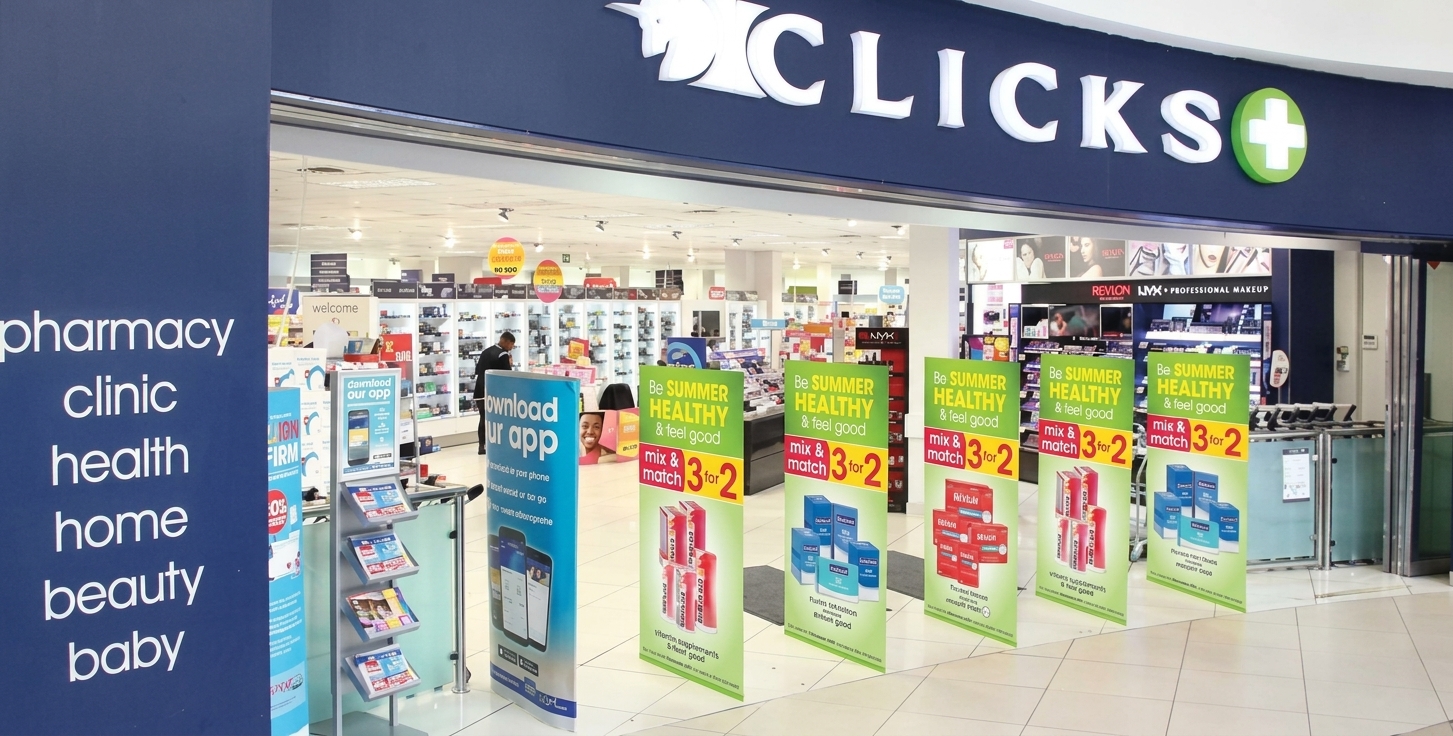
That was the curious tale before the Western Cape High Court, where Collateral Projects and retail giant Clicks battled all the way to judgment over a remaining balance of just R9,364.44. The presiding judge, Phillipa Susan Van Zyl J, appeared almost amused by the spectacle, opening the judgment by observing that the parties had indeed “duelled to the bitter end”.
From nearly R1 million to pocket change
The dispute did not start small. In July 2025, Collateral Projects launched legal proceedings claiming R943,991.29 for unpaid invoices arising from a long-running trading agreement between the parties.
Clicks indicated it would oppose the application but then missed the deadline to file its answering affidavit. By the time the matter first reached court in September 2025, the parties agreed to move it to the opposed roll and continue the fight another year.
Meanwhile, a remarkable thing happened: Clicks started paying. And paying. And paying some more.
ALSO READ: Clicks accelerates electric truck rollout with 30-vehicle fleet
The vanishing debt
Under the trading agreement, Collateral Projects had supplied goods and services, issued invoices, and expected payment at month-end. Nobody seriously disputed that the services had been delivered.
The real drama concerned the accounting. By the time litigation was underway, Clicks began making substantial payments that steadily reduced the debt.
First came payments in June 2025. Then, after court proceedings had already commenced, a further series of payments landed in September 2025.
The great reduction
Between September 9 and 15 2025, Clicks paid more than R934,000 towards the claim.
Those payments shrank the original claim of nearly R944,000 to a mere R9,364.44. At this point, it was expected that the two commercial entities to compare spreadsheets, exchange bank statements, share a conciliatory cup of tea and move on with their lives.
Instead, the battle intensified.
The missing proof
Clicks insisted it had paid everything due. According to its version, nothing remained outstanding and Collateral Projects was unnecessarily prolonging the litigation.
Read more: Ex-Clicks CFO Michael Fleming joins Santam board
There was just one problem. The court repeatedly noted that Clicks failed to provide proof of certain payments that allegedly explained the remaining discrepancy.
The judge remarked that obtaining evidence from banking records should have been straightforward.
The R9,000 question
The remaining dispute turned on competing versions of two payments. Collateral Projects said the figures left an unpaid balance of R9,364.44.
Clicks said the payments were larger than claimed and that the debt had been extinguished entirely. Yet despite carrying the burden of proving payment, Clicks did not produce the documentary evidence needed to settle the argument conclusively.
That omission would prove decisive.
Judge asks: where are receipts?
Van Zyl was unimpressed by the absence of proof. The judgment noted that a simple proof of payment could likely have put the matter to rest.
Read more: Landlord kicks out black-owned pharmacy for Clicks
Without that evidence, the respondent’s version was described as “bald and untenable”. The court consequently accepted Collateral Projects’ calculation of the outstanding amount.
And thus, after a year-long legal campaign, victory hinged on a sum smaller than many monthly cellphone contracts.
Interest never sleeps
The case was not only about the capital amount. Because payment had been delayed, Collateral Projects also sought mora interest from June 2025 onwards.
Clicks did not dispute that interest was payable. As the debt reduced through various payments, the interest calculation also reduced accordingly.
But the obligation never disappeared completely because the final R9,364.44 remained unpaid.
Everyone blames everyone
The most entertaining portion of the judgment concerned costs. Each side accused the other of frustrating efforts to resolve the dispute.
The affidavits and legal arguments apparently contained extensive finger-pointing. The judge observed that both sides bore responsibility for allowing the disagreement to continue.
In essence, neither camp emerged looking particularly reasonable.
Mediation opportunity lost
The court agreed that the matter would have been an ideal candidate for mediation. Yet the judge found little value in one side criticising the other for procedural shortcomings regarding mediation when both had overlooked their obligations.
In a memorable passage, the court effectively invoked the legal equivalent of “people in glass houses shouldn’t throw stones”.
Or, as the judge put it more elegantly, what is good for the goose is good for the gander.
Final whistle
In the end, Collateral Projects got what it wanted. The court ordered Clicks to pay the outstanding R9,364.44, together with ongoing mora interest and the costs of the application.
Those costs included counsel’s fees and earlier reserved costs, which are most likely to be higher than the R9,364.44 that the two parties were fighting for. While the judge declined to award punitive costs, the ordinary costs order still means the legal bill almost certainly dwarfed the amount actually in dispute by the time judgment was delivered.
- Collateral Projects sued Clicks in July 2025 for R943,991.29 for unpaid invoices under a trading agreement.
- Clicks made substantial payments during litigation that reduced the claim to R9,364.44 by mid-September 2025.
- Clicks claimed it had paid in full but failed to provide proof of certain payments, which the court found decisive.
- The Western Cape High Court ordered Clicks to pay the outstanding R9,364.44 plus ongoing mora interest and legal costs.
- Both parties were criticized by the judge for prolonging the dispute and missing an opportunity for mediation.


