


South Africa is entering a difficult period. Not because of one single event, but because several major economic pressures are converging at the same time, and many households are already feeling stretched before the full impact has even arrived. The warning signs are no longer subtle.
Crude oil remains above $100 per barrel, driven by prolonged conflict in the Middle East and continued uncertainty around global supply routes.
There is still no clear indication that the conflict will end soon, and every week of instability adds pressure to international energy markets.
For South Africa, that matters directly. We import the majority of our fuel, which means global oil prices rapidly become local inflation.
The recent fuel increases at the pumps are only the first visible layer. The broader inflationary impact filters through more slowly into food prices, transport costs, manufacturing inputs and ultimately the cost of living.
This means the inflation data South Africans have seen in recent months may be misleading. The real pressure is still coming.
May and June inflation figures are likely to tell a very different story as the fuel shock begins moving through the economy.
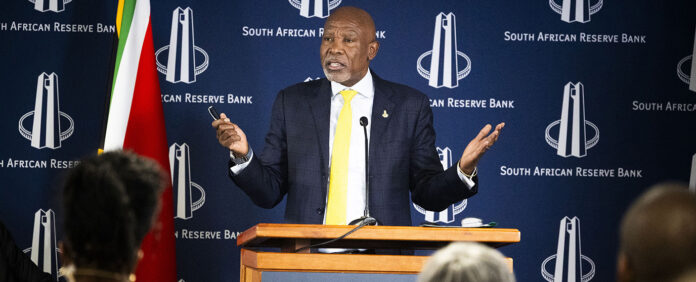
This is precisely why attention is now turning to the South African Reserve Bank’s next interest rate decision on 28 May.
While the Bank has not signalled an outright increase, the environment is shifting rapidly. My view is that the possibility of a rate increase should not be dismissed.
In fact, there is a strong argument that the Reserve Bank may move preemptively, anticipating the inflationary uptick that lies ahead rather than waiting for the full data to arrive. That may be prudent monetary management. But it comes at a cost.
As I argued in a recent piece, this creates a difficult policy contradiction for South Africa. Higher interest rates reduce aggregate demand – less borrowing, less spending, less investment – which ultimately slows economic growth. Yet the inflationary pressure now building is largely supply-side driven, led by higher fuel costs, global oil disruptions and a weaker rand.
In other words, we may be slowing an already weak economy to fight inflation originating largely outside our borders.
And that is the deeper problem. South Africa’s economic growth outlook is deteriorating.
Growth forecasts have been revised downward. Consumer confidence remains weak. Business confidence is fragile. The private sector remains hesitant to commit to large-scale expansion while both domestic and global uncertainty continue to rise. This leaves South Africa vulnerable because when growth is weak, the economy has very little shock absorption.
At the same time, political developments are adding another layer of uncertainty.
The renewed spotlight on Phala Phala is not merely political theatre. Markets and investors assess leadership stability, institutional integrity and governance continuity. When uncertainty rises around these, capital often pauses. Investment decisions are delayed. Risk pricing increases. That has economic consequences.
South Africa is therefore facing a combination that economists watch very carefully:
- Higher fuel costs.
- Rising inflation risk.
- Weak growth. Political uncertainty.
- A vulnerable currency.
- And the possibility of tighter monetary conditions.
For the average South African, the consequences are practical and immediate.
Food will become more expensive. Transport will cost more. Debt servicing remains under pressure. Business margins tighten. Employment creation slows.
The man in the street may not follow Brent crude charts or central bank commentary, but he feels the result every day at the till, in the taxi fare, and in the cost of keeping a household afloat.
The economy cannot rely only on monetary policy to weather this storm. Interest rates alone cannot create growth. In fact, they often suppress it.
We need investment. We need infrastructure delivery. We need energy stability. We need stronger logistics. We need business confidence.
Most importantly, we need to accelerate public-private partnerships.
The state cannot carry economic recovery alone.
Yes, the months ahead may be difficult. The data are pointing that way. Global conditions are fragile, and local vulnerabilities remain exposed.
But South Africa has repeatedly shown resilience in difficult cycles.
The opportunity now is not to wait for conditions to improve on their own.
It is to make deliberate decisions that unlock growth, restore confidence and position the economy to recover stronger.
But only if we are prepared to make the bold economic decisions needed now – not when the pressure becomes even greater.
- Van Doesburgh is an economist, head of economics at CPUT and a regular commentator and business consultant on South Africa’s economic landscape. vandoesburghm@cput.ac.za
- South Africa faces converging economic pressures including high global oil prices, rising inflation, weak growth, political uncertainty, a vulnerable currency, and potential interest rate hikes.
- Crude oil prices remain above $100 due to Middle East conflicts, driving up local fuel prices and triggering broader inflation impacting food, transport, and manufacturing costs.
- The South African Reserve Bank may preemptively raise interest rates on 28 May to combat anticipated inflation, although this could further slow already weak economic growth.
- Political issues like the Phala Phala scandal increase uncertainty, affecting investor confidence and delaying economic recovery efforts.
- To overcome these challenges, South Africa needs bold economic decisions focusing on investment, infrastructure, energy stability, business confidence, and stronger public-private partnerships.


