
South Africans have been reassured this week that there is no immediate fuel shortage. Government has moved quickly to attempt to calm nerves, confirming that supply for March and early April has already been secured and that the system, for now, remains stable – as per the government media statement of March 18.
That reassurance is important but it should not distract from a far more uncomfortable truth: South Africa’s energy security is far thinner than it appears.
At the heart of the issue lies a structural vulnerability that has been building for years.
South Africa holds strategic fuel reserves estimated at roughly 7.7 million barrels – the equivalent of just two to three weeks of supply. By global standards, where many countries aim for at least 90 days of cover, this is alarmingly low.
The concern is not that the country is about to run out of fuel tomorrow. It is that South Africa has very little buffer if something goes wrong.
And right now, a great deal could go wrong
A world on edge: The Strait of Hormuz
Global oil markets are once again being shaped by geopolitical risk, particularly in the Middle East.
Currently, tensions around the Strait of Hormuz – one of the world’s most critical oil
chokepoints – have intensified significantly.
Roughly 20% of global oil supply passes through this narrow shipping route. Any disruption, whether through military escalation or restricted passage, has immediate and severe implications for global supply and
pricing.
Markets have responded accordingly. Brent crude has surged above $100 per barrel, driven not only by actual supply constraints but by fear – the single most powerful force in commodity markets.
For South Africa, this matters enormously. We are not insulated from these developments. We are directly exposed to them.
The price of hindsight
The renewed focus on fuel security has inevitably revived scrutiny of South Africa’s 2015/16 decision to sell approximately 10.3 million barrels of its strategic crude oil reserves.
At the time, oil prices were trading near historic lows – around $30 per barrel. Today, they sit above $100.
With the benefit of hindsight, the economic cost of that decision is clear. But the real issue is not the sale itself. It is what followed – or more accurately, what did not.
The reserves were never meaningfully rebuilt.
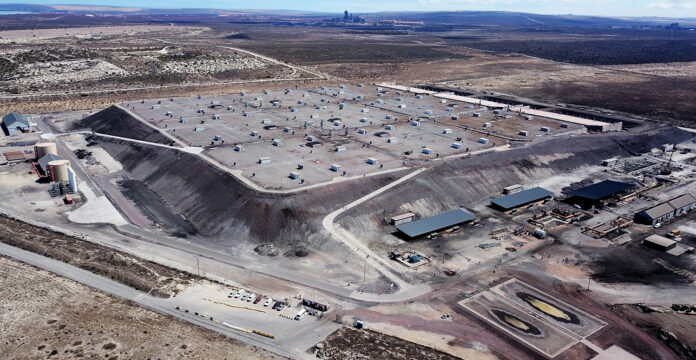
South Africa still has significant storage capacity, particularly at Saldanha Bay. The infrastructure exists. What is missing is the stockpile.
We have the tanks. We do not have enough oil in them.
Quiet stockpiling and rising anxiety
A less visible but increasingly important development is now taking place within the domestic fuel market.
Retailers and wholesalers are beginning to increase their own stock levels ahead of potential disruptions.
This is a rational response to uncertainty – but it also reflects a lack of confidence in the broader system’s resilience.
In normal conditions, fuel supply chains operate on tight logistics and predictable flows. But when uncertainty rises, behaviour changes.
Companies begin to hold more stock. Orders are placed earlier. Buffers are built.
Individually, this makes sense. Systemically, it can create pressure.
If multiple players begin stockpiling simultaneously, it can:
• tighten short-term supply availability,
• increase price volatility, and
• create the perception – or even the reality – of shortages.
This is how a “dry tank” scenario can begin — not necessarily from a lack of fuel globally, but from disruptions and distortions within the supply chain itself.
So what is the government doing?
The government has indicated that it is actively coordinating with industry and has secured near-term supply.
There are also broader commitments to:
• diversify import sources,
• strengthen strategic storage capacity, and
• invest in infrastructure over time – again.
These are important steps but they are largely medium- to long-term interventions.
The uncomfortable reality is that in the very short term, government has limited tools available. Unlike countries with large strategic reserves, South Africa cannot easily release significant volumes of fuel into the market to stabilise supply or prices.
What is the rest of the world doing?
Globally, the contrast is stark.
Many advanced economies maintain strategic petroleum reserves equivalent to 60 to 90 days of consumption. These reserves are actively managed and, crucially, are used counter-cyclically – built up when prices are low and released when markets are under
pressure.
In short, they treat energy
security as a core economic
priority.
A double vulnerability: imports and refining
South Africa’s exposure is compounded by a second structural weakness – its growing dependence on imported refined fuel.
Over the past two decades, the country has shifted from refining roughly 80% of its fuel domestically to less than 35% today. This means we are not only dependent on imported crude oil, but increasingly on imported finished products.
Diesel is the most critical pressure point.
Refined diesel quite literally powers the South African
economy – from logistics and mining to agriculture, manufacturing and backup electricity generation.
Yet, South Africa now imports approximately 75% of its diesel requirements.
In an economy already struggling with low growth and persistently high unemployment, this creates a significant macroeconomic risk.
Any disruption in diesel supply – or sharp increase in its price – feeds directly into:
• higher transport and food costs
• reduced industrial activity, and
• further pressure on already fragile economic growth.
Compounding the problem is the exchange rate.
The rand is trending towards R17 to the US dollar, the weakest level in weeks, amplifying the impact of rising oil prices. Oil is priced in dollars.
Every weakening in the rand feeds directly into higher domestic fuel prices.
The bottom line
South Africa is not in a fuel crisis today. But it is operating with a significantly reduced safety buffer in an increasingly unstable global environment.
We have the infrastructure. We have the supply chains. We have short-term stability. What we do not have is sufficient margin for error. Because in energy economics, as in life, resilience is built in advance – not in the middle of the storm.
Mark Van Doesburgh is head of economics at the Cape Peninsula University of Technology, a former financial director of JSE-listed companies, and a regular commentator on eNCA, CapeTalk and Sunday World. Email: vandoesburghm@cput.ac.za


